Situation Summary
Bangladesh remains at elevated security risk (rank #29 globally, composite score 70.1) with persistent threats from terrorism, violent crime, and political instability. Recent foreign-government advisories (US Level 3 "Reconsider Travel," UK high-risk designation) reflect ongoing concerns about terrorist attack likelihood in urban centers, kidnapping in the Chittagong Hill Tracts, and crime escalation since the July–August 2024 popular uprising. Although mass unrest has subsided from mid-2024 peaks, the February 2026 election cycle has reintroduced political rally violence and demonstration risks nationwide.
Key Developments
- Dhaka (2026-06-02): Public statements from Hindu and Bangladeshi actors, coupled with a "Reduce Relations" event involving the Prime Minister, signal domestic political tension and potential polarization in the capital.
- Kelantan/Bangladesh border (2026-06-02): Cross-border arrest/detention of Bangladeshi nationals and one Kelantan-linked detainee indicate heightened scrutiny at regional entry points and possible transnational security activity.
- Nationwide (2026-05-31 to 2026-06-02): Multiple public statements attributed to Bangladesh and internal actors suggest ongoing domestic political discourse; concurrent criminal arrests (2026-06-01) reflect continued law-enforcement operations.
- Dhaka & major cities (live advisory update): UK and US embassies have renewed explicit warnings that terrorist attacks are "very likely" in restaurants, public buildings, religious sites, and political venues; security force posture remains elevated to disrupt planned attacks.
- Chittagong Hill Tracts (Khagrachari, Rangamati, Bandarban): US "do not travel" advisory remains in force due to persistent kidnapping, unrest, terrorism, and crime; foreign nationals are advised to avoid the region entirely.
- Nationwide (crime trend): Armed robbery, mugging, sexual assault, and night-time travel violence have increased significantly since mid-2024; rickshaws, taxis, buses, and trains present elevated personal-security risk to travelers.
- Public-health concurrent alerts: Measles and Nipah virus infection cases reported; disease outbreaks may compound security challenges by straining health infrastructure and creating secondary displacement or unrest.
Highest-Risk Areas
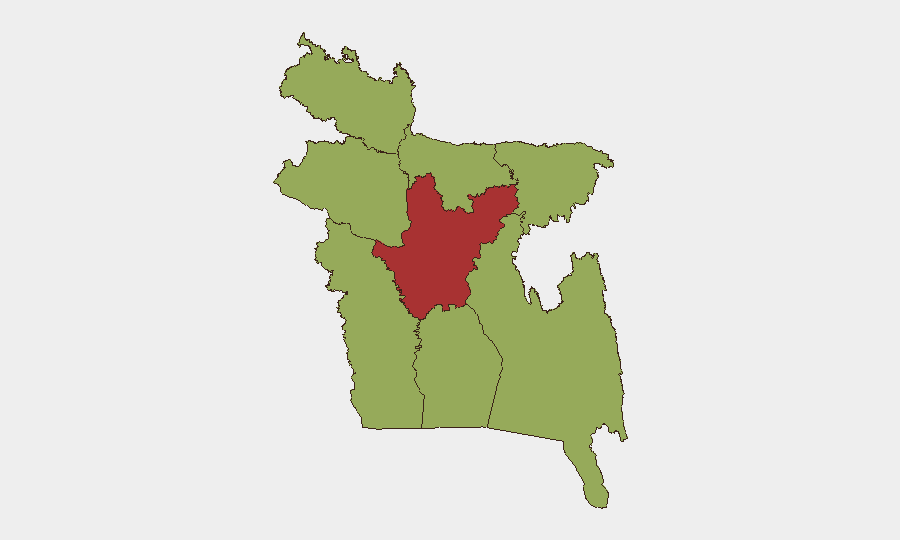
Dhaka Division dominates the sub-national risk landscape with a composite score of 79.1—substantially higher than all other divisions—driven by capital-city concentration of political activity, terrorist targeting, and violent crime. The remaining seven divisions cluster at scores between 49.1 and 50.3, indicating that terrorism, kidnapping, and crime risks are geographically distributed beyond the capital. Chittagong Division (50.3) remains elevated primarily due to Chittagong Hill Tracts kidnapping and unrest; Khulna, Barishal, Rangpur, Rajshahi, Mymensingh, and Sylhet divisions present more uniform baseline risk, suggesting either lower incident density or equal underlying structural vulnerability.
How GeoBit Would Assist
Security teams protecting personnel and assets in Bangladesh should employ AOI Monitoring & Early Warning to track protest, demonstration, and terrorist-activity signals in real time across Dhaka and secondary cities; OSINT fusion (X/Twitter, Telegram, YouTube, multi-language feeds) to detect emerging political or extremist rhetoric; and Election Monitoring capabilities to map political-rally schedules and violence risk during the ongoing post-February 2026 political cycle. Routing & Network Analysis can identify safer transit corridors in Dhaka and other high-crime zones, while Risk & Threat Assessment and Entity Extraction tools help teams correlate arrest, detention, and public-statement data to anticipate localized escalation.
7-Day Outlook
Terrorist threat posture is expected to remain consistent with current elevated levels; no imminent tactical shift is indicated. Protest activity may fluctuate around residual election-cycle messaging and political-party activity. Concurrent measles and Nipah virus reporting warrants health-security contingency review for affected personnel.
Highest-Risk Areas — Ranked
| # | State / Region | Risk |
|---|---|---|
| 1 | Dhaka Division | 79.1 |
| 2 | Chittagong Division | 50.3 |
| 3 | Khulna Division | 49.1 |
| 4 | Barishal Division | 49.1 |
| 5 | Rangpur Division | 49.1 |
| 6 | Rajshahi Division | 49.1 |
| 7 | Mymensingh Division | 49.1 |
| 8 | Sylhet Division | 49.1 |