Situation Summary
Brazil remains a persistent mid-tier security risk (global rank #37, composite score 36.8) characterized by sustained urban violence, active police counter-crime operations, organized-crime territorial disputes, and critical infrastructure vulnerabilities. The past 48 hours show elevated operational tempo across multiple states—armed clashes in Rio de Janeiro, large-scale raids in São Paulo, gang violence in Salvador, and prison-related security alerts in Manaus—coupled with government-level tensions and investigations. Current trajectory reflects cyclical intensification of criminal faction conflicts and law-enforcement response rather than systemic escalation, though individual incidents pose direct risk to residents and corporate assets in high-density urban zones.
Key Developments
- Rio de Janeiro (north-zone neighbourhoods), 2026-06-02–03: Sustained armed confrontations between police and criminal factions with automatic gunfire; road blockages and bus-route disruptions affecting metro-area mobility and access to peripheral districts.
- São Paulo (eastern and southern peripheral districts), 2026-06-02–03: Large-scale Civil and Military Police raids targeting drug-trafficking and cargo-theft networks; arrests, weapons seizures, sporadic gunfire exchanges, and temporary transport disruption in targeted zones.
- Salvador, Bahia (peripheral areas), 2026-06-02–03: Series of rival drug-faction shootings with multiple casualties; authorities advising avoidance of specific streets and informal settlements, particularly after dark.
- Manaus, Amazonas (prison facilities and nearby districts), 2026-06-02–03: Heightened security posture, reinforced patrols, and checkpoints following intelligence on potential coordinated organized-crime group actions; road delays and warnings of possible disturbances.
- Brasília (Federal District – government complex), 2026-06-03: Continued elevation of security protocols and access restrictions at Praça dos Três Poderes and federal ministries; complex remains flagged as sensitive for politically-motivated protests and attacks.
- Nationwide cyber threat: Brazil among the world's most heavily targeted for cyberattacks (10+ billion attempts recorded in 2023); financial, healthcare, and critical-infrastructure sectors repeatedly compromised; mandatory incident reporting to national data-protection authority (ANPD) underscores systemic vulnerability.
- Nationwide urban crime: Persistent high-volume armed robbery, express kidnapping, carjacking, and transit-system theft in major cities; organized-crime militias and unannounced police operations in favelas pose hazards for foreign and corporate personnel.
Highest-Risk Areas
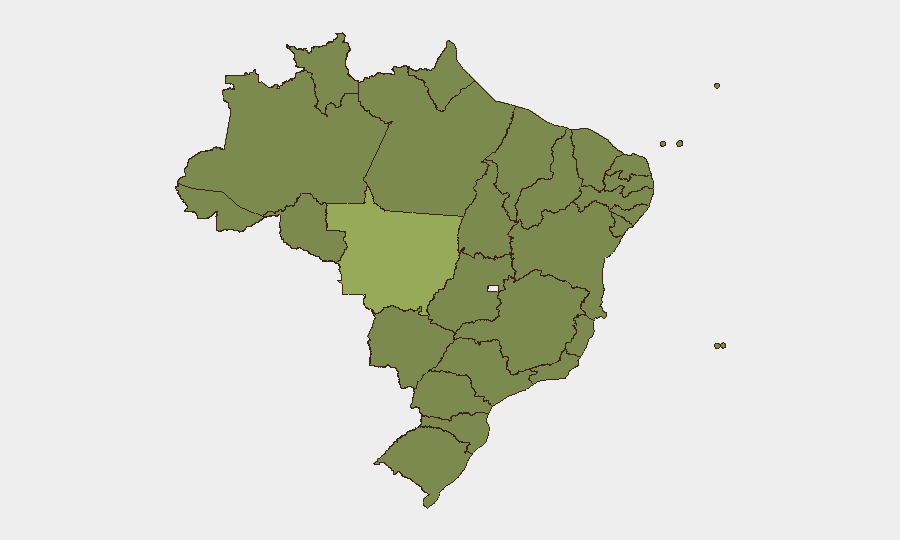
Mato Grosso (#1, risk 55.8) presents the highest composite score, driven primarily by land-dispute violence, illegal mining, and border-control challenges in frontier zones; São Paulo (#2, 39.4) consolidates risk from large-scale organized-crime operations, cargo theft, and major police operations in densely populated peripheral districts; Rio de Janeiro (#3, 28.7) remains elevated due to sustained faction violence, militia activity, and police counter-operations in north-zone favelas. The top five states account for concentrated risk in agricultural-frontier regions, major metropolitan zones, and Amazon-basin areas where state capacity and criminal enforcement operate in parallel.
How GeoBit Would Assist
Security teams would deploy AOI Monitoring & Early Warning on known gang-territory boundaries and police-operation hotspots (Rio, São Paulo, Salvador, Manaus) to receive real-time alerts on armed clashes and mobility disruption; Routing & Network Analysis to plan alternative journey corridors during active operations; and Intel Sweep and multi-language OSINT (X/Twitter, Telegram, local media feeds) to track criminal-faction announcements, police press releases, and emerging protest signals around federal facilities in Brasília. Cyber and critical-infrastructure risk assessment tools would enable monitoring of sector-specific attack patterns and breach notifications affecting operations in finance, healthcare, or supply-chain-dependent business lines.
7-Day Outlook
Operational intensity in Rio de Janeiro and São Paulo is expected to remain elevated as police maintain counter-crime campaigns; São Paulo state elections or political developments could drive short-term protest activity and federal-complex security tightening in Brasília. Organized-crime faction violence in secondary cities (Salvador, Manaus) will likely persist at current levels barring major arrests or territorial shifts.
Highest-Risk Areas — Ranked
| # | State / Region | Risk |
|---|---|---|
| 1 | Mato Grosso | 55.8 |
| 2 | São Paulo | 39.4 |
| 3 | Rio de Janeiro | 28.7 |
| 4 | Amazonas | 28.6 |
| 5 | Pernambuco | 28.4 |
| 6 | Santa Catarina | 28.1 |
| 7 | Tocantins | 27.7 |
| 8 | Paraná | 26.4 |
| 9 | Goiás | 26.4 |
| 10 | Mato Grosso do Sul | 26.3 |
| 11 | Maranhão | 26.3 |
| 12 | Ceará | 26.3 |