Situation Summary
Egypt remains a moderate-to-elevated risk environment (composite threat score 70, ranked #19 globally) characterized by sustained terrorism threats, episodic targeted violence against foreigners, and a restrictive internal security posture that can escalate rapidly around political or regional triggers. No major terrorist attacks, mass civil unrest, or infrastructure-disrupting incidents have been reported in the last 24 hours; however, current risk reflects structural vulnerabilities rather than acute incidents. Regional tensions with Israel, ongoing Sinai-based insurgency, and political constraints on expression create an environment where security conditions can shift with limited warning.
Key Developments
- Cairo & nationwide – Public statements and diplomatic tensions (2026-06-01 to 06-03). Multiple Egyptian government and civil-society statements on 2026-06-01, followed by formal Egyptian demands and disapproval toward Israel, and a U.S. appeal to Egypt on 2026-06-03. Pattern suggests elevated regional friction that could trigger anti-foreign sentiment or tighter security operations in major cities.
- Cairo – Investigation and detention activity (2026-06-01 to 06-02). Cairo authorities launched investigation(s) into unspecified Egyptian subjects on 2026-06-01; arrest/detention activity followed on 2026-06-02, consistent with the pattern of rapid response to perceived security or political threats.
- Nationwide – Ongoing U.S. State Department terrorism and civil-unrest advisory. The U.S. State Department maintains a "reconsider travel" advisory due to terrorism risk and civil-unrest potential, underpinned by heavy security-force presence at sensitive sites, transport hubs, and tourist areas.
- Alexandria – Pattern of politically motivated attacks against foreigners (2023–2024). Two Israeli tourists and an Egyptian guide killed in 2023; Israeli-Canadian national killed in May 2024. These incidents establish Alexandria as a higher-risk location for targeted or spillover violence tied to regional conflict.
- Sinai & border zones – Ongoing militant activity and military operations. North Sinai and sensitive border areas remain subject to terrorism and military counterinsurgency; FCDO advises against all travel to affected regions.
- Red Sea resorts – Sexual assault and harassment risk. Persistent reports of sexual assaults against foreign women in Hurghada and Sharm el-Sheikh, often by hotel or excursion staff, with alleged under-reporting enabled by hotel management.
- Nationwide – Digital surveillance and detention risk for activists & journalists. Egypt classified as "Not Free" by Freedom House; criminal penalties, harassment, and surveillance of internet users, activists, and bloggers create heightened detention risk for journalists, human-rights workers, or politically engaged travelers.
Highest-Risk Areas
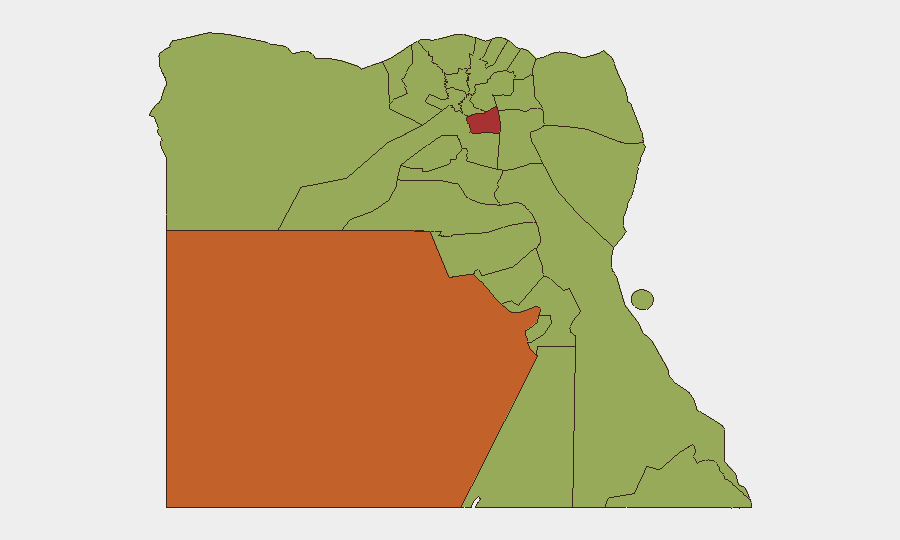
Cairo (risk 79) and New Valley (74.2) are the primary drivers of national risk, with Cairo's dominance reflecting its status as the political, administrative, and population center—concentrating both terrorist targeting and state security operations. Alexandria (59.9) ranks third and warrants elevated vigilance due to the documented pattern of targeted attacks on Israeli and foreign nationals since 2023, suggesting both opportunistic and organized anti-foreign/anti-Israeli violence. Sinai zones (North and South, both risk 49) remain structurally high-risk due to militant insurgency and military operations; while not dominating the composite ranking, they are subject to categorical travel restrictions and should be off-limits for corporate personnel.
How GeoBit Would Assist
Security teams can deploy AOI Monitoring & Early Warning on Cairo, Alexandria, and Sinai to detect shifts in protest activity, security-force posture, and militant indicators. OSINT Fusion (Twitter/Telegram, multi-language search, sentiment analysis) would track anti-foreign or anti-Israeli narratives and official statements in real time, enabling early detection of escalation triggers. Routing & Network Analysis supports alternative journey planning to avoid high-risk zones, while Risk & Threat Assessment tied to event feeds provides duty-of-care documentation and policy-update triggers.
7-Day Outlook
Regional tensions are likely to remain elevated given current diplomatic friction between Egypt and Israel; localized protest risk around political or regional flashpoints should be assumed even without large-scale civil unrest in the last 24 hours. Personnel in Cairo and Alexandria should maintain heightened situational awareness and defer non-essential travel; Sinai remains a no-go. No major new security incident is forecast, but the restrictive political environment and pattern of rapid state response mean security conditions can deteriorate with limited notice.
Highest-Risk Areas — Ranked
| # | State / Region | Risk |
|---|---|---|
| 1 | Cairo | 79 |
| 2 | New Valley | 74.2 |
| 3 | Alexandria | 59.9 |
| 4 | The Lake | 53.1 |
| 5 | Giza | 51 |
| 6 | Red Sea | 49.7 |
| 7 | Al Minya | 49.7 |
| 8 | North Sinai | 49 |
| 9 | Qena | 49 |
| 10 | South Sinai | 49 |
| 11 | Halaib Triangle | 49 |
| 12 | Matruh | 49 |