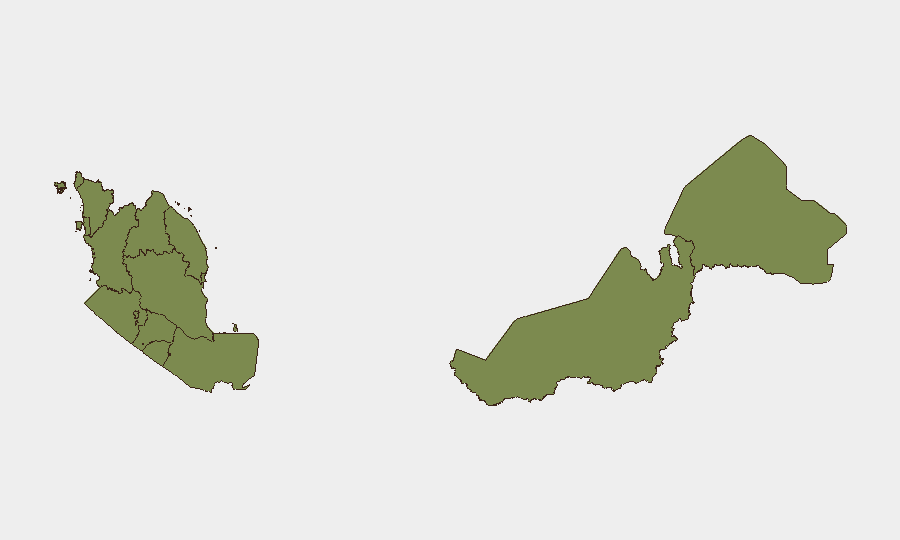
Situation Summary
Malaysia remains a low-threat environment globally (rank #128, composite score 2.0), but critical infrastructure vulnerability has been exposed through a major cyberattack on the country's primary aviation hub. The KLIA ransomware incident underscores systemic cyber-resilience gaps in key economic sectors and regional transport networks. Sub-national risk is heavily concentrated in Sarawak (31.4) and the major urban/economic centers of Kuala Lumpur and Johor (both 16.4), while most of Peninsular Malaysia registers below 6.0. The trajectory suggests elevated operational risk for organizations dependent on airport services or connected IT systems, despite the government's rejection of ransom demands and stated normalization of flight operations.
Key Developments
- KLIA cyberattack and ransom demand (Sepang, Kuala Lumpur Federal Territory). Malaysia Airports Holdings Berhad (MAHB) systems were compromised beginning 23 March; attackers demanded US$10 million. National Cyber Security Agency (NACSA) and MAHB confirmed the incident; Malaysia rejected the ransom demand. Manual workarounds (whiteboard departure time logging) documented during outages. Flight operations nominally resumed, but IT system recovery status remains unclear.
- Regional aviation infrastructure vulnerability exposed. Cybersecurity analysts flagged the KLIA incident as a regional threat indicator, noting that similar vulnerabilities likely exist across Asian hub airports and that ransomware targeting air-transport IT can degrade passenger processing and operational scheduling for extended periods.
- No discrete security events in current 24-hour window beyond KLIA continuation. Open-source reporting shows no new discrete incidents (terrorism, crime, civil unrest, or political destabilization) in the last 24 hours; the KLIA event remains the dominant live development.
- Sub-national concentration of tracked threats in East Malaysia and urban zones. Sarawak registers 31.4 composite risk (5.6× national average), indicating persistent underlying security drivers (likely related to illicit cross-border activity, maritime piracy risk, or organized crime in port/resource sectors). Kuala Lumpur and Johor follow at 16.4 each, consistent with high-density urban crime, cybercrime activity, and transnational organized-crime transit routes.
- Cyber as dominant operational threat vector for corporate and aviation sectors. Unlike conventional terrorism or civil unrest, which remain at background levels, the KLIA incident highlights that cyber-enabled disruption of critical national infrastructure now poses measurable duty-of-care risk to organizations with supply-chain, operational, or personnel dependencies on Malaysian airports and connected services.
Highest-Risk Areas
Sarawak dominates the sub-national threat profile at 31.4—more than 1.9× the risk of Kuala Lumpur—suggesting concentrated illicit networks, maritime/border smuggling, or organized-crime operations in the state's port and maritime zones. Kuala Lumpur and Johor tie at 16.4, reflecting the combination of high urban density, transnational criminal networks, and critical infrastructure concentration (airports, seaports, financial hubs). The remainder of Peninsular Malaysia and the northern states (Perlis, Kedah at 1.4 each) register minimal tracked threat activity. For corporate teams, risk is not evenly distributed: aviation-dependent operations face elevated cyber risk nationwide, while field operations or supply chains in Sarawak warrant heightened vetting for organized-crime and maritime interdiction exposure.
How GeoBit Would Assist
Security teams should deploy AOI Monitoring & Early Warning on KLIA and other critical-infrastructure nodes to detect operational anomalies or secondary cyber-incident signals. Intelligence & OSINT (Intel Sweep, entity extraction, Telegram/X monitoring) can track ransom-group communications, payment flows, and follow-on extortion threats. Routing & Network Analysis enables alternative air-transport and supply-chain planning if KLIA disruptions recur or spread to secondary hubs.
7-Day Outlook
KLIA recovery and potential follow-on extortion attempts will likely dominate near-term monitoring. No imminent escalation in conventional security threats (civil unrest, terrorism) is signaled by open-source reporting. Corporate teams should anticipate intermittent IT service degradation at Malaysian airports and begin contingency planning for distributed passenger processing and manual backup procedures over the coming week.
Highest-Risk Areas — Ranked
| # | State / Region | Risk |
|---|---|---|
| 1 | Sarawak | 31.4 |
| 2 | Kuala Lumpur | 16.4 |
| 3 | Johor | 16.4 |
| 4 | Penang | 12.7 |
| 5 | Malacca | 8.9 |
| 6 | Perak | 5.2 |
| 7 | Kelantan | 5.2 |
| 8 | Selangor | 5.2 |
| 9 | Pahang | 5.2 |
| 10 | Negeri Sembilan | 5.2 |
| 11 | Perlis | 1.4 |
| 12 | Kedah | 1.4 |