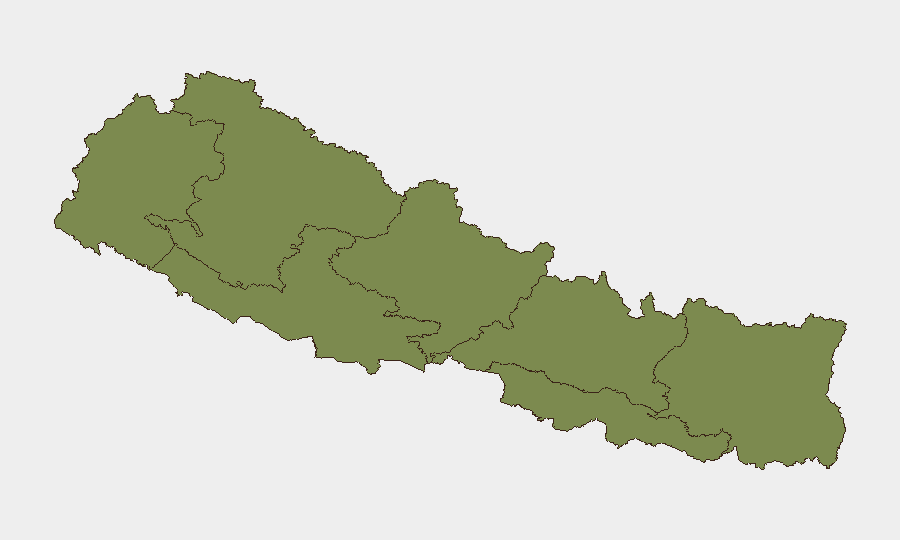
Situation Summary
Nepal is experiencing a severe security crisis following a week of violent anti-government protests triggered by a now-revoked social media ban. The Nepal Army has assumed operational control of security, imposing nationwide curfews with at least 30 confirmed deaths and over 1,000 injured. Critical infrastructure—including Parliament, the Supreme Court, and senior leaders' residences—has been damaged or destroyed, and an estimated 7,000–13,000 inmates have escaped during prison security failures, creating compounding crime and instability risks across the country.
Key Developments
- Kathmandu – Curfew & military control: Nepal Army formally took operational charge of security; curfews remain in force across Kathmandu and other key areas, with hundreds of soldiers patrolling streets and manning checkpoints.
- Tribhuvan International Airport: Reopened at 18:00 local time on 2026-06-04 after shutdown; authorities require confirmed tickets, ID, and direct airline verification due to ongoing disruption and enhanced security screening.
- Political infrastructure attacks: Parliament building, Supreme Court, Communist Party headquarters, and Singha Durbar complex sustained fire damage and structural harm; at least one media outlet was also targeted.
- Targeted political violence: Residences of former PM KP Sharma Oli, a former home minister, and several other senior leaders were set ablaze, contributing to political pressure that forced Oli's resignation.
- Mass jailbreaks nationwide: Security forces lost control of multiple prisons; 7,000–13,000 inmates escaped across the country, prompting ongoing army recapture operations and raising immediate crime risk.
- Militarization & detention: Nepal Army has intensified crackdowns on looting and jail-break support; at least four suspected looters were apprehended in Maharajgunj after abandoning cash and a looted firearm.
- Protest dialogue & political flux: Army chief Sigdel met Gen Z protest representatives and appealed for ceasefire; protest leaders have proposed former Chief Justice Sushila Karki as interim national head, signaling unresolved political arrangements.
- External travel advisories: India's Ministry of External Affairs and other foreign governments have advised their nationals to defer non-essential travel to Nepal due to violence, curfews, and instability.
Highest-Risk Areas
Bagamati Province (risk score 31.4) dominates the threat landscape, encompassing Kathmandu and the capital region where political infrastructure, military operations, escaped inmates, and violent protest activity are concentrated. Gandaki Province (18.1) represents the second-tier risk, likely reflecting secondary urban centers and regional protest activity. The remaining provinces—Karnali, Sudurpashchim, Lumbini, Koshi, and Madhesh—carry lower but non-zero risk scores (1.4–3.1), indicating dispersed unrest and potential spillover from the capital but no immediate acute threats in those zones. Risk concentration in Bagamati reflects the political and administrative centrality of Kathmandu and its role as the focal point of protests and military response.
How GeoBit Would Assist
Security teams should deploy AOI Monitoring & Early Warning on Kathmandu's political, aviation, and detention-infrastructure zones to track curfew compliance, checkpoint activity, and potential re-escalation. Intel Sweep, OSINT fusion, and X/Telegram monitoring can capture real-time protest messaging, protest-leader communications, and Army operational signals to assess dialogue progress and ceasefire stability. GIS & Spatial Analysis combined with Routing & Network Analysis enable alternative travel planning around curfew zones and checkpoints for personnel requiring movement, while Early Warning & Prediction models can identify precursors to renewed violence or prison-escape clusters.
7-Day Outlook
The immediate 7-day period will likely remain characterized by military presence, curfews, and active recapture operations for escaped inmates. If Army–protest dialogue progresses and a political interim arrangement (e.g., involving Karki) gains traction, pressure may ease by mid-week; however, the scale of infrastructure damage, political leadership instability, and large escaped-inmate population create significant risk for renewed clashes, opportunistic crime, or secondary protest waves if negotiations stall.
Highest-Risk Areas — Ranked
| # | State / Region | Risk |
|---|---|---|
| 1 | Bagamati Province | 31.4 |
| 2 | Gandaki Province | 18.1 |
| 3 | Karnali Province | 3.1 |
| 4 | Sudurpashchim Province | 1.4 |
| 5 | Lumbini Province | 1.4 |
| 6 | Koshi Province | 1.4 |
| 7 | Madhesh Province | 1.4 |