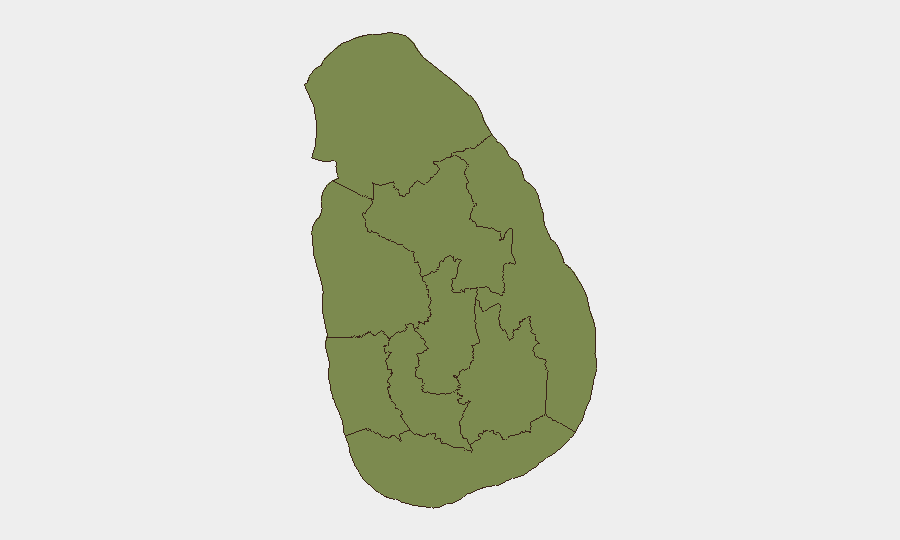
Situation Summary
Sri Lanka faces a composite security environment of persistent terrorism and civil-unrest risk alongside a rapidly escalating cyber-threat landscape. The June 1st event cluster—comprising diplomatic statements, government-level investigations, and territorial activity—signals elevated political tension, while the confirmed ransomware strike on government cloud infrastructure and reported $2.5 million Treasury Department breach underscore critical vulnerabilities in state digital systems. Overall threat ranking (#47 globally) masks severe sub-national concentration and a sharp upward cyber-risk trajectory driven by weak institutional backup protocols and growing criminal exploitation of digitisation.
Key Developments
- Colombo – government cyber infrastructure breach (May 17–26): Sri Lanka ICT Agency confirmed ransomware attack on government cloud wiped or corrupted ~5,000 @gov.lk email accounts with significant data loss; limited recovery and agencies ordered to improve backup and cyber-hygiene measures.
- Colombo – critical financial system breaches: Treasury Department suffered a $2.5 million cyber heist; separate breaches at Sri Lanka Post and other institutions indicate systemic vulnerabilities in public financial infrastructure and delayed incident disclosure protocols.
- Island-wide – sharp spike in phishing, BEC, and ransomware: Sri Lanka CERT reports elevated cybercrime activity correlated with rapid digitisation of banking and e-commerce; 2024 incident volumes remain sustained at high levels.
- Nationwide – protest and civil-unrest escalation risk: Foreign advisories note demonstrations can occur with short notice and become violent (water cannon, tear gas); 2022 precedent includes fatalities, curfews and roadblocks; political/economic grievance re-escalation remains plausible.
- Colombo and tourist zones – terrorism threat unchanged: UK and Canadian advisories maintain assessment that terrorist attacks cannot be ruled out; precedent of coordinated Easter 2019 bombings (250+ deaths) targeting hotels, restaurants, worship sites and public gatherings drives continued caution.
- Colombo, transport hubs, markets – opportunistic crime and harassment: Low-level theft, pickpocketing and sexual harassment reported in crowded venues, hotels, guesthouses and public transport; risk highest for solo travellers and women in unlit areas.
- National transport – accident and infrastructure risk: Fatal rail incidents involving passengers exiting moving trains remain common on tourist routes; post-cyclone damage and landslide-prone roads in regions cause periodic disruption.
- Indian Ocean approaches – maritime piracy risk: Gulf of Aden and Indian Ocean High Risk Area sustain piracy and armed-robbery threat; yachts and small vessels transiting to/from Sri Lanka face hijack and hostage-for-ransom risk without counter-piracy routing adherence.
Highest-Risk Areas
Uva Province (36.2) dominates sub-national risk and is the primary driver of national threat elevation; significantly higher than Western Province (9.5), suggesting concentrated instability in the east-central interior. All remaining provinces cluster at 6.2, indicating either diffuse low-level risk or data-reporting gaps outside Uva and Western. The Uva outlier warrants investigation into specific event types (terrorism, conflict, crime) and operational implications for personnel or asset deployment in that region.
How GeoBit Would Assist
Security teams should employ Intel Sweep and multi-language OSINT fusion to corroborate emerging cyber-incident disclosures and track unattributed breach actors; AOI Monitoring & Early Warning on Colombo, Uva Province and key transport hubs to detect protest mobilisation and terrorism precursors; and Conflict & Military network analysis to map political actor statements and intentions following the June 1st diplomatic event cluster. GIS & Spatial Analysis can identify safest routing for personnel and critical asset movements, while Economic & Trade intelligence monitors critical infrastructure breach impact on government service continuity.
7-Day Outlook
Cyber-incident disclosure momentum and institutional accountability pressure will likely continue through early June, with potential for further breach announcements affecting corporate confidence in local government and financial systems. Civil-unrest risk remains episodic but volatile; no specific trigger is evident, though June political calendar or labour actions could catalyse protest activity. Terrorism and crime threat posture remains stable at elevated baseline.
Highest-Risk Areas — Ranked
| # | State / Region | Risk |
|---|---|---|
| 1 | Uva Province | 36.2 |
| 2 | Western Province | 9.5 |
| 3 | Southern Province | 8.4 |
| 4 | Northern Province | 6.2 |
| 5 | North Western Province | 6.2 |
| 6 | North Central Province | 6.2 |
| 7 | Central Province | 6.2 |
| 8 | Eastern Province | 6.2 |
| 9 | Sabaragamuwa Province | 6.2 |