Situation Summary
The United Arab Emirates remains under a persistent Level 3: Reconsider Travel advisory due to regional armed conflict and terrorism threats, with U.S. government personnel ordered to depart in March 2026. While the composite threat score of 2 positions the UAE at #68 globally, sub-national risk is heavily concentrated in Dubai (31.4), driven by aviation disruption, drone/missile attack exposure, and targeting of high-density civilian infrastructure. The security environment is shaped primarily by spillover from regional conflicts rather than domestic instability, though cyber and property-damage incidents continue to surface in event monitoring.
Key Developments
- Dubai International Airport (06-02 to present): Brief suspension of flight operations following drone strike-triggered fuel tank fire; operations subsequently resumed with residual aviation risk and potential for airspace restrictions.
- UAE Digital Infrastructure (nationwide, recent): Ransomware attack detected and stopped against national digital systems; ongoing cyber infrastructure vulnerability remains a material risk.
- Airspace Closures (nationwide, ongoing): Temporary UAE airspace closures linked to missile and drone threats have caused significant commercial flight disruptions; threat environment persists.
- Drone & Missile Threat (nationwide): Continued Iranian-origin drone and missile attack threat documented in U.S. Embassy security alerts; targets identified include tourist zones, transportation hubs, shopping areas, government facilities, places of worship, and Israeli/Jewish-linked locations.
- Property Damage Incident (Dubai, 06-01): Seize/damage property event recorded between Haredi group and police; low-scale but signals localized civil friction.
- Governance/Welfare Statements (Abu Dhabi, 05-31): Public statements from governor and caregiver regarding welfare matter; administrative-level communication with possible duty-of-care relevance.
Highest-Risk Areas
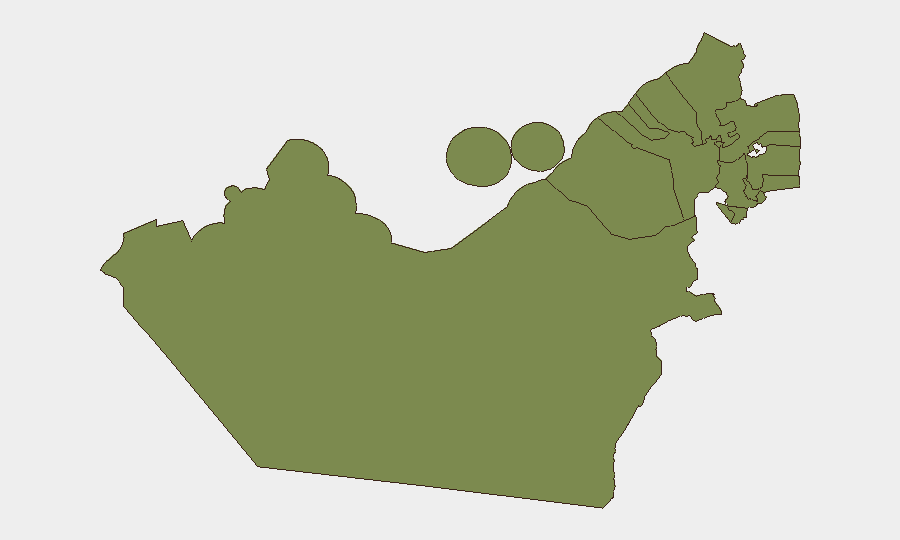
Dubai dominates the sub-national risk profile at 31.4, reflecting its status as a major international aviation hub, tourist destination, and logistics nexus vulnerable to drone/missile attack and flight disruption. Sharjah and Abu Dhabi Emirate each score 12, indicating secondary but material risk exposure to similar regional threats and infrastructure targeting. The remaining emirates (Ajman, Ras al-Khaimah, Fujairah, Umm al-Quwain) score 1.4, reflecting lower population density and reduced exposure to high-consequence targets. Risk concentration in the northern emirates reflects population and economic activity distribution, not domestic instability; the primary driver is regional spillover from armed conflict.
How GeoBit Would Assist
Security teams operating in the UAE should leverage AOI Monitoring & Early Warning to maintain persistent watch on Dubai International Airport, critical infrastructure zones, and high-density civilian areas for emerging drone/missile threat indicators and airspace closure signals. Aviation & Maritime Tracking combined with Intel Sweep and multi-language OSINT (X, Telegram, Arabic-language sources) provide real-time detection of flight disruptions, airspace closures, and credible threat announcements. Network & Actor Analysis supports tracking of regional armed groups and threat actors with stated targeting intent against UAE infrastructure, enabling duty-of-care risk modeling for personnel and asset placement.
7-Day Outlook
The regional armed-conflict environment is expected to remain the primary driver of UAE security risk over the next week, with continued potential for drone/missile threats, airspace disruptions, and aviation delays. No escalation of domestic instability is currently indicated, though cyber attacks on digital infrastructure and property-damage incidents warrant continued monitoring. Organizations should maintain heightened awareness of aviation schedules, embassy advisories, and alternative routing capability for personnel movement.
Highest-Risk Areas — Ranked
| # | State / Region | Risk |
|---|---|---|
| 1 | Dubai | 31.4 |
| 2 | Sharjah Emirate | 12 |
| 3 | Abu Dhabi Emirate | 12 |
| 4 | Ajman Emirate | 1.4 |
| 5 | Ras al-Khaimah | 1.4 |
| 6 | Fujairah Emirate | 1.4 |
| 7 | Umm al-Quwain | 1.4 |