Situation Summary
The United Kingdom ranks #59 globally in composite threat exposure (score 3.2), with 467 tracked events. The dominant near-term security development is a coordinated retail-sector cyberattack wave affecting major London and nationwide retailers, with attribution to DragonForce and a reconstituted Scattered Spider variant. Kinetic threats remain modest relative to cyber risk; however, baseline cybercrime exposure is severe—UK government 2025 data indicates one hacking incident per minute nationally and breach rates of 43% among businesses and 30% among charities in the prior 12 months.
Key Developments
- London retail—multi-company breach (2026-06-04): Harrods, Marks & Spencer, and Co-op targeted in coordinated cyberattack wave. Harrods remains operational; M&S suspended contactless, Click & Collect, and online/app ordering. Co-op confirmed exfiltration of member names and contact details (passwords and financial data not compromised).
- Retail sector—NCSC coordination: UK National Cyber Security Centre activated inter-agency response; sector-wide warning issued to retail and supply-chain operators on intrusion tactics and indicators of compromise.
- Attribution—DragonForce and Scattered Spider: Threat actors claiming responsibility; security researchers corroborate involvement of Scattered Spider reconstitution, suggesting persistent APT-adjacent threat actor interest in UK financial and logistics targets.
- Northern Ireland—fraud-enabled attack vector (2026-06-03): Police issued public safety alert following spoofing of official phone numbers by scammers; indicates active phishing and identity-impersonation campaigns targeting public-sector trust.
- Nationwide scale: Cyber Security Breaches Survey data (2025) shows UK organizations face approximately one hacking incident per minute; underscores systemic vulnerability across sectors and supply chains.
- Operational disruption risk: M&S payment and order-fulfillment suspension demonstrates retail-sector dependency on uninterrupted cyber infrastructure; extended outages pose reputational and revenue impact.
Highest-Risk Areas
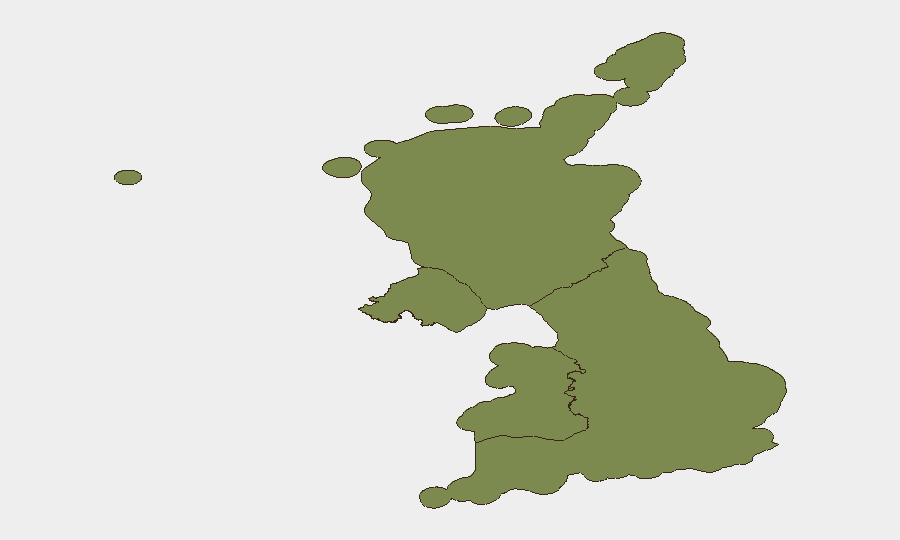
England dominates the sub-national risk profile (composite score 32.2), driven by concentration of financial services, retail, logistics, and government IT infrastructure in and around London. Scotland (6.5) and Northern Ireland (2.7) carry elevated secondary risk from targeted fraud campaigns and legacy infrastructure vulnerabilities. Wales (2.3) shows the lowest tracked risk. The England-centric distribution reflects both asset concentration and attacker targeting of high-value transaction hubs; retail and payment systems in London and the Southeast warrant heightened monitoring for supply-chain cascades.
How GeoBit Would Assist
Operationally, security teams would deploy Intel Sweep and multi-language OSINT (X/Twitter, Telegram, YouTube) to monitor threat-actor communications and claim responsibility for ongoing campaigns. Network & Actor Analysis would map Scattered Spider and DragonForce infrastructure, tactics, and victim timelines to predict secondary targeting. AOI Monitoring & Early Warning pinned to retail, financial, and logistics facilities in England and Scotland would trigger real-time alerting on anomalous activity, supplier advisories, or intrusion indicators, enabling faster duty-of-care response for staff and supply-chain continuity.
7-Day Outlook
The retail cyberattack wave is likely to persist or expand into adjacent sectors (logistics, financial services, hospitality) as threat actors exploit momentum and sector-wide defensive attention. Secondary phishing and fraud campaigns targeting employees and customers of affected retailers will increase. Expect continued NCSC sector advisories and possible regulatory or insurance-linked liability announcements; organizations with UK retail or logistics exposure should anticipate operational disruption and heightened credential-compromise risk through mid-June.
Highest-Risk Areas — Ranked
| # | State / Region | Risk |
|---|---|---|
| 1 | England | 32.2 |
| 2 | Scotland | 6.5 |
| 3 | Northern Ireland | 2.7 |
| 4 | Wales | 2.3 |