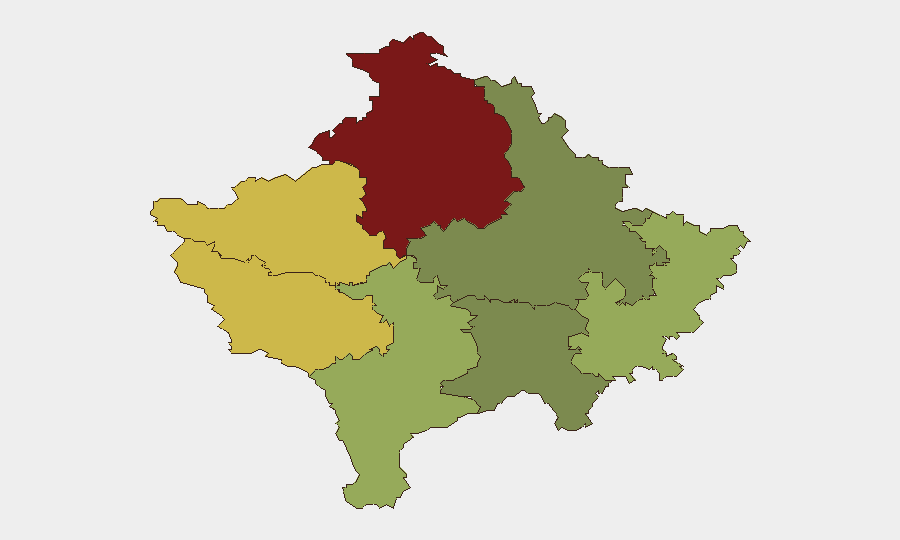
Sub-national composite risk — darker = higher. Source: GeoBit.
⬇ Kosovo dataset (CSV) — events, per-region risk, cyber & sources
Situation Summary
Kosovo is ranked #135 on the GeoBit threat index (score 13). Live brief generation is temporarily degraded; event data follows.
Recent Events
- 2026-10-05 · Violence against civilians · Kosovo citizen M.K. allegedly attacked another Kosovo citizen S.B. with hands and feet to the head and body; arrested at Sukobin–Murićani bo
- 2026-10-05 · Protests · Several hundred KLA war veterans and supporters protested outside Parliament, throwing fireworks, flares and objects at riot police who resp
- 2026-10-05 · Riots · Demonstrators burned rubbish bins and set fires in streets near Parliament and government buildings during ongoing protest clashes.
- 2026-10-06 · Protests · Protesters regrouped outside Parliament on October 6 demanding legal restrictions on Hague court powers; riot police intervened to remove bl
Highest-Risk Areas — Ranked
| # | State / Region | Risk |
|---|---|---|
| 1 | District of Mitrovica | 92 |
| 2 | District of Peja | 68 |
| 3 | District of Gjakova | 65 |
| 4 | District of Prizren | 55 |
| 5 | District of Gjilan | 52 |
| 6 | District of Ferizaj | 38 |
| 7 | District of Prishtina | 28 |
Sources
Previous Weekly Briefs
A new Kosovo brief is written every Monday, covering the week — each with its own risk map and downloadable CSV. Use the calendar to go further back.
- October 12, 2026
- October 5, 2026
- September 28, 2026
- September 21, 2026
- September 14, 2026
- September 7, 2026
- September 1, 2026
📅 Browse past briefs by calendar →
Highlighted days have a brief. Tap a day for that day's map & analysis, or “csv” for that day's dataset ($5).
See Kosovo live.
GeoBit maps Kosovo — every region, event, and risk layer — on demand.
Request a live demo →Share this intelligence
Atlas — our AI intelligence desk — emails them this snapshot personally. Nothing else, no list.
Automated by GeoBit AI from publicly reported events and open-source research. Context only; not a risk advisory. Recognized by Deloitte · NVIDIA Inception · Geospatial World Forum.