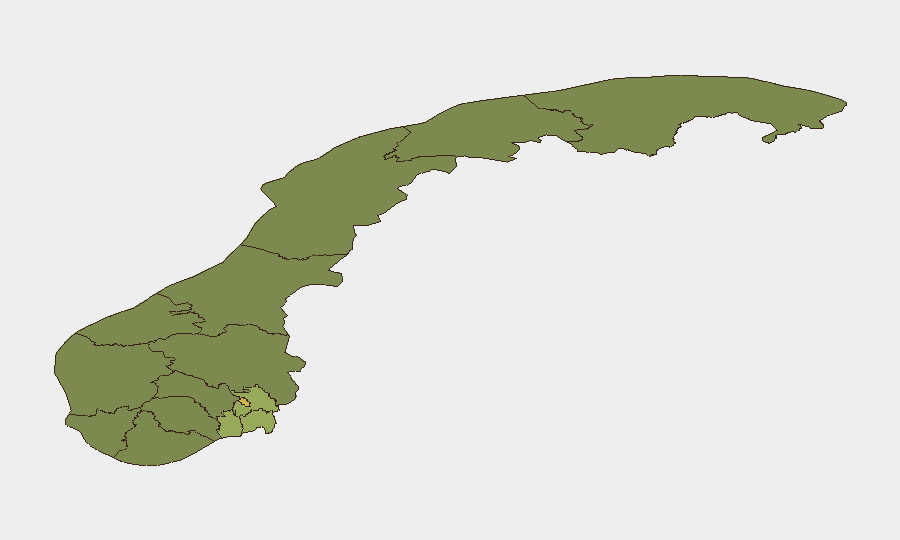
Situation Summary
Norway maintains a composite threat score of 35 (rank #55 globally), with zero tracked major incidents during the past week but elevated baseline violence and emerging infrastructure-security concerns. The week's primary developments center on military-facility surveillance vulnerabilities and a reported cyberattack on the energy sector, both suggesting persistent state and criminal interest in Norwegian strategic assets. Overall national threat remains moderate, though Oslo and surrounding regions (Akershus, Østfold) continue to drive sub-national risk through street-level violence and organized crime activity.
Key Developments
- Oslo Airport & military facilities (17–19 October): Norwegian media disclosed that Chinese-manufactured Deepal rental vehicles, deployed during a Norwegian Armed Forces military exercise at Oslo Airport in September, contained onboard cameras that recorded soldiers' movements, facility access codes, and vehicle-occupant data. Authorities acknowledged inability to exclude transmission of captured information to third parties, triggering renewed security review of contractor vehicle sourcing.
- Oslo (17 October): Norwegian Armed Forces vehicle-surveillance concerns escalated on social media (X) following reports that military-exercise vehicles equipped with onboard surveillance had captured sensitive facility and personnel information, prompting internal security assessment.
- National oil-and-energy sector (19 October): A report indicated approximately 300 Norwegian oil and energy companies were targeted in a significant hacking campaign; independent corroboration of scope, attacker attribution, and compromise detail remains incomplete.
- Halden area (8 October): A shooter opened fire on a hunting party in a forested area; two people were killed and one seriously injured. A suspect was apprehended; motive was not immediately disclosed in available reporting.
- Oslo region (6 October): A 35-year-old male was charged with attempted murder after allegedly stabbing a woman and attacking a male bystander who intervened. The victim was hospitalized with cuts; forensic examination was conducted at the scene.
- Oslo region (11 October): Multiple isolated violence incidents were reported, including a stabbing of a man in his 60s (non-serious injuries), a finger-stabbing of a male in his 20s, and an assault with property damage; a minor was also apprehended carrying a sword in public, and a man in his 30s was stopped carrying a meat cleaver with suspected drug involvement.
- Finnsnes (8 October): Police responded to drone flights over or near a NATO-designated quay facility. Four Chinese nationals were stopped and questioned; police seized equipment related to the operation.
Highest-Risk Areas
Oslo (risk 68) and Akershus (risk 52) dominate the national threat profile, driven primarily by street-level violence, interpersonal assaults, and weapons possession. Østfold (risk 48) and Vestfold (risk 42) remain secondary concern areas, reflecting similar patterns of violent crime and organized-activity indicators. The concentration of risk in the southeastern region, particularly the Oslo metropolitan area, reflects ongoing gang-related activity, substance-abuse driven violence, and transient criminal networks that have persisted since February.
How GeoBit Would Assist
Security and risk teams protecting personnel or assets in Norway would employ Intel Sweep and OSINT fusion to correlate military-facility surveillance incidents with supply-chain vulnerabilities and track Chinese-linked technology insertion into critical infrastructure. AOI Monitoring & Early Warning with persistent geographic focus on Oslo, Akershus, and NATO-adjacent facilities would provide early detection of drone activity, foreign national presence, and cyber-campaign precursors. Network & Actor Analysis combined with energy-sector cyber-threat research would enable organizations to assess compromise likelihood and coordinate incident response within the sector.
7-Day Outlook
Violent-crime activity in Oslo and surrounding regions is expected to remain elevated through seasonal winter months; weapon-possession incidents suggest escalating street-level tensions. The confluence of military-facility surveillance exposure and energy-sector cyber-targeting indicates sustained foreign-intelligence and criminal interest in Norwegian strategic assets; organizations should expect continued targeting and review vendor-access protocols.
Highest-Risk Areas — Ranked
| # | State / Region | Risk |
|---|---|---|
| 1 | Oslo | 68 |
| 2 | Akershus | 52 |
| 3 | Østfold | 48 |
| 4 | Vestfold | 42 |
| 5 | Rogaland | 38 |
| 6 | Buskerud | 35 |
| 7 | Trøndelag | 32 |
| 8 | Telemark | 28 |
| 9 | Vestland | 27 |
| 10 | Agder | 26 |
| 11 | Møre og Romsdal | 22 |
| 12 | Innlandet | 20 |
Sources
Previous Weekly Briefs
A new Norway brief is written every Monday, covering the week — each with its own risk map and downloadable CSV. Use the calendar to go further back.
- October 12, 2026
- October 5, 2026
- September 28, 2026
- September 21, 2026
- September 14, 2026
- September 7, 2026
- September 2, 2026
📅 Browse past briefs by calendar →
Highlighted days have a brief. Tap a day for that day's map & analysis, or “csv” for that day's dataset ($5).
Atlas — our AI intelligence desk — emails them this snapshot personally. Nothing else, no list.