Situation Summary
Albania remains a low-to-moderate threat environment globally (rank #64, composite score 2.2), but faces an acute, near-term security elevation driven by credible U.S. Embassy warnings of potential Iran-linked targeting of U.S. and opposition entities. All Albanian security structures are now operating under heightened alert with coordinated protocols involving State Police, counterterrorism units, and the National Security Council. The threat trajectory is upward over the next 7–14 days pending clarification of Iranian intentions and completion of current security sweeps; risk remains geographically concentrated in Vlorë and Tirana counties.
Key Developments
- Nationwide – U.S. Embassy Iran-threat alert (2026-06-04): The U.S. Embassy issued a formal security alert warning of groups associated with Iran potentially targeting U.S.-linked facilities and Iranian opposition elements at soft targets including tourist sites, shopping malls, hotels, and restaurants; Albanian Interior Minister Besfort Lamallari confirmed heightened coordination with Embassy security and intensified State Police/counterterrorism patrols.
- Tirana – National Security Council activation (2026-06-04): President Bajram Begaj is receiving daily threat briefings in coordination with the National Security Council and international partners; all security structures reported operating under a detailed national action plan with specific taskings for State Police, Anti‑Terror units, and Criminal Police.
- Nationwide – public reassurance messaging (2026-06-04): Senior officials publicly stated Albania "remains a safe country" for citizens and tourists, attributing part of the online panic to alleged Iranian disinformation; messaging indicates concern for economic/tourism sector stability.
- Nationwide – cyber threat history (context): Albanian authorities previously shuttered government online services following a "synchronized and sophisticated" cyberattack; current Iran-related concerns carry historical weight given prior infrastructure vulnerabilities and reliance on U.S. cybersecurity support.
- Tirana – opposition protest and public-order precedent (2026-06-02): Recent opposition rally turned violent with police deploying tear gas, demonstrating potential for rapid escalation of street-level unrest during periods of heightened security sensitivity.
- Tirana County – composite risk score 5.5 (second nationally): Capital remains a focal point for both terrorist targeting (soft-target density) and political tension; concentration of U.S./EU diplomatic and commercial presence elevates consequence.
Highest-Risk Areas
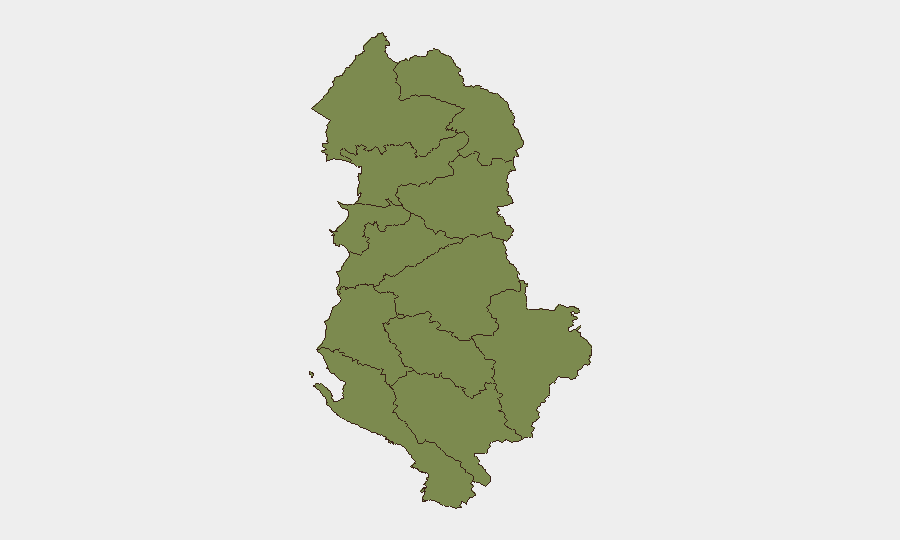
Vlorë County (risk 31.5) dominates the sub-national ranking—a 5.7× multiplier above Tirana—suggesting either persistent organized-crime/trafficking activity, maritime vulnerability, or prior event clustering. Tirana County (5.5) follows as the secondary hotspot due to capital-city soft-target density, diplomatic presence, and political volatility. Elbasan (4.5) and Korçë (2.9) show moderate residual risk, while all remaining counties cluster at 1.5, indicating diffuse baseline risk. The spike in Vlorë warrants specific asset/personnel review for those with operations in the coastal southwest.
How GeoBit Would Assist
Teams with personnel or assets in Albania should activate AOI Monitoring & Early Warning on Tirana and Vlorë counties to detect movement of actors or incident clustering in real time. OSINT Sweep and multi-language social/Telegram monitoring will track Iranian diaspora narratives, opposition coordination, and threat-actor communications. Risk & Threat Assessment coupled with Network & Actor Analysis can map known Iranian opposition figures and their security perimeters to inform duty-of-care posture for co-located staff. Routing & Network Analysis can support contingency planning and alternative travel corridors if unrest spreads to primary transit nodes.
7-Day Outlook
The heightened alert posture will likely persist through the end of the week pending either concrete intelligence resolution or formal Embassy guidance downgrade. Soft-target avoidance and crowd avoidance in Tirana and coastal areas (Vlorë, Durrës) remain prudent. Risk of secondary street-level unrest (opposition activity, nationalist sentiment) remains latent if the narrative framing shifts; monitor opposition party statements and social media sentiment for early signs.
Highest-Risk Areas — Ranked
| # | State / Region | Risk |
|---|---|---|
| 1 | Vlorë County | 31.5 |
| 2 | Tirana County | 5.5 |
| 3 | Elbasan County | 4.5 |
| 4 | Korçë County | 2.9 |
| 5 | Durrës County | 1.5 |
| 6 | Shkodër County | 1.5 |
| 7 | Kukës County | 1.5 |
| 8 | Lezhë County | 1.5 |
| 9 | Dibër County | 1.5 |
| 10 | Fier County | 1.5 |
| 11 | Berat County | 1.5 |
| 12 | Gjirokastër County | 1.5 |
Previous Daily Briefs
A new Albania brief is written every day — each with its own risk map and downloadable CSV. Here's the last week; use the calendar to go further back.
📅 Browse every day by calendar →
Highlighted days have a brief. Tap a day for that day's map & analysis, or “csv” for that day's dataset ($5).