Situation Summary
Australia maintains a composite threat score of 2.4 (rank #59 globally) with 878 tracked events, reflecting a moderate security environment with concentrated regional variance. Recent signals indicate elevated civil-political tension, active cybercrime operations targeting critical infrastructure and cultural institutions, and sustained international cyber-actor activity. The threat environment is characterised by distributed low-to-moderate intensity events rather than acute systemic crisis, but with emerging infrastructure vulnerabilities and data-breach activity requiring operational attention.
Key Developments
- Gold Coast, Queensland (2026-06-03) – Airport IT systems outage caused widespread check-in disruption across domestic and international flights; staff reverted to manual processing, indicating critical infrastructure vulnerability to technical failure and potential cyber exploitation vectors.
- Melbourne, Victoria (2026-06-03) – Hacker group publicly claimed breach of Australian Centre for the Moving Image (ACMI), alleging theft of PII and releasing sample data; elevated risk of identity theft and phishing campaigns against institutional staff, members and partners.
- National cyber threat environment (2026-06-03) – Australian Signals Directorate Annual Cyber Threat Report 2024–25 reiterates "persistent and increasingly sophisticated" threats from state and criminal actors targeting critical infrastructure and government networks, confirming sustained national-level operational risk.
- Canberra, ACT (2026-06-03) – Federal authorities announced development of new national cyber security agency to improve coordination on large-scale attacks; signals institutional restructuring of Australia's security architecture with potential operational impacts for critical infrastructure operators and major corporates.
- Civil-political tension signals (2026-06-01 to 2026-06-03) – Multiple public statements and disapproval signals involving government, parliament, police and media actors; unconventional violence events and arrest/detention activity recorded, indicating elevated domestic friction without clear escalation pattern.
- National travel advisory (ongoing) – Smartraveller maintains "do not travel" status for multiple Middle Eastern states due to regional conflict; Australian personnel in those regions face infrastructure-attack risk and should repatriate while commercial flight availability persists.
- Cybercrime reporting surge (ongoing) – Australian cyber authorities promoting 24/7 hotline and incident-reporting portal in response to high volumes of ransomware, data breaches and online fraud affecting individuals, SMEs and larger organisations nationally.
Highest-Risk Areas
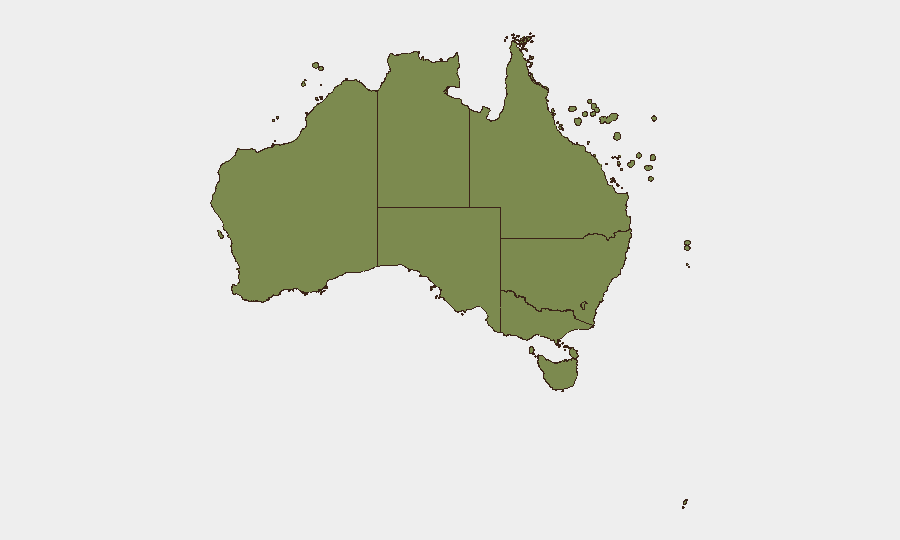
New South Wales dominates sub-national risk at 31.7, followed by Northern Territory (20.7) and Victoria (16.1), collectively accounting for the majority of tracked threat events. NSW's elevated score reflects concentrated civil-political activity, police engagement signals, and likely critical-infrastructure concentration in Sydney and surrounding areas. NT's relatively high score despite smaller population warrants monitoring for specific threat drivers (Indigenous affairs, remote infrastructure vulnerability, or international actor activity). Victoria's risk is driven partly by the ACMI cyber breach and Melbourne's status as a secondary critical-infrastructure hub; remaining states and territories present materially lower composite risk.
How GeoBit Would Assist
Security teams would deploy AOI Monitoring & Early Warning on NSW, NT and Victoria to detect emerging incident clusters and escalation patterns in real time. Intel Sweep and OSINT fusion (including social-media, Telegram and news-source aggregation) would track civil-political sentiment and unconventional-violence signals to anticipate flashpoint timing and location. Cyber threat assessment combined with Shodan and network analysis would map critical-infrastructure vulnerabilities (airports, utilities, government systems) and correlate them with active breach activity and actor reconnaissance patterns.
7-Day Outlook
Near-term trajectory suggests sustained low-to-moderate civil-political friction without imminent escalation, continued opportunistic cybercrime and state-actor reconnaissance, and ongoing critical-infrastructure vulnerability exploitation. Airport and cultural-institution incidents are likely to prompt heightened public scrutiny and potential copycat attacks. Corporate and government cyber-resilience investments and incident-response capability are expected to remain at elevated operational tempo through Q2 2026.
Highest-Risk Areas — Ranked
| # | State / Region | Risk |
|---|---|---|
| 1 | New South Wales | 31.7 |
| 2 | Northern Territory | 20.7 |
| 3 | Victoria | 16.1 |
| 4 | Australian Capital Territory | 8.7 |
| 5 | Western Australia | 5 |
| 6 | Queensland | 3.2 |
| 7 | South Australia | 2.2 |
| 8 | Jervis Bay Territory | 1.8 |
| 9 | Ashmore and Cartier Islands | 1.7 |
| 10 | Tasmania | 1.7 |
| 11 | Coral Sea Islands | 1.7 |