Situation Summary
Bhutan remains one of the world's lowest-risk countries, with no corroborated security incidents, armed conflict, civil unrest, or infrastructure disruption reported in the last 24–48 hours. Government activity continues at routine diplomatic and policy pace, including participation in international climate forums and coordination of overseas citizen safety measures (focused on Middle East exposure, not domestic risk). Current open-source indicators show no spike in violence, crime, or political instability.
Key Developments
- Bhutan National Committee on Middle East Safety (2026-06-08, circulating recent): Government has formed a committee to monitor and protect Bhutanese nationals in the Middle East amid ongoing regional conflict. This is a protective outward measure; no domestic security implications reported.
- Assam–Bhutan Relations (last 24h headline): India–Bhutan ties have progressed positively, with no border tensions, closures, or security incidents flagged in recent coverage. Messaging emphasizes diplomatic cooperation rather than conflict.
- Global Environment Facility Council Meeting (2026-06-08, Samarkand, Uzbekistan): Bhutanese officials participated in the 71st GEF Council Meeting, highlighting Bhutan's climate-action role. Senior government mobility and international engagement remain normal.
- Embassy of India in Bhutan (Thimphu, last 24–48h): Routine diplomatic communication on infrastructure and digital governance cooperation; no security advisories or risk warnings included.
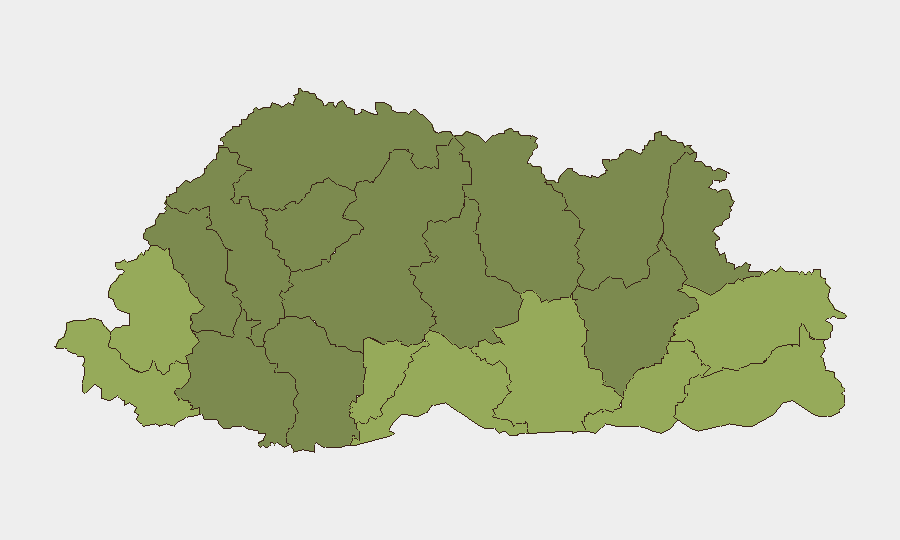
- Sub-National Risk Pattern: GeoBit's sub-national tracking identifies southern border districts (Samtse, Sarpang, Haa) as highest-risk zones, with scores declining northward toward central and northern regions. No acute incidents are attributed to these areas in the current 24–48h window.
- No Corroborated Acute Incidents: Live web research across open sources, social media, and news feeds confirms absence of reliable reports of organized violence, crime spikes, civil unrest, or political instability within Bhutan's borders.
Highest-Risk Areas
Southern border districts—Samtse (risk 58), Sarpang (55), and Haa (52)—rank highest on GeoBit's sub-national matrix, likely reflecting historic cross-border tensions, migration patterns, and geographic exposure to India–Bangladesh dynamics. However, no current incidents are attributed to these zones. Risk scores decline significantly in central and northern districts (Mongar, Gasa, Lhuntse all below 40), suggesting concentration of monitored concern in the south. The absence of flagged events in these zones over the past 48 hours indicates the ranking reflects underlying structural or historical factors rather than active acute threats.
How GeoBit Would Assist
Organizations with people or assets in Bhutan should employ AOI Monitoring & Early Warning capabilities to track the southern border districts (Samtse, Sarpang, Haa) for any uptick in cross-border activity, localized unrest, or infrastructure disruption. Intel Sweep and multi-language OSINT fusion would provide early detection of any emerging political, civil-unrest, or crime signals before they escalate. For expatriate or supply-chain operations, Routing & Network Analysis can identify alternative transit corridors if regional instability were to affect primary routes through India or Bangladesh.
7-Day Outlook
Bhutan's security environment is expected to remain stable over the next week, with no indicators of imminent conflict, unrest, or major disruption. Routine government operations, diplomatic engagement, and low-crime conditions should persist. Monitoring should remain focused on the southern border corridor for any changes in cross-border dynamics or India–Bangladesh regional spillover, though no such developments are currently signaled.
Highest-Risk Areas — Ranked
| # | State / Region | Risk |
|---|---|---|
| 1 | Samtse District | 58 |
| 2 | Sarpang District | 55 |
| 3 | Haa District | 52 |
| 4 | Pemagatshel District | 50 |
| 5 | Samdrup Jongkhar District | 48 |
| 6 | Tsirang District | 45 |
| 7 | Zhemgang District | 42 |
| 8 | Trashigang District | 40 |
| 9 | Mongar District | 38 |
| 10 | Gasa District | 35 |
| 11 | Lhuntse District | 32 |
| 12 | Wangdue Phodrang District | 30 |