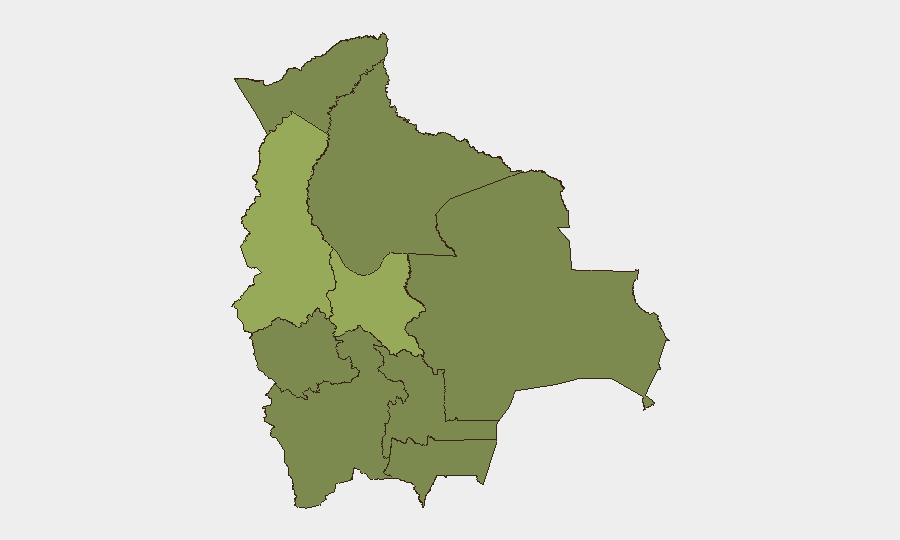
Situation Summary
Bolivia is experiencing its most severe civil unrest in recent years, driven by an economic crisis and coordinated labor strikes that have effectively isolated the capital, La Paz, through nationwide road blockades. Two weeks of sustained action by unions, miners, peasant organizations, and transport workers have created critical shortages of food, fuel, medicines, and medical oxygen in hospitals, while simultaneously escalating into mass demonstrations and confrontations with police. Political volatility is acute: calls for President Rodrigo Paz's resignation—less than six months into his tenure—have hardened, and the government has begun framing the unrest as a destabilization attempt backed by former president Evo Morales and organized crime. The security environment is deteriorating rapidly, with elevated risks to supply chains, movement, detention, and media freedom.
Key Developments
- La Paz – Siege conditions: Road blockades led by COB, miners, and peasant unions have cut the capital off from the rest of the country for two weeks, causing acute shortages of food, fuel, medicines, and hospital oxygen supplies; authorities characterize the situation as a de facto siege.
- La Paz – Mass convergence and escalation: Large-scale protests from unions, miners, transport workers, and rural groups have converged on the capital, resulting in clashes with police, looting, and explicit demands for presidential resignation.
- Western Bolivia – Heightened travel disruption: Official advisories warn of a "heightened security situation," with roadblocks and demonstrations occurring with little notice on major inter-city routes, affecting ground travel and logistics networks.
- Nationwide – Coordinated labor action: Strikes and blockades organized by COB, miners, transport, and rural groups since early May demonstrate sustained, coordinated capacity for prolonged disruption of inter-city transport and supply chains.
- Government narratives: The government has alleged orchestration by Evo Morales and organized crime, framing unrest as a coup attempt; international figures have echoed destabilization rhetoric, adding geopolitical dimensions to the crisis.
- Press freedom deterioration: Reporters Without Borders documented 14 attacks on journalists and media crews over seven days, directly linked to the current polarization and creating information-access risks for organizations monitoring the situation.
- Detention risk: U.S. travel guidance notes that arrests occur during demonstrations and that legal processes can be protracted, particularly for foreigners near protests or roadblocks in La Paz and western departments.
Highest-Risk Areas
La Paz and Cochabamba are the epicenters of risk, with composite scores of 54.2 and 50.8 respectively, reflecting the concentration of political authority, union organizing capacity, and protest activity in these two departments. La Paz specifically faces a perfect storm: it is both the seat of government (making it a focal point for political demands) and the target of blockade action, creating simultaneous risks of civil unrest, supply disruption, and security-force escalation. Cochabamba's elevated ranking reflects its role as a secondary organizing hub for mining and peasant unions and its position on key supply corridors. The remaining departments score uniformly lower (24.2–26.5), indicating that while conditions are tense nationwide, risk concentration is heavily weighted toward the capital and central-western regions.
How GeoBit Would Assist
Organizations with personnel or assets in Bolivia should employ AOI Monitoring & Early Warning on La Paz and western corridor routes to track blockade movements and protest convergence in near-real-time. OSINT fusion across social media, union communications, and local news sources can provide early signals of coordinated action expansion or de-escalation. Routing & Network Analysis capabilities enable security teams to model alternative supply and evacuation routes around active blockades, while conflict event feeds and sentiment analysis monitor shifts in government and protest narratives that may signal imminent escalation or negotiation.
7-Day Outlook
Road blockades and union action are likely to persist or intensify over the next week absent meaningful government concessions on economic relief or austerity reversal. Police and security-force responses to mass protests in La Paz carry elevated risk of further confrontations and potential widening of looting or property damage. The political demand for presidential resignation is unlikely to be met in the short term, prolonging the underlying grievance structure and sustaining conditions for sustained disruption to movement, services, and supply chains.
Highest-Risk Areas — Ranked
| # | State / Region | Risk |
|---|---|---|
| 1 | La Paz | 54.2 |
| 2 | Cochabamba | 50.8 |
| 3 | Potosí | 26.5 |
| 4 | Tarija | 24.2 |
| 5 | Pando | 24.2 |
| 6 | Beni | 24.2 |
| 7 | Oruro | 24.2 |
| 8 | Chuquisaca | 24.2 |
| 9 | Santa Cruz | 24.2 |
Previous Daily Briefs
A new Bolivia brief is written every day — each with its own risk map and downloadable CSV. Here's the last week; use the calendar to go further back.
📅 Browse every day by calendar →
Highlighted days have a brief. Tap a day for that day's map & analysis, or “csv” for that day's dataset ($5).