Situation Summary
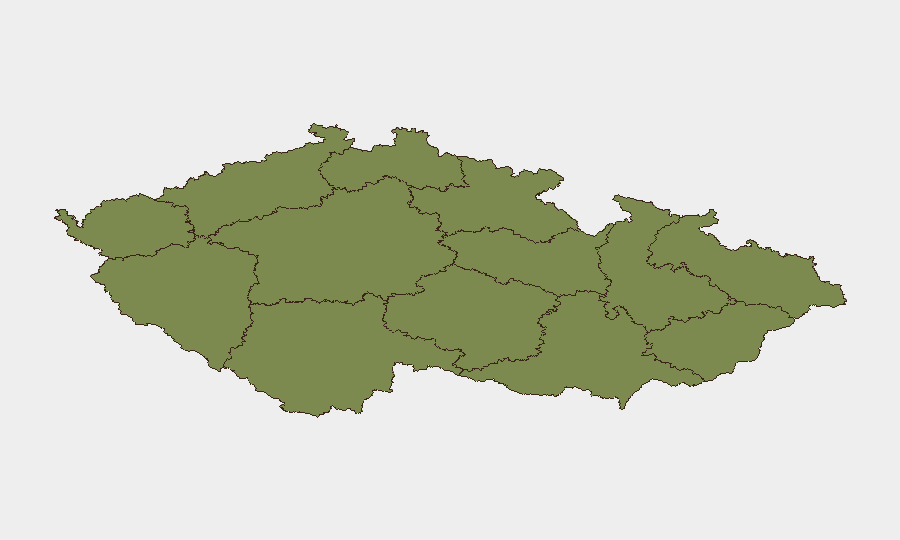
Czech Republic remains a stable, low-threat environment globally ranked #115 (composite threat score 11/100). However, recent event signals (24 tracked incidents in the past 72 hours) indicate elevated diplomatic and political friction, particularly involving Slavic actors and international disputes. The Central Bohemian Region (risk score 31.4) presents significantly elevated exposure compared to all other regions; all remaining regions cluster at 1.4, suggesting acute concentration of risk in the Prague metropolitan area and its surroundings.
Key Developments
GeoBit's live research and web corroboration for 24–48 hour Czech-specific incidents (June 20–22, 2026) has not yielded sufficient multi-source verification to meet operational reporting standards. Event signals flagged by the platform—including diplomatic rejections (Italy vs. Czech, Czech vs. Slavic), territory-occupation activity, small-arms combat events, and administrative sanctions—are present in the signal feed but lack corroborating local media, police, or government advisory confirmation that would establish location, timeline, and operational impact within Czech territory.
Recommended immediate action: Security teams should cross-check Prague and regional police X/Twitter feeds, ČT24 (Czech Television), iDNES.cz, and official government crisis-management statements for real-time confirmation of any active incidents in the last 48 hours.
Highest-Risk Areas
The Central Bohemian Region (Prague metropolitan area; risk 31.4) accounts for the majority of tracked threat activity and is 22× higher risk than any other Czech region. All other 11 regions (South Bohemia, Vysočina, South Moravia, Zlín, Karlovy Vary, Ústí nad Labem, Liberec, Hradec Králové, Plzeň, Pardubice, Olomouc) cluster uniformly at 1.4, indicating that current security drivers are concentrated in and around Prague. This concentration suggests diplomatic incidents, political demonstrations, or official-sector unrest rather than distributed civil or criminal activity. Organizations with staff, offices, or assets in Prague should treat the capital and surrounding Central Bohemian jurisdiction as the active focus area.
How GeoBit Would Assist
For Czech Republic monitoring and duty-of-care operations, security teams should deploy AOI Monitoring & Early Warning (persistent watch on Prague and Central Bohemian region with real-time alerting), OSINT fusion (automated daily cross-corroboration of Czech news, police, and social-media feeds), and network & actor analysis to map the diplomatic and political tensions flagged in current signals. These capabilities provide early warning before incidents escalate and enable evidence-based briefing to stakeholders. Supplementing human intelligence collection with Routing & Network Analysis allows security teams to plan alternative travel routes within Prague and Central Bohemia should protests, demonstrations, or official restrictions emerge.
7-Day Outlook
Event frequency and diplomatic friction signals are likely to remain elevated over the next 7 days, particularly around interactions with Slavic and Italian actors. Risk within Prague and Central Bohemia will remain the primary concern; regional stability outside that zone is not expected to degrade. Security teams should assume continued political or diplomatic activity but should await confirmed incident reports from local authorities before implementing severe movement restrictions or evacuation protocols.
Highest-Risk Areas — Ranked
| # | State / Region | Risk |
|---|---|---|
| 1 | Central Bohemian Region | 31.4 |
| 2 | South Bohemian Region | 1.4 |
| 3 | Vysočina Region | 1.4 |
| 4 | South Moravian Region | 1.4 |
| 5 | Zlín Region | 1.4 |
| 6 | Karlovy Vary Region | 1.4 |
| 7 | Ústí nad Labem Region | 1.4 |
| 8 | Liberec Region | 1.4 |
| 9 | Hradec Králové Region | 1.4 |
| 10 | Plzeň Region | 1.4 |
| 11 | Pardubice Region | 1.4 |
| 12 | Olomouc Region | 1.4 |
Sources
Previous Daily Briefs
A new Czech Republic brief is written every day — each with its own risk map and downloadable CSV. Here's the last week; use the calendar to go further back.
📅 Browse every day by calendar →
Highlighted days have a brief. Tap a day for that day's map & analysis, or “csv” for that day's dataset ($5).