Situation Summary
Denmark remains a low-threat environment globally (rank #136, composite score 6/100) with no verified acute security incidents surfaced in the last 24–48 hours. Risk concentration is heavily skewed toward the Central Denmark Region and Capital Region (Copenhagen), which together account for the majority of tracked event signals; peripheral regions show minimal activity. The overall security posture is stable, with no indicators of imminent escalation in crime, civil unrest, or infrastructure disruption.
Key Developments
No independently verified security, civil-unrest, crime, or acute travel-risk incidents were corroborated in Denmark during the last 24–48 hours. Current open-source and monitoring feeds show no discrete events meeting incident-reporting thresholds for the reporting window.
Highest-Risk Areas
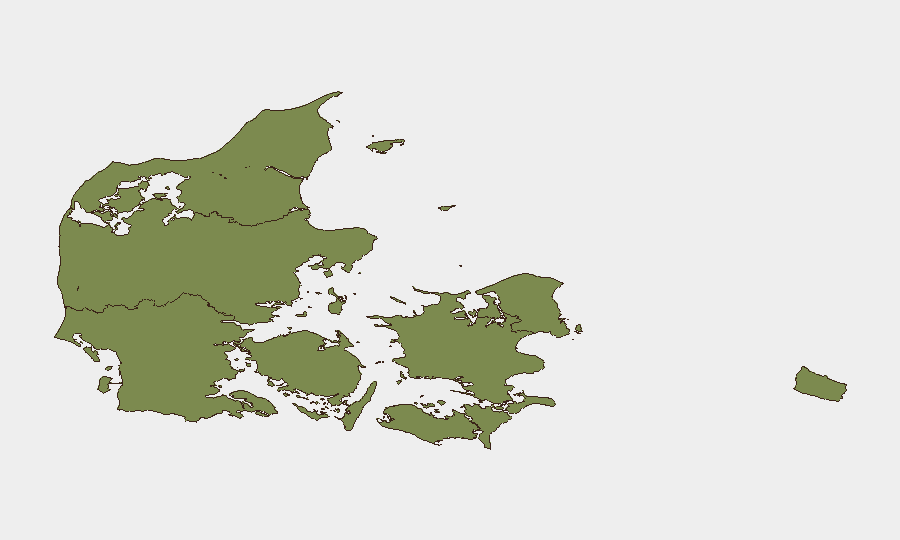
Central Denmark Region and the Capital Region of Denmark (Copenhagen metropolitan area) drive the majority of tracked risk signals, with composite scores of 31.8 and 21.8 respectively. This concentration reflects higher population density, economic activity, and baseline incident frequency in urban centers rather than acute emerging threats. The three remaining regions—Southern Denmark, Zealand, and North Denmark—show minimal risk scores (1.8–2.8) and represent lower-priority monitoring zones for most corporate security operations. Risk in the two leading regions remains within historical norms for a mature Nordic economy.
How GeoBit Would Assist
Intel Sweep & OSINT Fusion would establish baseline event-type definitions and corroboration thresholds specific to Denmark (crime hotspots, transport disruption, labor action, cybercrime indicators), enabling teams to distinguish routine news from material security events. AOI Monitoring & Early Warning on the Capital Region and Central Denmark Region—paired with multi-language X/Twitter, Telegram, and local-media OSINT—would provide 24/7 alerting for emerging civil unrest, demonstrations, transport strikes, or infrastructure incidents affecting employee safety or supply-chain continuity. Routing & Network Analysis would support contingency journey planning for personnel traveling between high-risk urban zones and airports or client sites. Sentiment & temporal analysis of Danish-language social feeds would flag early signs of labor, protest, or security escalation 48–72 hours before mainstream reporting.
7-Day Outlook
No material change in Denmark's low-threat posture is anticipated over the next seven days. Seasonal and economic indicators remain stable. Continuous monitoring of the Central and Capital regions for labor-related transport disruptions (particularly rail and port actions, which can affect supply chains and commuter safety) remains the primary watch priority; corporate teams should maintain standard duty-of-care protocols and pre-positioned contingency routing for any personnel deployed to Copenhagen or Aarhus metropolitan areas.
Next Steps: GeoBit recommends activation of persistent AOI monitoring on both high-risk regions and a Danish-language OSINT watchlist (X, Telegram, local media) set to alert on keywords including labor action, transport disruption, and civil gathering. Contact your analyst to configure alerts.
Highest-Risk Areas — Ranked
| # | State / Region | Risk |
|---|---|---|
| 1 | Central Denmark Region | 31.8 |
| 2 | Capital Region of Denmark | 21.8 |
| 3 | Region of Southern Denmark | 2.8 |
| 4 | Region Zealand | 1.8 |
| 5 | North Denmark Region | 1.8 |
Sources
Previous Daily Briefs
A new Denmark brief is written every day — each with its own risk map and downloadable CSV. Here's the last week; use the calendar to go further back.
📅 Browse every day by calendar →
Highlighted days have a brief. Tap a day for that day's map & analysis, or “csv” for that day's dataset ($5).