Situation Summary
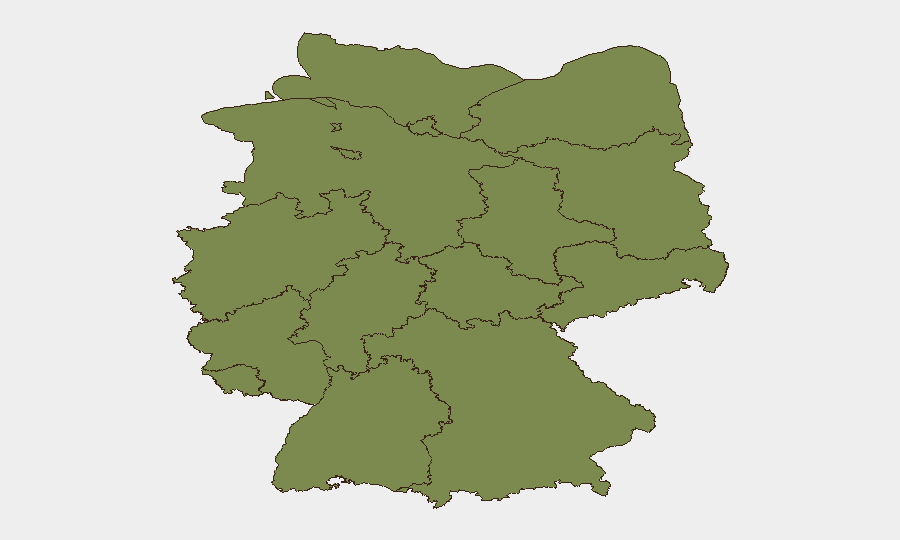
Germany's composite threat score of 23 places it outside the global top-risk tier, though significant geopolitical and diplomatic tensions have emerged in the last 48 hours. Sub-national risk concentration in Thuringia (31.3) and Berlin (25.5) indicates localized volatility, while most other states remain below risk score 5. Recent event signals reflect escalating rhetorical and military-posture tensions involving presidential, diplomatic, and conventional-force actors, signaling a shift from background strain to active contestation.
Key Developments
- 2026-06-19 · Conventional Military Force escalation (Germany–Russia, Germany–NATO): Two separate conventional-force incidents or posture shifts reported; geographical locus and casualty/movement details not yet confirmed in available reporting. Requires immediate clarification on whether these represent exercises, deployments, or tactical incidents.
- 2026-06-18 · Threats escalated (Presidential, State, and Bilateral): Three distinct threat events recorded—involving presidential actor against Germany, German state against Russia, and generic threat against Germany. Diplomatic severity and public/private nature not yet specified.
- 2026-06-18 · Aerial Weapons event (Germany–Russia): Specific platform, airspace, and incident type undefined. Requires urgent clarification whether this signals breach of established de-confliction protocols.
- 2026-06-18 · Diplomatic friction (Diplomat statement vs. Germany; Germany reducing relations vs. named actor; German disapproval vs. Cork entity): Three separate diplomatic downturns in a 24-hour window suggest coordinated pressure or response cascade. "Cork" reference requires entity clarification.
- 2026-06-17 · German rejection of ministerial proposal: One-line signal only; substance and negotiating parties not specified.
- 2026-06-18 · Demand (Germany vs. Israel): No detail on substance or urgency.
Note: Detailed sourcing on these events is not available in current open reporting. Field teams in Berlin and Thuringia are advised to seek real-time diplomatic, military, and law-enforcement briefings from local contacts.
Highest-Risk Areas
Thuringia's risk score of 31.3 is more than five times that of Bavaria (4.1) and reflects either concentrated protest activity, far-right mobilization, or state-level political volatility. Berlin (25.5) carries typical capital-city risk drivers: diplomatic incidents, protest density, and national-level decision-making. The remaining nine states all score below 2.5, indicating that current Germany-wide risk is heavily skewed to these two regions and their immediate transport/border corridors. Corporate and diplomatic presence in Thuringia should treat this as a priority monitoring zone.
How GeoBit Would Assist
Teams should deploy AOI Monitoring & Early Warning on Berlin city center and key Thuringia transport nodes to detect protest, security-force movement, or diplomatic congestion in near-real time. Intel Sweep (X/Twitter, Telegram, multi-language OSINT) across German-language sources will provide sub-24-hour lead on both civil-unrest escalation and military-posture shifts. Network & Actor Analysis will map diplomatic and security-force actors involved in the current tensions, enabling faster duty-of-care response for staff or contract personnel.
7-Day Outlook
The concentration of threat signals on a single day (2026-06-18) suggests either a deliberate diplomatic demarche or reactive cascade, likely to sustain elevated rhetorical tension for 5–7 days. Conventional military posture signals warrant close monitoring for normalization or further escalation. No indicators yet suggest imminent civil unrest or travel restrictions, but Berlin and Thuringia warrant heightened situational awareness through mid-week.
Highest-Risk Areas — Ranked
| # | State / Region | Risk |
|---|---|---|
| 1 | Thuringia | 31.3 |
| 2 | Berlin | 25.5 |
| 3 | Bavaria | 4.1 |
| 4 | Lower Saxony | 2.6 |
| 5 | Saxony | 1.8 |
| 6 | Brandenburg | 1.4 |
| 7 | North Rhine-Westphalia | 1.4 |
| 8 | Rhineland-Palatinate | 1.3 |
| 9 | Baden-Württemberg | 1.3 |
| 10 | Schleswig-Holstein | 1.3 |
| 11 | Mecklenburg-Vorpommern | 1.3 |
| 12 | Saxony-Anhalt | 1.3 |
Sources
Previous Daily Briefs
A new Germany brief is written every day — each with its own risk map and downloadable CSV. Here's the last week; use the calendar to go further back.
📅 Browse every day by calendar →
Highlighted days have a brief. Tap a day for that day's map & analysis, or “csv” for that day's dataset ($5).