Situation Summary
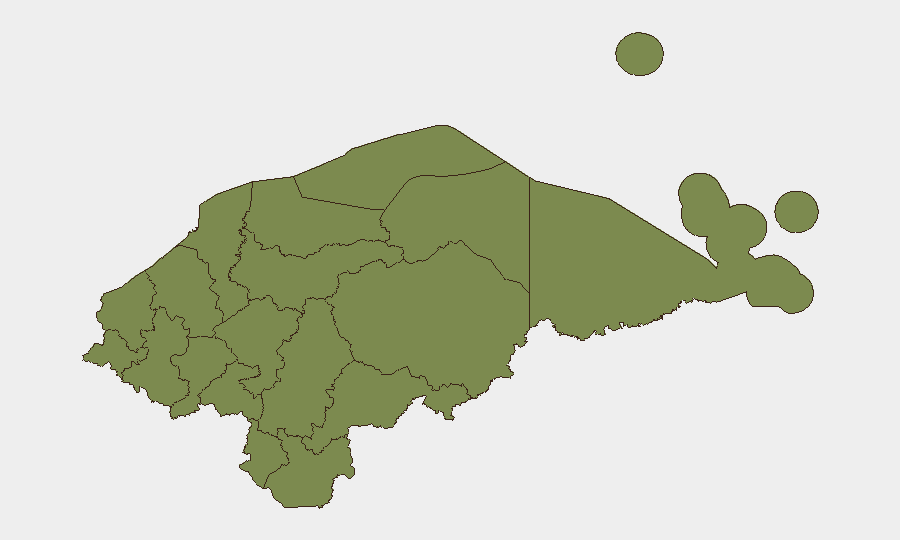
Honduras remains under moderate composite threat (score 18), with security risks heavily concentrated in the northeastern state of Olancho (31.3), which dominates the national threat profile. Three separate diplomatic incidents involving threats toward neighboring Guatemala, El Salvador, and Nicaragua on 10 June signal elevated inter-state tensions, though the operational impact on internal security remains unclear. An arrest/detention event logged on 11 June adds a routine law-enforcement signal. Overall trajectory is stable but regionally fragmented, with Olancho presenting acute risk while most other departments remain low-threat.
Key Developments
- Diplomatic threats, Honduras–Guatemala / Honduras–El Salvador / Honduras–Nicaragua (10 June): Three separate threat incidents recorded across northern and southern borders. Specific operational context not yet clarified in available open reporting; status of any military posturing or trade/migration disputes unknown.
- Arrest/detention event (11 June): One person-of-interest detained. Location, identity, and charge classification not specified in current event data; likely routine law-enforcement action pending additional confirmation.
Note on current reporting: GeoBit's event feed does not currently include detailed location pins, actor identifications, or causal narratives for these incidents. Cross-confirmation with Honduran official police statements, regional news outlets (e.g., *La Prensa*, *El Heraldo*), and diplomatic statements from Guatemala, El Salvador, and Nicaragua will be required to assess operational significance and rule out routine diplomatic posturing.
Highest-Risk Areas
Olancho (risk 31.3) dominates national threat profile—a 5.5× multiple over the next-highest regions. This northeastern department has historically been a contested zone for organized-crime logistics, cattle theft, and armed-group activity. Francisco Morazán (5.6) and Choluteca (5.6), home to the capital Tegucigalpa and southern border zones respectively, carry secondary risk, likely tied to gang presence, port-of-entry crime, and urban violence. All remaining departments score 1.3, indicating either effective security control or lower reporting density. Companies with personnel or supply chains in Olancho or the greater Tegucigalpa area should maintain elevated situational awareness.
How GeoBit Would Assist
Security teams should employ AOI Monitoring & Early Warning configured on Olancho and Tegucigalpa to generate alerts on armed incidents, roadblocks, and gang activity before they affect personnel movements. Parallel use of Intel Sweep (multi-language news, official statements, and X/Telegram OSINT) will disambiguate the 10 June diplomatic incidents and confirm whether they carry travel or asset-protection implications. Routing & Network Analysis can identify alternative supply/personnel routes away from high-risk corridors pending the 7-day outlook.
7-Day Outlook
Diplomatic tensions with three neighboring states warrant close monitoring; if they escalate to border mobilization or economic sanctions, secondary effects (fuel shortages, port delays, checkpoint intensity) could ripple across Honduras within 48–72 hours. Olancho's chronic risk profile is unlikely to shift absent a major security operation or cartel realignment. Expect routine gang-related violence in Cortés (San Pedro Sula) and Francisco Morazán (Tegucigalpa) to continue.
Highest-Risk Areas — Ranked
| # | State / Region | Risk |
|---|---|---|
| 1 | Olancho | 31.3 |
| 2 | Francisco Morazán | 5.6 |
| 3 | Choluteca | 5.6 |
| 4 | El Paraíso | 1.3 |
| 5 | Copán | 1.3 |
| 6 | Ocotepeque | 1.3 |
| 7 | Cortés | 1.3 |
| 8 | Yoro | 1.3 |
| 9 | Santa Bárbara | 1.3 |
| 10 | Lempira | 1.3 |
| 11 | Intibucá | 1.3 |
| 12 | Comayagua | 1.3 |
Sources
Previous Daily Briefs
A new Honduras brief is written every day — each with its own risk map and downloadable CSV. Here's the last week; use the calendar to go further back.
📅 Browse every day by calendar →
Highlighted days have a brief. Tap a day for that day's map & analysis, or “csv” for that day's dataset ($5).