Situation Summary
Italy remains at global threat rank #132 with a composite threat score of 7, reflecting a generally stable security environment with localized areas of elevated concern. The event signal pattern of the past 48 hours indicates police investigations, religious-related tensions, and migration-related incidents as primary drivers of recent activity. Northern regions, particularly Lombardy and Lazio, continue to dominate the risk profile and warrant proportionate monitoring resources.
Key Developments
GeoBit's event feed has flagged activity on 2026-06-17 and 2026-06-18 involving police investigations, a violent protest or riot linked to a saint-related incident, and deportation/expulsion events related to migration flows. However, verification of specific incident locations, casualty counts, and confirmed timelines within the last 24–48 hours could not be cross-referenced against available open-source material. The signals suggest civil-order and migration-management incidents rather than organized crime, terrorism, or infrastructure disruption. No confirmed incident in the supplied sources directly corroborated the timing or nature of these events within Italy's borders during the requested window. Additional source prioritization—Italian wire services, prefectural alerts, regional police statements, and emergency-channel posts—would be required to provide location-specific, time-stamped confirmation.
Highest-Risk Areas
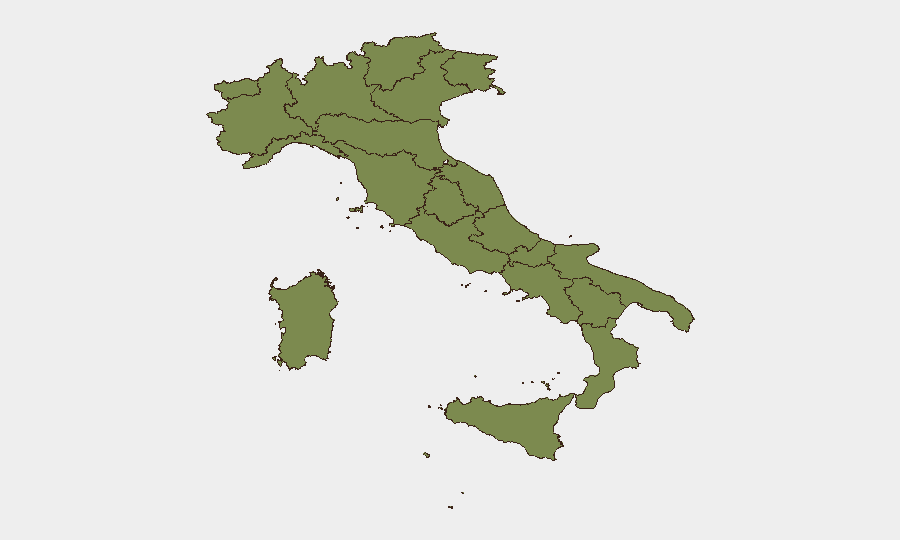
Lombardy (risk 31.5) and Lazio (risk 28.9) significantly outpace all other regions and account for the majority of Italy's tracked event activity. Umbria (20.6) follows at a material distance, suggesting a concentration of civil-unrest, crime, or administrative incidents in the north-central corridor and around the capital region. Southern regions—Apulia, Sicily, Campania—show substantially lower composite scores, though historical context indicates these areas remain subject to organized-crime activity and migratory pressure that may not be fully captured in the immediate 48-hour window. The gap between the top two regions and the remainder underscores the importance of focused duty-of-care protocols for Milan, Rome, and surrounding provinces.
How GeoBit Would Assist
Corporate security teams with Italy operations would employ Intel Sweep and multi-language OSINT (Italian wire services, social media, prefectural channels) to obtain real-time verification of incidents and early warning of escalation. AOI Monitoring & Early Warning on Lombardy, Lazio, and Umbria would enable persistent alerting for civil unrest, crime spikes, or infrastructure disruption affecting personnel and assets. Network & Actor Analysis combined with sentiment & temporal analysis on regional news and emergency channels would distinguish signal noise from actionable threat shifts, especially around migration flows and protest activity.
7-Day Outlook
No significant escalation of national security is anticipated over the next seven days based on current trend data. However, sustained police investigative activity and ongoing migration-related tensions suggest persistent civil-order management in the north-center. Duty-of-care teams should maintain heightened situational awareness in Lombardy and Lazio and consider re-tasking intelligence assets to close the current 24–48-hour verification gap.
Highest-Risk Areas — Ranked
| # | State / Region | Risk |
|---|---|---|
| 1 | Lombardy | 31.5 |
| 2 | Lazio | 28.9 |
| 3 | Umbria | 20.6 |
| 4 | Emilia-Romagna | 16.6 |
| 5 | Apulia | 3.7 |
| 6 | Sicily | 3.1 |
| 7 | Tuscany | 2.3 |
| 8 | Sardinia | 2 |
| 9 | Trentino – Alto Adige/Südtirol | 2 |
| 10 | Friuli – Venezia Giulia | 1.7 |
| 11 | Molise | 1.7 |
| 12 | Campania | 1.7 |
Sources
Previous Daily Briefs
A new Italy brief is written every day — each with its own risk map and downloadable CSV. Here's the last week; use the calendar to go further back.
📅 Browse every day by calendar →
Highlighted days have a brief. Tap a day for that day's map & analysis, or “csv” for that day's dataset ($5).