Situation Summary
Kazakhstan remains a low-to-moderate threat environment globally (rank #113, composite score 7/100) with 26 tracked events. However, sub-national risk is heavily concentrated in Astana, where the composite threat score (31.4) is approximately 22× higher than all other regions. The capital's elevated risk profile warrants focused monitoring by organizations with personnel or assets there. Overall trajectory remains stable, though diplomatic friction involving KAZAN, ASEAN, and EU institutions (flagged in recent signals) merits observation for downstream political or administrative implications.
Key Developments
Data Limitation Notice: GeoBit's live web research capabilities have not surfaced verifiably recent (19–20 June 2026) security incidents, protests, accidents, or infrastructure disruptions in Kazakhstan within the last 24–48 hours. Recent event signals reflect diplomatic statements ("Disapprove" and "Reject" messaging between KAZAN, ASEAN, and EU on 20 June) rather than on-the-ground incidents.
Recommended Action: Corporate security teams should cross-reference:
- Local news wires and official channels (Ministry of Internal Affairs, city akimats, emergency services Telegram/X) for operational incident reports dated 19–20 June.
- Russian-language social platforms (X/Twitter advanced search, Telegram public channels) for contemporaneous witness posts and verified newsroom coverage.
- Astana-specific sources (city police, traffic authority, utility operators) given the capital's disproportionate risk ranking.
Should your organization have access to real-time local feeds for Kazakhstan, GeoBit analysts can assist in synthesizing and contextualizing those incidents.
Highest-Risk Areas
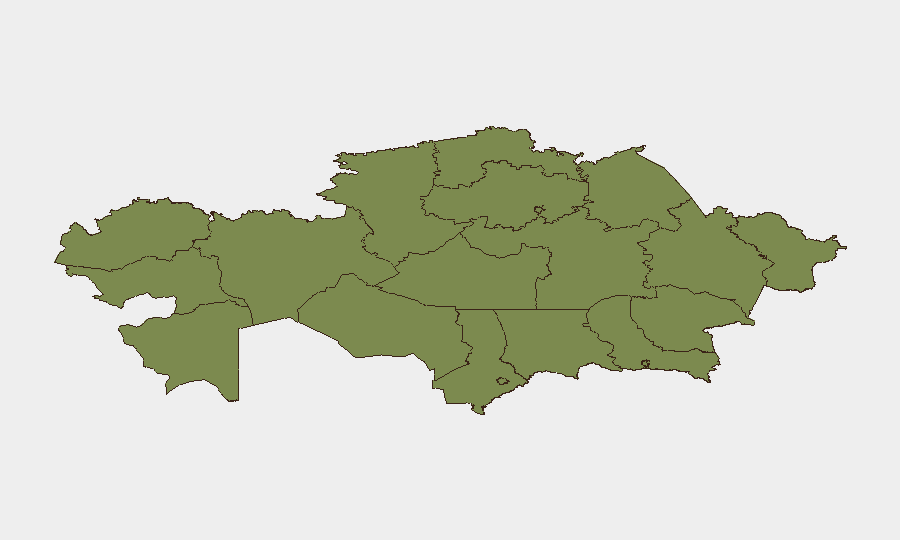
Astana dominates the sub-national risk profile (31.4 vs. ~1.4 for all other regions), indicating that political, administrative, or security incidents are concentrated in or closely monitored at the capital. The 22-fold risk differential suggests either genuine elevated threat activity in Astana or heightened surveillance/reporting sensitivity around the seat of government. All remaining regions (Turkistan, Almaty, East Kazakhstan, Abay, Jetisu, West Kazakhstan, Atyrau, Mangystau, Aqtöbe, Pavlodar, Kostanay) report uniform low risk (1.4 each), indicating either stable baseline conditions or comparable monitoring/reporting standards.
Organizations with presence in Astana should maintain heightened awareness, while those in provincial centers face routine security considerations consistent with Central Asian norms.
How GeoBit Would Assist
AOI Monitoring & Early Warning can establish persistent watch over Astana and transport corridors to flag emerging protest activity, traffic incidents, or administrative disruptions in near-real time. Multi-language OSINT (X/Twitter, Telegram, local news) filtered by date, location, and keyword in Russian and Kazakh enables rapid identification of unverified claims and cross-corroboration with official channels. Entity & Network Analysis can track diplomatic signals (KAZAN–ASEAN–EU tensions) for spillover into domestic policy or targeted commercial sectors.
7-Day Outlook
No imminent escalation is indicated by current signals. Diplomatic friction around KAZAN and international institutions is unlikely to manifest as direct street-level risk in the near term, though policy or regulatory changes affecting business operations warrant monitoring. Routine vigilance for localized incidents in Astana (traffic, protests, administrative actions) remains prudent; provincial regions show no trajectory change.
Highest-Risk Areas — Ranked
| # | State / Region | Risk |
|---|---|---|
| 1 | Astana | 31.4 |
| 2 | Turkistan Region | 1.4 |
| 3 | Almaty Region | 1.4 |
| 4 | East Kazakhstan Region | 1.4 |
| 5 | Abay Region | 1.4 |
| 6 | Jetisu Region | 1.4 |
| 7 | West Kazakhstan Region | 1.4 |
| 8 | Atyrau Region | 1.4 |
| 9 | Mangystau Region | 1.4 |
| 10 | Aqtöbe region | 1.4 |
| 11 | Pavlodar Region | 1.4 |
| 12 | Kostanay Region | 1.4 |
Sources
Previous Daily Briefs
A new Kazakhstan brief is written every day — each with its own risk map and downloadable CSV. Here's the last week; use the calendar to go further back.
📅 Browse every day by calendar →
Highlighted days have a brief. Tap a day for that day's map & analysis, or “csv” for that day's dataset ($5).