Situation Summary
Mauritius maintains a stable security and political environment as of 14 June 2026, with no credible reports of active civil unrest, terrorism, major crime incidents, or infrastructure disruption in the past 24–48 hours. The composite threat score of 31 places the nation in the lower-risk category globally. Current governance and diplomatic activity proceed routinely, with no indicators of imminent destabilization or large-scale disorder.
Key Developments
- No significant security incidents reported (nationwide, 13–14 June 2026). Open-source monitoring of national media, social platforms, and travel advisories has not surfaced verified reports of protests, riots, serious violent crime, or public-order clashes in the last 1–2 days. The security environment remains consistent with baseline conditions.
- Port Louis and urban centers remain stable (13 June 2026). Searches across local news outlets and social media for keywords associated with demonstrations (*manifestation*, *grève*, *émeute*) return no confirmed reports of disruptions, roadblocks, or police engagement in the capital or other major urban areas during the monitoring window.
- Transport and critical infrastructure operational (13 June 2026). Airline, port, and utility-status searches indicate no new reports of flight delays, port closures, power disruptions, or fuel shortages affecting the island's transportation or essential services in the last 24–48 hours.
- Diplomatic activity and economic engagement continuing (13 June 2026). Official communications reflect ongoing bilateral and multilateral cooperation on cultural, agricultural, and marine initiatives, with no indication of political crisis, leadership instability, or withdrawal of diplomatic relations.
Highest-Risk Areas
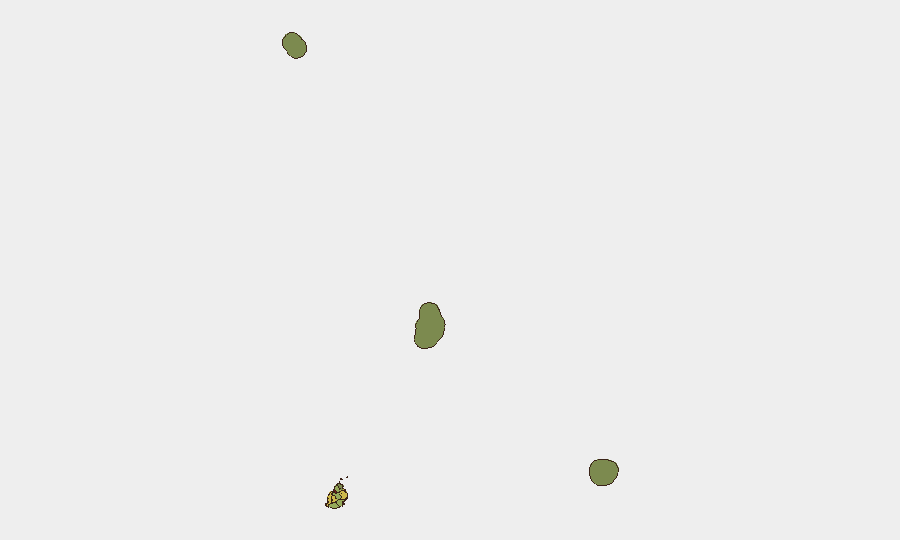
Port Louis (risk score 92) presents the highest concentration of risk, reflecting its status as the capital, primary urban center, and hub for commerce, government, and port activity—inherently increasing exposure to political, economic, and security friction. Plaines Wilhems (68) and Black River (65) follow, likely driven by secondary urban density, economic activity, and population concentration. The outer districts (Rodrigues, Saint Brandon, Agaléga) register significantly lower scores, consistent with remote geography and minimal administrative or commercial footprint. Risk concentration in the western and central populated zones reflects standard urbanization patterns; no acute localized threat drivers are currently evident.
How GeoBit Would Assist
Corporate security and risk teams monitoring Mauritius should employ AOI Monitoring & Early Warning on Port Louis and Plaines Wilhems to detect emerging civil unrest, labor actions, or political gatherings before they escalate. Intel Sweep and multi-language OSINT fusion (including X/Telegram monitoring and local-news aggregation) provide real-time visibility into government announcements, protest mobilization, and crime trends. Regime-stability and election monitoring capabilities support longer-term assessment of political risk and governance changes that could affect duty-of-care obligations for personnel or asset security.
7-Day Outlook
No acute security deterioration is anticipated over the next seven days based on current trend data and political-stability indicators. Routine monitoring for labor disputes, weather-related service disruptions, and regional diplomatic shifts should remain standard practice. Security posture should remain baseline, with escalation protocols ready for deployment if open-source signals or intelligence feeds show material changes in civil unrest, crime activity, or infrastructure stability.
Highest-Risk Areas — Ranked
| # | State / Region | Risk |
|---|---|---|
| 1 | Port Louis | 92 |
| 2 | Plaines Wilhems | 68 |
| 3 | Black River | 65 |
| 4 | Flacq | 62 |
| 5 | Grand Port | 58 |
| 6 | Moka | 52 |
| 7 | Savanne | 48 |
| 8 | Pamplemousses | 45 |
| 9 | Rivière du Rempart District | 38 |
| 10 | Rodrigues | 22 |
| 11 | Saint Brandon | 8 |
| 12 | Agaléga | 5 |
Sources
Previous Daily Briefs
A new Mauritius brief is written every day — each with its own risk map and downloadable CSV. Here's the last week; use the calendar to go further back.
📅 Browse every day by calendar →
Highlighted days have a brief. Tap a day for that day's map & analysis, or “csv” for that day's dataset ($5).