Situation Summary
Morocco remains a stable, lower-risk jurisdiction with a composite threat score of 11 (global rank #95) and no major active conflicts or widespread civil unrest reported in the past 24–48 hours. Open-source monitoring shows routine activity and event-related crowding associated with international sporting fixtures, but no verified security incidents, protests, or armed clashes. The overall security environment is assessed as calm, though sub-national disparities in risk—particularly in the southeast—warrant continued monitoring of personnel and asset locations.
Key Developments
- No major security incidents verified in the past 24–48 hours. Open-source search, social-media OSINT, and news feeds show no reported terrorism, armed violence, civil unrest, or crime spikes in Moroccan cities or border regions. Routine law-enforcement and administrative activity continues.
- Sporting event activity ongoing. International football tournament coverage and fan engagement in the period 4–5 July 2026 involves Morocco-adjacent audience participation; no associated stadium violence, crowd disorder, or security breaches are documented in current reporting.
- Platform event-detection signals show mixed low-level administrative and protest-related activity. Recent signal keywords (arrest, rejection by authorities, unconventional violence, public statements) appear scattered and unconfirmed by independent news sources; corroboration and severity assessment remain pending.
Highest-Risk Areas
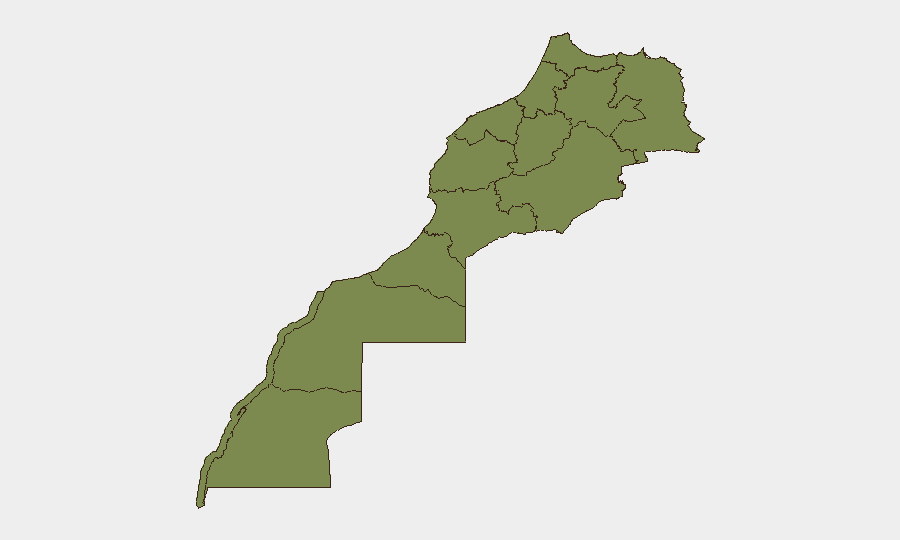
Drâa-Tafilalet in the southeast dominates Morocco's sub-national risk profile, with a composite score of 31.4—substantially higher than all other regions (next highest: Rabat-Salé-Kénitra at 3.6). This disparity reflects historical activity related to terrorist recruitment networks, cross-border trafficking, and remote-area governance challenges. Rabat-Salé-Kénitra (capital region) and Fez-Meknes carry moderate baseline risks typical of large urban centers with mixed migrant and transient populations. All other regions, including Western Sahara and southern disputed territories, score at or below 1.4, indicating low operational threat density relative to national average.
For duty-of-care planning: personnel and high-value assets in Drâa-Tafilalet require elevated monitoring protocols. Capital-region operations should maintain standard urban security hygiene. Remote southern and eastern border zones present low near-term risk but warrant contingency awareness given geographic isolation.
How GeoBit Would Assist
Intel Sweep & OSINT Fusion across news, social platforms, and regional feeds would provide 24-hour monitoring of protest activity, security-force movements, and emerging actor statements—allowing early detection of destabilization signals before they escalate. Area-of-Interest (AOI) Monitoring anchored on Drâa-Tafilalet, border crossing points, and major urban centers would generate automated alerts on crowd movements, checkpoints, or unconventional violence, reducing response latency for at-risk teams. Network & Actor Analysis would map known terrorist-recruitment and trafficking networks historically active in the southeast, enabling risk-profiling of personnel travel and supply-chain routing through flagged zones.
7-Day Outlook
No escalation is forecast in the near term. Morocco's security apparatus remains stable, and international engagement (sporting events, trade, diplomatic activity) is proceeding normally. Monitoring should remain routine but persistent, with particular focus on Drâa-Tafilalet for any uptick in cross-border trafficking, detention activity, or remote-area incidents that might signal changing sub-national dynamics.
Highest-Risk Areas — Ranked
| # | State / Region | Risk |
|---|---|---|
| 1 | Drâa-Tafilalet | 31.4 |
| 2 | Rabat-Salé-Kénitra | 3.6 |
| 3 | Fez-Meknes | 1.8 |
| 4 | Marrakech-Safi | 1.8 |
| 5 | Western Sahara | 1.4 |
| 6 | Laâyoune-Sakia El Hamra | 1.4 |
| 7 | Guelmim-Oued Noun | 1.4 |
| 8 | Casablanca-Settat | 1.4 |
| 9 | Dakhla-Oued Ed-Dahab | 1.4 |
| 10 | Béni Mellal-Khénifra | 1.4 |
| 11 | Tangier-Tetouan-Al Hoceima | 1.4 |
| 12 | Oriental | 1.4 |
Sources
Previous Daily Briefs
A new Morocco brief is written every day — each with its own risk map and downloadable CSV. Here's the last week; use the calendar to go further back.
📅 Browse every day by calendar →
Highlighted days have a brief. Tap a day for that day's map & analysis, or “csv” for that day's dataset ($5).
Atlas — our AI intelligence desk — emails them this snapshot personally. Nothing else, no list.