Situation Summary
Russia remains in the #12 global threat position (score 94.1), with active war as the primary driver. The security environment is characterized by sustained high-intensity conflict with Ukraine, ongoing Ukrainian strikes on Russian rear logistics and energy infrastructure, and heightened internal security controls across major urban centers. The trajectory indicates continued securitization, isolation from the West, and elevated risk of arbitrary detention for foreigners alongside persistent vulnerability of critical infrastructure in regions adjacent to Ukraine and along major supply lines.
Key Developments
- Moscow (nationwide) – U.S. State Department maintains "Do Not Travel" advisory; Russian authorities expanding use of espionage and "fake news" charges against foreigners and dual nationals, with multiple U.S. citizens designated wrongfully detained.
- Volgograd and Yaroslavl regions – Ukrainian long-range strikes on Volgograd refinery and Yaroslavl logistics facility causing fires and shutdowns; shadow-fleet tanker and product-oil depot also struck, disrupting military fuel supply chains.
- Crimea and southern Russia – Ukrainian drone and missile campaigns targeting logistics hubs and transport routes within 150 km behind Russian lines; sustained pressure on land corridor and rear logistics degrading resupply capacity.
- Belgorod, Kursk, Rostov border regions – Cross-border drone, missile, and air-defense activity continuing; elevated spillover risk to critical transport and energy infrastructure in border oblasts.
- Moscow, Saint Petersburg – FSB enforcement of wartime censorship laws and detention of individuals accused of discrediting the army or spreading "false information"; heightened surveillance and politically motivated arrest risk.
- NATO border areas (Baltic, western Russia) – Russian gray-zone tactics, aggressive air/naval maneuvers, and nuclear signaling sustaining low-probability, high-impact risk of Russia–NATO incident or miscalculation.
- Nationwide – Analysts assess prolonged securitization and war-time political economy will drive unpredictable regulatory changes, asset seizures, and further restrictions on foreign companies and NGOs.
Highest-Risk Areas
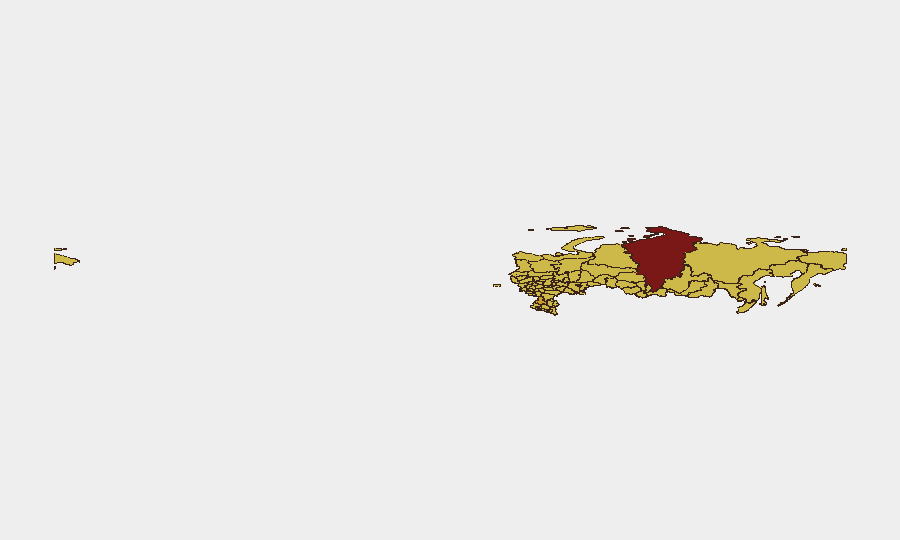
Moscow dominates the sub-national ranking (95.9), driven by its role as the political and security hub where detention risk, surveillance, and arbitrary enforcement are most acute. The second-tier cluster—Krasnoyarsk Krai (88), Rostov (71.5), and Saint Petersburg (68.4)—reflects mixed exposure: Krasnoyarsk as a key war-economy logistics and energy node; Rostov and adjacent border regions as active conflict zones with cross-border strike and spillover risk. The concentration of risk in Moscow, plus the border oblasts and energy-infrastructure regions, mirrors the geographic footprint of both Ukrainian targeting and Russian internal-security expansion.
How GeoBit Would Assist
Teams operating in Russia would deploy AOI Monitoring & Early Warning on Moscow and border regions (Kursk, Rostov, Belgorod) to track drone strikes, military movements, and security sweeps in near-real time. OSINT Fusion across X/Telegram, local media, and radio SIGINT would provide early signals of arbitrary detention campaigns, regulatory changes, and supply-chain disruptions before they impact personnel or assets. Battle Mapping and Conflict Intelligence, combined with Routing & Network Analysis, would enable alternative-route planning for logistics and personnel movement around strike zones and checkpoints.
7-Day Outlook
Ukrainian strikes on energy and logistics infrastructure are expected to continue across southern and central regions through the near term. Internal-security enforcement in major cities will likely remain elevated and unpredictable. No significant de-escalation in the Russia–Ukraine conflict is anticipated, maintaining sustained pressure on border regions and rear logistics corridors.
Highest-Risk Areas — Ranked
| # | State / Region | Risk |
|---|---|---|
| 1 | Moscow | 95.9 |
| 2 | Krasnoyarsk Krai | 88 |
| 3 | Rostov Oblast | 71.5 |
| 4 | Saint Petersburg | 68.4 |
| 5 | Dagestan | 67.8 |
| 6 | Astrakhan Oblast | 67.7 |
| 7 | Tver Oblast | 67.6 |
| 8 | Saratov Oblast | 67.6 |
| 9 | Novosibirsk Oblast | 67.2 |
| 10 | Kaliningrad | 67 |
| 11 | Kamchatka Krai | 66.7 |
| 12 | Kursk Oblast | 66.7 |
Sources
Previous Daily Briefs
A new Russia brief is written every day — each with its own risk map and downloadable CSV. Here's the last week; use the calendar to go further back.
📅 Browse every day by calendar →
Highlighted days have a brief. Tap a day for that day's map & analysis, or “csv” for that day's dataset ($5).