Situation Summary
Belarus remains a structurally controlled, low-acute-incident environment with no verified security incidents, civil unrest, or infrastructure failures reported in the last 24–48 hours. The country maintains its composite threat ranking of #120 globally with 38 tracked events. Persistent structural repression and documented human-rights violations continue as an enduring political issue, but no new on-the-ground trigger events have emerged to alter the near-term security trajectory.
Key Developments
- No acute security incidents detected (nationwide, 16–18 June 2026). Structured OSINT monitoring across English-language news, social media, and open sources confirms absence of attacks, major protests, border clashes, or critical infrastructure failures during this 48-hour window.
- European Parliament resolution on human-rights violations (18 June 2026, Minsk/national). The EU body issued a statement condemning ongoing repression, torture allegations, incommunicado detention, and misuse of anti-terrorism laws within Belarus. This reflects persistent structural conditions rather than a discrete new incident.
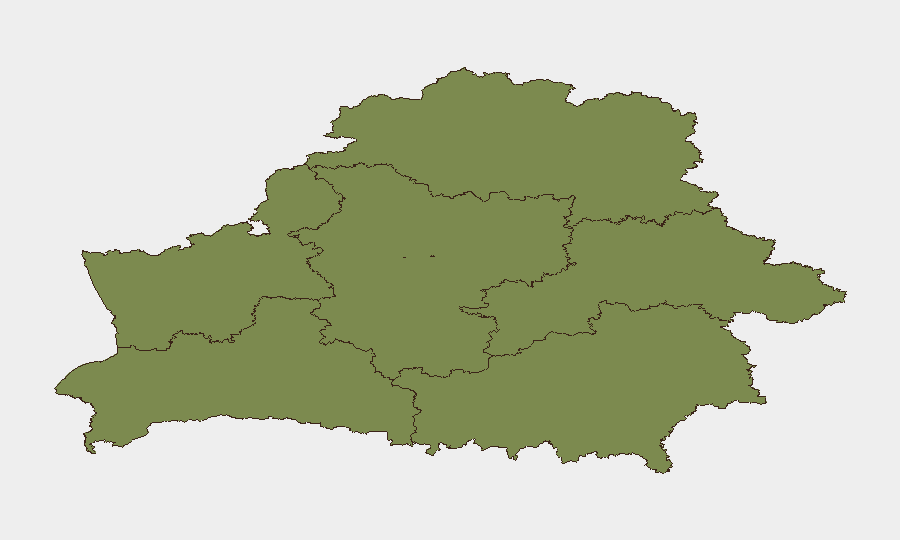
- Minsk Region elevated risk profile continues (composite risk 31.4). The capital region remains the country's dominant risk driver, though no specific new events have been time-stamped to the last 24–48 hours. Risk elevation reflects cumulative political, governance, and security factors rather than acute developments.
- Stability maintained across secondary regions. Vitsebsk, Hrodna, Brest, Mahilyow, and Homyel regions report composite risk scores of 1.4 each, indicating minor or diffuse threat activity with no fresh incidents in the evaluation window.
- Burundian/refugee diplomatic statement activity (17 June 2026). Two public statements involving refugee and Burundian actors were recorded on 17 June; no escalation or on-the-ground security impact has been confirmed as of 18–19 June.
Highest-Risk Areas
Minsk Region (risk 31.4) drives the national risk profile by a significant margin, reflecting concentration of political control mechanisms, security apparatus activity, and governance-related volatility in and around the capital. Minsk city itself (risk 4.3) carries material but substantially lower risk than its surrounding region, suggesting that regional administrative and security infrastructure outside the capital center generates elevated exposure. Secondary regions (Vitsebsk, Hrodna, Brest, Mahilyow, Homyel) all register at 1.4, indicating diffuse or minor threat activity, likely tied to border proximity, logistical activity, or scattered local governance issues rather than acute conflict or unrest.
How GeoBit Would Assist
Security teams operating or holding assets in Belarus should deploy AOI Monitoring & Early Warning on Minsk Region and Minsk city to capture emerging civil unrest, protest activity, or regime-stability shifts in real time. Intel Sweep and OSINT fusion (multi-language search, X/Twitter and Telegram monitoring, sentiment analysis) provide early detection of political rhetoric, sanctions developments, or repression escalation before they manifest as travel restrictions or asset access denial. Regime-stability and network-actor analysis help corporate teams track leadership changes, security-apparatus reorganization, or shifts in enforcement patterns that could affect business continuity or personnel safety.
7-Day Outlook
No acute incidents are forecast for the 19–25 June period based on current trajectory and absence of visible trigger-event buildup. Structural repression and political tension will likely persist as baseline conditions, but near-term acute security risk remains low absent external shocks (e.g., significant EU/US policy shifts, regional border escalation, or major domestic political catalyst). Duty-of-care teams should maintain standard monitoring protocols and contingency planning for Minsk Region.
Highest-Risk Areas — Ranked
| # | State / Region | Risk |
|---|---|---|
| 1 | Minsk Region | 31.4 |
| 2 | Minsk | 4.3 |
| 3 | Vitsebsk Region | 1.4 |
| 4 | Hrodna Region | 1.4 |
| 5 | Brest Region | 1.4 |
| 6 | Mahilyow Region | 1.4 |
| 7 | Homyel Region | 1.4 |
Sources
Previous Daily Briefs
A new Belarus brief is written every day — each with its own risk map and downloadable CSV. Here's the last week; use the calendar to go further back.
📅 Browse every day by calendar →
Highlighted days have a brief. Tap a day for that day's map & analysis, or “csv” for that day's dataset ($5).