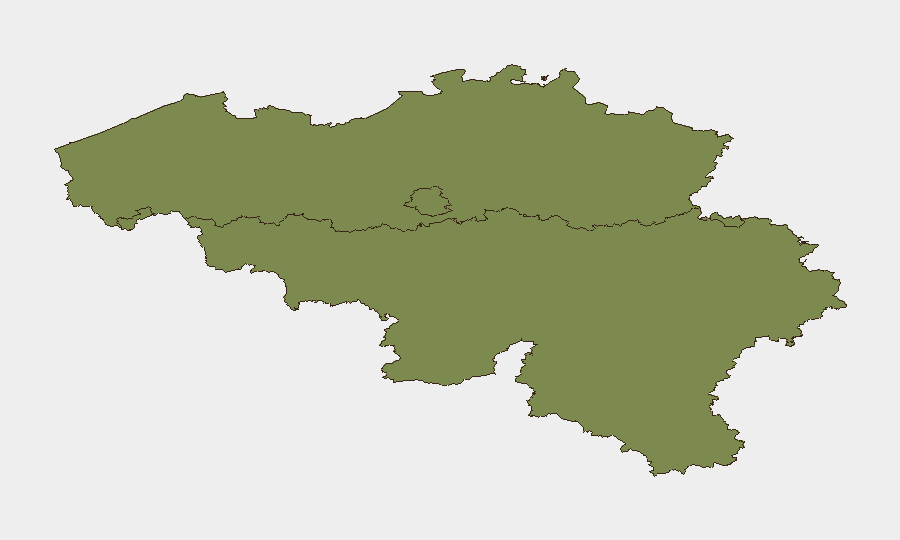
Situation Summary
Belgium's composite threat score of 19 places it in the lower-to-middle risk band globally, but regional concentration is pronounced: Brussels-Capital (31.3) and Flanders (27.9) drive national risk, while Wallonia remains significantly lower (1.3). Recent signal activity reflects fragmented tensions—religious institutional scrutiny, migration-related rhetoric, EU–Ukraine diplomatic friction—rather than a unified security crisis. Immediate operational threats remain contained but warrant focused monitoring in high-risk urban centers.
Key Developments
- Brussels, 21 July 2026 – Brussels Fire Brigade announced a strike action on Belgian National Day to protest staffing shortages and workload; minimum service will be maintained.
- Antwerp, early 19 July 2026 – A fatal shooting occurred outside a nightclub; prosecutors issued a warrant for one suspect.
- Antwerp (Jewish neighborhood, Lamorinièrestraat), 17 July 2026 – A suspect allegedly threatened pedestrians with an emergency hammer; military intervention occurred. *Single-source report; independent corroboration recommended.*
- Belgium (national), 18–20 July – Investigation signals tied to institutional clergy matters; student-related disapproval noted; Belgium-EU relations showed rejection signals on migration/asylum framing.
- Brussels, 21 July 2026 – Ukrainian and Brussels-level actors exchanged disapproval signals; concurrent European administrative sanctions announced.
Highest-Risk Areas
Brussels-Capital dominates risk (31.3), driven by diplomatic friction, institutional scrutiny, and concentrated population density. Flanders (27.9) reflects both Brussels proximity and secondary urban/suburban density (Antwerp shooting, hammer threat), coupled with sectarian and migration-rhetoric signals. Wallonia (1.3) shows minimal tracked event activity and lower operational threat. Corporate teams should prioritize Brussels for diplomatic/institutional risk and Antwerp for street-level incident vigilance; Wallonia operations face lower near-term exposure.
How GeoBit Would Assist
Intel Sweep & OSINT Fusion would cross-corroborate fragmented signals (clergy investigations, migration rhetoric, Ukraine–Brussels tension) to determine whether incidents reflect coordinated activity or isolated events. AOI Monitoring & Early Warning applied to Brussels-Capital and Antwerp would provide persistent watch on public gatherings, transport hubs, and diplomatic venues, with alerting on accumulating hostile rhetoric or assembly indicators. Network & Actor Analysis would map relationships between clergy-institution actors, migration-advocacy networks, and any emerging radicalization vectors, enabling duty-of-care teams to anticipate secondary targeting or reputational exposure.
7-Day Outlook
Belgium is unlikely to see a sharp security escalation in the next 7 days; current signals reflect ongoing institutional and diplomatic friction rather than acceleration toward violence. However, the Brussels firefighters' strike (21 July) may create operational gaps in emergency response, and continued Antwerp-area street violence or harassment could sustain public unease. Teams should maintain heightened situational awareness in Brussels and Antwerp through late July and remain alert to any convergence of protest activity, immigration rhetoric, or institutional crises that could amplify risk regionally.
Highest-Risk Areas — Ranked
| # | State / Region | Risk |
|---|---|---|
| 1 | Brussels-Capital | 31.3 |
| 2 | Flanders | 27.9 |
| 3 | Wallonia | 1.3 |
Previous Daily Briefs
A new Belgium brief is written every day — each with its own risk map and downloadable CSV. Here's the last week; use the calendar to go further back.
📅 Browse every day by calendar →
Highlighted days have a brief. Tap a day for that day's map & analysis, or “csv” for that day's dataset ($5).
Atlas — our AI intelligence desk — emails them this snapshot personally. Nothing else, no list.