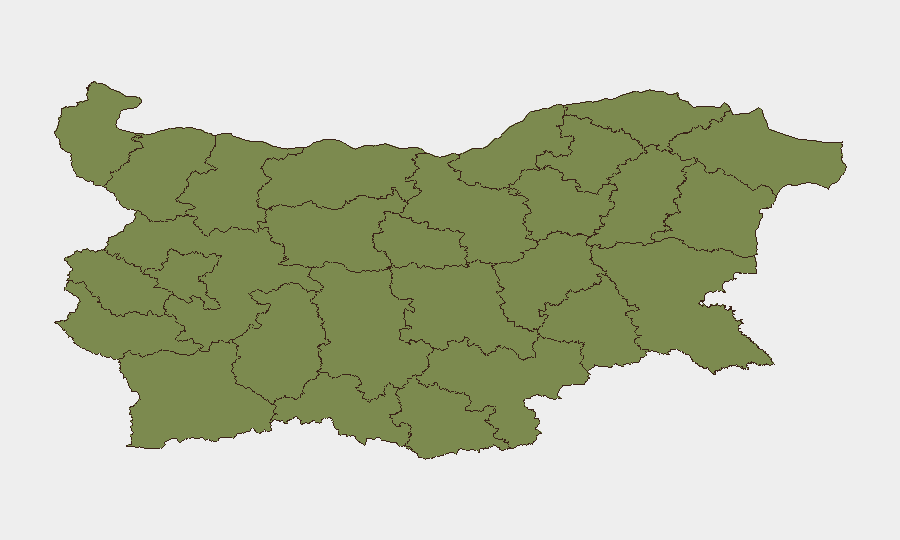
Situation Summary
Bulgaria maintains a stable security and civil-order environment with no verified acute incidents in the last 24–48 hours. The composite threat score of 7 (rank #121 globally) reflects historical and baseline vulnerabilities rather than active escalation. Open-source monitoring and local reporting indicate no new protests, infrastructure disruptions, significant crime spikes, or travel-risk changes in the reporting window.
Key Developments
No verified security incidents meeting incident-classification criteria occurred in Bulgaria during the last 24–48 hours. Open-source search, news wire monitoring, and social-media OSINT identified routine consular updates and political commentary on draft-budget proposals, but no discrete events (protests, assaults, disruptions, or travel warnings) that would constitute actionable security developments for corporate duty-of-care teams.
Historical context (not current): Pressure on independent journalists was documented around recent election cycles; the planned 2026 budget includes proposed changes to oversight of secret-police files—a policy matter, not an incident.
Highest-Risk Areas
Gabrovo Province (risk 31.8) drives Bulgaria's composite threat profile and is the clear outlier in the sub-national ranking, with risk nearly 17 times higher than the second-ranked area. Sofia-City (19.3) carries significant urban-concentration risk typical of capital regions. All remaining provinces cluster below 2.8, indicating that acute threat concentration is heavily localized to Gabrovo and, to a lesser extent, Sofia. The marked disparity suggests that Gabrovo warrants persistent monitoring and heightened asset/personnel precautions, while remainder-of-country risk remains comparatively routine.
How GeoBit Would Assist
Corporate security teams with personnel or assets in Bulgaria—particularly in Gabrovo and Sofia—should employ Area-of-Interest (AOI) Monitoring with alerting to detect emerging unrest, crime spikes, or infrastructure incidents in near-real time. Intel Sweep and multi-language news/social OSINT provide continuous baseline updates on political stability, judicial actions, and labor disputes that could escalate. Risk & Threat Assessment and early-warning prediction enable duty-of-care teams to anticipate seasonal volatility, electoral disruption, or cross-border spillover from regional instability.
7-Day Outlook
No near-term escalation is signaled in current open-source reporting. Standard seasonal and political rhythms are expected; continued monitoring of Gabrovo's risk drivers (organized crime, informal governance, or resource disputes) and Sofia's urban volatility (protests, labor actions) remains prudent. Regional developments (Balkans instability, NATO posture shifts, refugee/migrant flows) could create indirect secondary effects, warranting persistent cross-border awareness.
Report Date: 28 June 2026
Confidence: High (negative finding supported by broad OSINT sweep)
Next Update: 29 June 2026
Highest-Risk Areas — Ranked
| # | State / Region | Risk |
|---|---|---|
| 1 | Gabrovo | 31.8 |
| 2 | Sofia-City | 19.3 |
| 3 | Plovdiv | 2.8 |
| 4 | Yambol | 1.8 |
| 5 | Kardzhali | 1.8 |
| 6 | Haskovo | 1.8 |
| 7 | Burgas | 1.8 |
| 8 | Vidin | 1.8 |
| 9 | Pernik | 1.8 |
| 10 | Kyustendil | 1.8 |
| 11 | Montana | 1.8 |
| 12 | Vratsa | 1.8 |
Sources
Previous Daily Briefs
A new Bulgaria brief is written every day — each with its own risk map and downloadable CSV. Here's the last week; use the calendar to go further back.
📅 Browse every day by calendar →
Highlighted days have a brief. Tap a day for that day's map & analysis, or “csv” for that day's dataset ($5).