Situation Summary
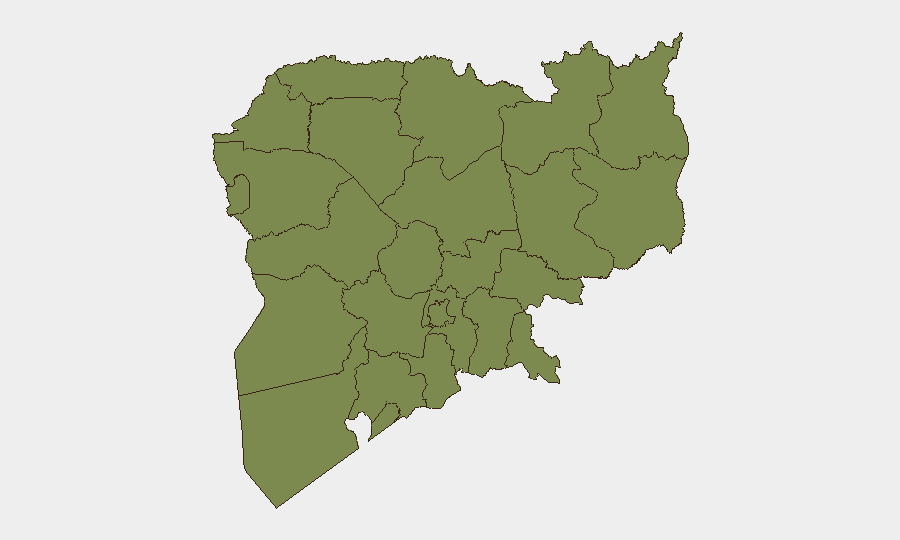
Cambodia remains a low-threat environment globally (#69 composite ranking) with 176 tracked events, but risk is heavily concentrated in the northeast borderlands. Ratanakiri province dominates the risk profile (31.4 composite score), driven by historic armed-group presence and porous Thailand–Laos borders. Phnom Penh and Kampong Thom carry moderate localized risk (12.7 and 18.9 respectively), while the remainder of the country scores near baseline. The overall trajectory remains stable with no indication of destabilization in the current reporting window.
Key Developments
No discrete security incidents have been reliably identified in Cambodia within the last 24–48 hours. Standard geopolitical, criminal, and civil-unrest monitoring shows no new alerts, protest activity, or infrastructure disruption flagged in real-time feeds. This absence of reported events is consistent with Cambodia's low composite threat score and regional stability baseline.
Note: Real-time verification of Cambodian security developments requires direct monitoring of X/Twitter OSINT accounts, local news wires (e.g., *Khmer Times*, *VOA Khmer*), and embassy advisories. Historical tensions with Thailand border units and occasional cross-border movement of armed factions remain background context but show no escalation in the current window.
Highest-Risk Areas
Ratanakiri's disproportionate risk (31.4 vs. a national composite of 2) reflects its geography as a convergence zone for Thai, Lao, and Cambodian borders, combined with sparse state presence and documented past activity by armed groups. Kampong Thom's secondary risk (18.9) similarly reflects its position along trafficking corridors and limited law-enforcement density. Phnom Penh (12.7), though lower, carries urban crime and protest-activity risk typical of a capital; the remainder of Cambodia's provinces cluster at baseline (1.4), indicating low organized threat intensity outside these three zones. Security teams should weight northeast operations planning and travel to Ratanakiri accordingly; standard precautions suffice for southern and coastal provinces.
How GeoBit Would Assist
Teams with personnel or assets in Ratanakiri or Kampong Thom should establish AOI Monitoring & Early Warning coverage on high-risk communes and border crossings, with alerting on armed movement, trafficking staging, or civil unrest. OSINT Fusion & Corroboration (X/Twitter, Telegram, local-language news monitoring) provides daily real-time event feeds to cross-check against official advisories. For duty-of-care risk assessment and route planning in northern zones, Routing & Network Analysis identifies secure corridors and checkpoint patterns, while Satellite & Imagery Analysis supports situational awareness of remote borderlands where ground reporting is sparse.
7-Day Outlook
No major incidents or policy shifts are anticipated in the next seven days. Ratanakiri and Kampong Thom remain persistent moderate-risk zones requiring standard corporate security protocols; no escalation signals are present. Phnom Penh will likely remain stable; monitor only for sporadic protest activity around government announcements or elections, which would be flagged by embassy alerts and local media within hours.
Highest-Risk Areas — Ranked
| # | State / Region | Risk |
|---|---|---|
| 1 | Ratanakiri | 31.4 |
| 2 | Kampong Thom | 18.9 |
| 3 | Phnom Penh | 12.7 |
| 4 | Koh Kong | 1.4 |
| 5 | Kampong Speu | 1.4 |
| 6 | Kandal | 1.4 |
| 7 | Prey Veng | 1.4 |
| 8 | Khaet Preah Sihanouk | 1.4 |
| 9 | Kampot | 1.4 |
| 10 | Kep | 1.4 |
| 11 | Takeo | 1.4 |
| 12 | Svay Rieng | 1.4 |
Previous Daily Briefs
A new Cambodia brief is written every day — each with its own risk map and downloadable CSV. Here's the last week; use the calendar to go further back.
📅 Browse every day by calendar →
Highlighted days have a brief. Tap a day for that day's map & analysis, or “csv” for that day's dataset ($5).