Situation Summary
Cuba remains at moderate global risk (rank #57, composite score 3.3) with significant internal security pressures and elevated U.S.–Cuba bilateral tension as of 2 June 2026. The threat environment is characterized by systemic state repression of civil society, arbitrary detention of dissidents, and escalating rhetorical and diplomatic friction with Washington. Risk is highly concentrated in two provinces—Sancti Spiritus and Havana—which account for the majority of tracked security events and require differentiated monitoring.
Key Developments
- 2 June, nationwide – Armed confrontation reported between Cuban security forces and civilians; exact location and casualty count not yet confirmed in open sources; signals potential escalation in state-response protocols.
- 3 June, Havana & national level – U.S. announces reduction of diplomatic relations and reimposed blockade measures; concurrent Cuban public statements frame action as hostile, raising domestic political temperature.
- 3 June, national level – Multiple internal threats recorded: Cuban civilians making threats toward military and government; police arrests of Cuban nationals; domestic political disapproval targeting sovereign institutions.
- 2 June, border/maritime – Venezuela-Cuba territorial occupation event logged; nature and duration unclear; reflects regional instability affecting Cuba's external security posture.
- 1 June, diplomatic – Cuban public statements directed at foreign diplomat; U.S. State Department counter-statements; indicates friction in bilateral and multilateral channels.
- Background (ongoing) – Documented pattern of arbitrary detention, surveillance, and harassment of dissidents and independent journalists nationwide, particularly affecting politically active residents and foreign civil-society workers.
Highest-Risk Areas
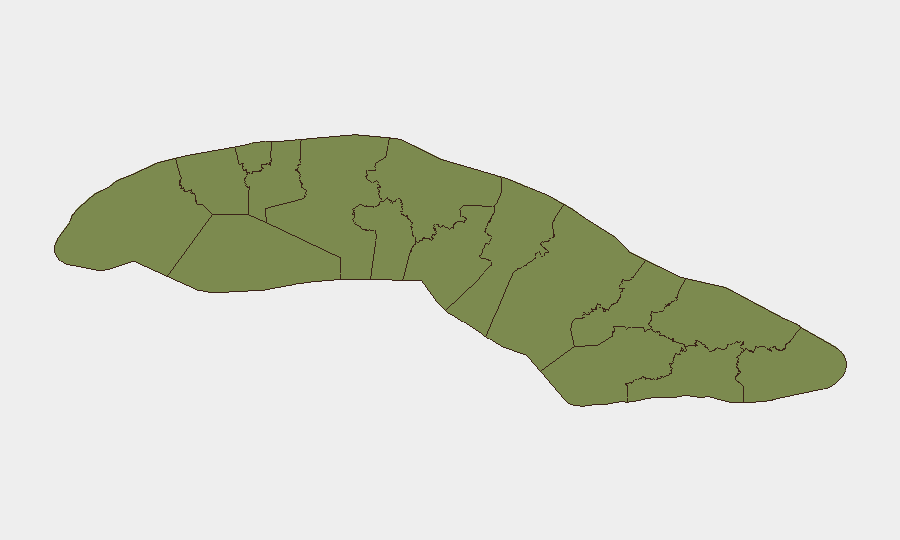
Sancti Spiritus (risk 32.3) and Havana (risk 30) drive the overwhelming majority of tracked threat activity. Sancti Spiritus's elevated score likely reflects either concentrated state-security operations, protest activity, or civil unrest; Havana's high risk is attributable to political-control mechanisms, diplomatic incidents, and security-force presence in the capital. Santiago de Cuba (5.7) and Las Tunas (2.8) show substantially lower but non-negligible risk. All other provinces cluster at 2.3, indicating threat is heavily concentrated in the central and capital regions; peripheral and eastern areas present comparatively lower operational risk for corporate assets.
How GeoBit Would Assist
Security teams should activate AOI Monitoring & Early Warning on Havana and Sancti Spiritus to receive real-time alerts on state-security activity, protest mobilization, and civil unrest. Intel Sweep and OSINT fusion (X/Twitter, Telegram, YouTube, multi-language search) enable 24/7 tracking of Cuban government statements, dissident networks, and U.S.–Cuba diplomatic signals to anticipate policy shifts affecting curfews, checkpoints, or asset restrictions. Routing & Network Analysis supports contingency planning for personnel extraction or supply-chain rerouting should security deteriorate in high-risk provinces.
7-Day Outlook
U.S.–Cuba tensions are likely to remain elevated and rhetorical in the near term, with U.S. blockade measures and Cuban counter-messaging dominating public discourse. Domestic repression of civil society will persist as standard state practice. Operationally, expect continued police activity in Havana and Sancti Spiritus and heightened scrutiny of foreign nationals; no imminent, large-scale armed conflict is indicated, but isolated incidents of state-civilian confrontation should be monitored as early warning of broader instability.
Highest-Risk Areas — Ranked
| # | State / Region | Risk |
|---|---|---|
| 1 | Sancti Spiritus | 32.3 |
| 2 | Havana | 30 |
| 3 | Santiago de Cuba | 5.7 |
| 4 | Las Tunas | 2.8 |
| 5 | Pinar del Rio | 2.3 |
| 6 | Artemisa | 2.3 |
| 7 | Mayabeque | 2.3 |
| 8 | Matanzas | 2.3 |
| 9 | Cienfuegos | 2.3 |
| 10 | Villa Clara | 2.3 |
| 11 | Isle of Youth | 2.3 |
| 12 | Ciego de Avila | 2.3 |
Previous Daily Briefs
A new Cuba brief is written every day — each with its own risk map and downloadable CSV. Here's the last week; use the calendar to go further back.
📅 Browse every day by calendar →
Highlighted days have a brief. Tap a day for that day's map & analysis, or “csv” for that day's dataset ($5).