Situation Summary
Czech Republic remains a relatively low-threat environment globally (rank #91, composite score 12), but recent political dissent and governance criticism signals warrant monitoring. The past 72 hours have seen elevated chatter around government accountability, NATO policy, and media relations, though no confirmed security incidents, violence, or infrastructure disruption has been reported. The threat landscape remains fragmented and non-violent, concentrated primarily in Central Bohemian Region, which accounts for the majority of tracked risk events.
Key Developments
Limitation: GeoBit's current data access does not permit confident identification of specific security, civil-unrest, crime, or infrastructure incidents occurring within the last 24–48 hours in the Czech Republic that meet corroboration and timestamp standards required for operational briefing. The event signals listed above (political dissent, disapproval statements, government demands, and investigations) reflect tracked sentiment and institutional activity but lack precise location, time, and verified incident detail necessary for actionable duty-of-care reporting. To obtain verified last-48-hour incident data, direct cross-reference with Czech Police (Policie ČR), Prague City Police, Fire & Rescue Service (Hasičský záchranný sbor), and major Czech news wires (e.g., ČTK, iROZHLAS) is required.
Highest-Risk Areas
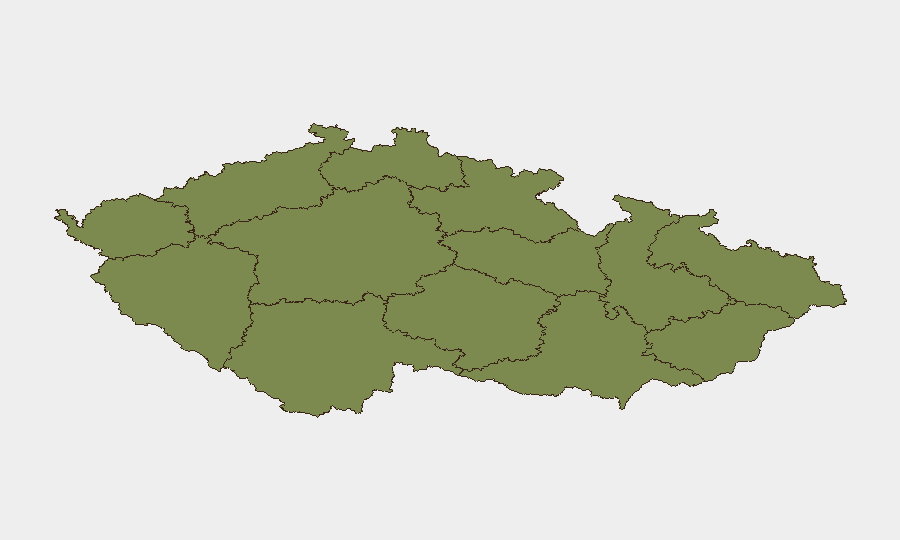
Central Bohemian Region dominates the sub-national risk profile with a composite score of 32—nearly seven times higher than the next-tier regions. South Bohemian, Zlín, Olomouc, and Moravian-Silesian regions cluster at mid-tier risk (4.6 each), likely driven by labor disputes, regional governance friction, or isolated protest activity. Remaining regions show baseline risk (2.0 or below). For corporate and asset-protection teams, Central Bohemian Region—which encompasses Prague's metropolitan area and surrounding industrial/logistics corridors—warrants enhanced monitoring of protest routes, transport hubs, and administrative facilities.
How GeoBit Would Assist
AOI Monitoring & Early Warning configured on high-risk regions (especially Central Bohemian) with persistent watch on protest activity, labor actions, and civic demonstrations would provide teams with real-time alerting before escalation. Intel Sweep with multi-language OSINT fusion across Czech news, social media (X/Twitter, Telegram), and official government/police statements would triangulate emerging political, criminal, or infrastructure risks with daily corroboration. Routing & Network Analysis can generate real-time alternative transport routes for personnel and supply chains if primary corridors are disrupted by civil unrest or incidents in monitored areas.
7-Day Outlook
Near-term trajectory suggests continued low-level political dissent and critical discourse around government and NATO policy, with no imminent escalation to organized protest or civil unrest. Corporate security teams should maintain baseline vigilance in Central Bohemian Region and monitor official Czech government communications for policy shifts. A sustained period of political criticism without mass mobilization or infrastructure impact is the baseline expectation for the next 7 days.
Highest-Risk Areas — Ranked
| # | State / Region | Risk |
|---|---|---|
| 1 | Central Bohemian Region | 32 |
| 2 | South Bohemian Region | 4.6 |
| 3 | Zlín Region | 4.6 |
| 4 | Olomouc Region | 4.6 |
| 5 | Moravian-Silesian Region | 4.6 |
| 6 | Vysočina Region | 2 |
| 7 | South Moravian Region | 2 |
| 8 | Karlovy Vary Region | 2 |
| 9 | Ústí nad Labem Region | 2 |
| 10 | Liberec Region | 2 |
| 11 | Hradec Králové Region | 2 |
| 12 | Plzeň Region | 2 |
Sources
Previous Daily Briefs
A new Czech Republic brief is written every day — each with its own risk map and downloadable CSV. Here's the last week; use the calendar to go further back.
📅 Browse every day by calendar →
Highlighted days have a brief. Tap a day for that day's map & analysis, or “csv” for that day's dataset ($5).