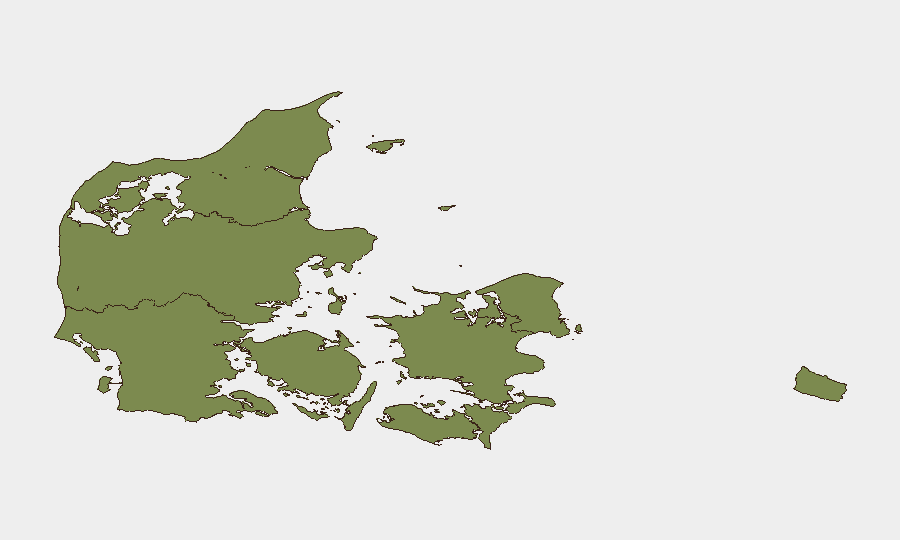
Situation Summary
Denmark remains a low-threat environment globally (rank #135; composite score 5.0) with isolated criminal incidents rather than systemic security destabilization. The Capital Region and Central Denmark Region carry elevated composite risk scores (31.8 and 28.4 respectively), driven primarily by urban crime concentration and administrative activity rather than organized terrorism or armed conflict. A significant armed police response in North Jutland on 17 July has been contained and classified as a localized incident; no broader threat indicators have emerged in the 72 hours following.
Key Developments
- Nørresundby (North Jutland) – Friday 17 July, ~13:39–15:00 local time: An industrial-zone fire drew emergency responders who came under gunfire. One civilian was killed, one police officer wounded; the suspected shooter was seriously injured in police return fire. The incident remains under investigation with no confirmed motive.
- Nørresundby (North Jutland) – Friday 17 July, ongoing: North Jutland Police have maintained a heavy cordon and forensic presence in the industrial district north of Aalborg; public advisories remain in effect to avoid the zone while investigation continues.
- Nørresundby (North Jutland) – Friday 17 July: Police are investigating whether the shooting constituted a deliberate ambush of responding officers, though no evidence of broader planning or wider threat has been identified beyond the immediate crime scene.
- Copenhagen – Sunday 19 July, ~14:20 local time: A strong rainstorm struck the capital region, causing short-term impacts including reduced visibility and minor surface flooding; no major infrastructure disruption or damage was reported.
- Regional travel advisories – Friday 17 July onwards: Media and authorities circulated safety guidance to avoid the Nørresundby industrial area; no disruption to broader transport networks in northern Denmark has been flagged.
Highest-Risk Areas
The Capital Region of Denmark (Copenhagen metropolitan area) and Central Denmark Region (Aarhus and surrounding Jutland) dominate the composite risk rankings at 31.8 and 28.4 respectively, reflecting urban crime concentration, administrative activity, and population density rather than organized violent extremism or insurgent activity. The three remaining regions (Southern Denmark, Zealand, and North Denmark) score at 1.8, indicating minimal measurable threat. The 17 July shooting in North Jutland, while serious, has not cascaded into systemic regional instability and remains classified as a contained criminal matter; it does not materially alter the established regional risk profile.
How GeoBit Would Assist
Corporate security and duty-of-care teams operating in Denmark would employ Intel Sweep and OSINT fusion to monitor emerging crime and protest activity in the Capital and Central regions in near real-time; AOI Monitoring & Early Warning on Copenhagen, Aarhus, and industrial zones to detect rapid escalation; and Risk & Threat Assessment integrated with Network & Actor Analysis to distinguish isolated incidents from coordinated or recurring patterns. Routing & Network Analysis would also support operational planning to avoid active cordons or transport disruption during incident response.
7-Day Outlook
The Nørresundby incident is expected to conclude its active investigation phase within 3–5 days, with cordon restrictions lifting and normal industrial-zone access resuming thereafter. No cascading incidents or organized response are anticipated; the overall threat trajectory for Denmark remains stable and low. Security teams should maintain standard monitoring of Copenhagen and Aarhus (highest-risk urban centers) while treating the North Jutland shooting as a resolved isolated event.
Highest-Risk Areas — Ranked
| # | State / Region | Risk |
|---|---|---|
| 1 | Capital Region of Denmark | 31.8 |
| 2 | Central Denmark Region | 28.4 |
| 3 | Region of Southern Denmark | 1.8 |
| 4 | Region Zealand | 1.8 |
| 5 | North Denmark Region | 1.8 |
Sources
Previous Daily Briefs
A new Denmark brief is written every day — each with its own risk map and downloadable CSV. Here's the last week; use the calendar to go further back.
📅 Browse every day by calendar →
Highlighted days have a brief. Tap a day for that day's map & analysis, or “csv” for that day's dataset ($5).
Atlas — our AI intelligence desk — emails them this snapshot personally. Nothing else, no list.