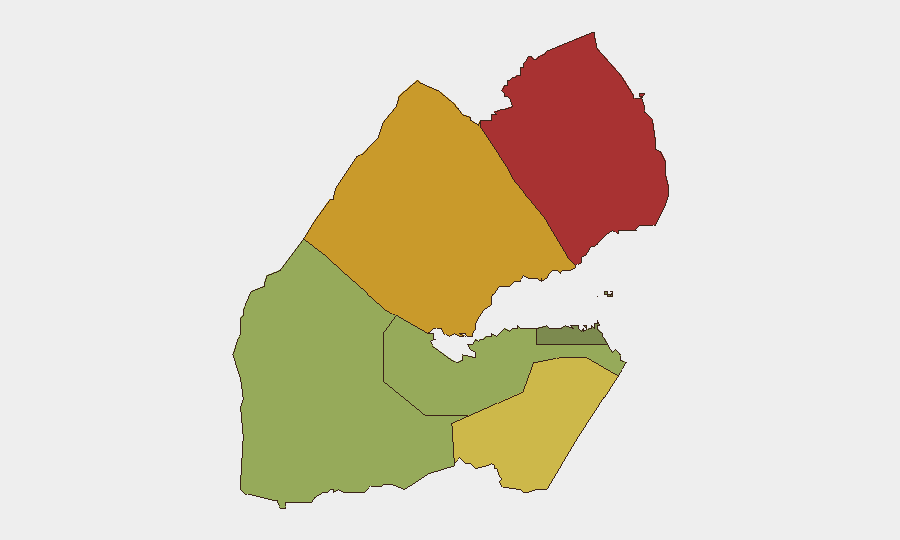
Situation Summary
Djibouti remains a low-frequency, moderate-risk environment globally (composite threat score 23; ranked #null), with security pressures concentrated in northern border regions rather than the capital or main commercial zones. Recent event signals dated 2026-06-18/19 point to conventional military activity involving Swiss forces and merchant shipping disruption by rebel elements, but open-source verification of these incidents remains incomplete as of 2026-06-20. The capital (Djibouti city) and southern regions retain substantially lower risk profiles; northern districts (Obock, Tadjourah) drive the country's composite ranking.
Key Developments
- 2026-06-19 · Merchant vessel engaged by rebel actors (location unspecified; maritime context suggests Gulf of Aden or Red Sea approaches). Conventional military confrontation; details require corroboration.
- 2026-06-19 · Swiss military operations reported involving Djibouti (multi-signal). Nature, scale, and duration of Swiss involvement unconfirmed; may relate to regional counterterrorism or maritime security.
- 2026-06-18 · Demonstration/rally activity in Djibouti city (two separate signals). No casualty, infrastructure, or operational-impact reporting available; scale and political driver unverified.
- Verification gap: Open-source media and web search (last 24–48 hours) have not independently corroborated the above event signals. GeoBit's Intel Sweep and OSINT feeds flagged these incidents; ground-truth assessment is pending.
Highest-Risk Areas
Obock (risk 78) and Tadjourah (risk 72) in the north dominate country-level risk, followed by Ali Sabieh (65). These regions border Somalia and Ethiopia, exposing them to cross-border militant activity, pastoral conflict, and weapons trafficking. Djibouti city and surrounding Djibouti region (risk 35) remain substantially safer, reflecting urban security presence and lower insurgent penetration. Ali Sabieh sits astride overland trade and human-migration routes, amplifying both criminality and political volatility. Corporate assets, supply chains, and personnel should expect northern operations to require enhanced vetting and movement protocols; capital-based functions face routine crime and civil-unrest risks typical of large Horn of Africa ports.
How GeoBit Would Assist
Security teams should deploy AOI Monitoring & Early Warning on Obock and Tadjourah with persistent alerting to detect militant movement, cross-border incursions, or roadblock activity before they affect operations. Intel Sweep and OSINT Fusion (X/Twitter, Telegram, YouTube, multi-language sources, entity extraction) will corroborate or refute the 2026-06-19 merchant-vessel and Swiss-military signals within 24–72 hours and surface actor attribution. Routing & Network Analysis enables alternative journey planning for personnel transiting Ali Sabieh or the north, while Maritime & Aviation Tracking provides real-time visibility of Red Sea and Gulf of Aden vessel movements affecting supply-chain continuity.
7-Day Outlook
If Swiss military engagement is sustained, Djibouti may experience elevated diplomatic or security-posture changes over the next week; monitor official statements and military-movement indicators. Northern militia or rebel activity is likely to remain episodic rather than organizational; however, merchant-shipping disruption in the Red Sea has historically cascaded into port congestion and cost inflation within 3–5 days. Expect no major change to capital-region stability absent new triggering incidents; routine organized-crime and civil-unrest monitoring should continue.
Highest-Risk Areas — Ranked
| # | State / Region | Risk |
|---|---|---|
| 1 | Obock | 78 |
| 2 | Tadjourah | 72 |
| 3 | Ali Sabieh | 65 |
| 4 | Arta | 48 |
| 5 | Dikhil | 42 |
| 6 | Djibouti | 35 |
Sources
Previous Daily Briefs
A new Djibouti brief is written every day — each with its own risk map and downloadable CSV. Here's the last week; use the calendar to go further back.
📅 Browse every day by calendar →
Highlighted days have a brief. Tap a day for that day's map & analysis, or “csv” for that day's dataset ($5).