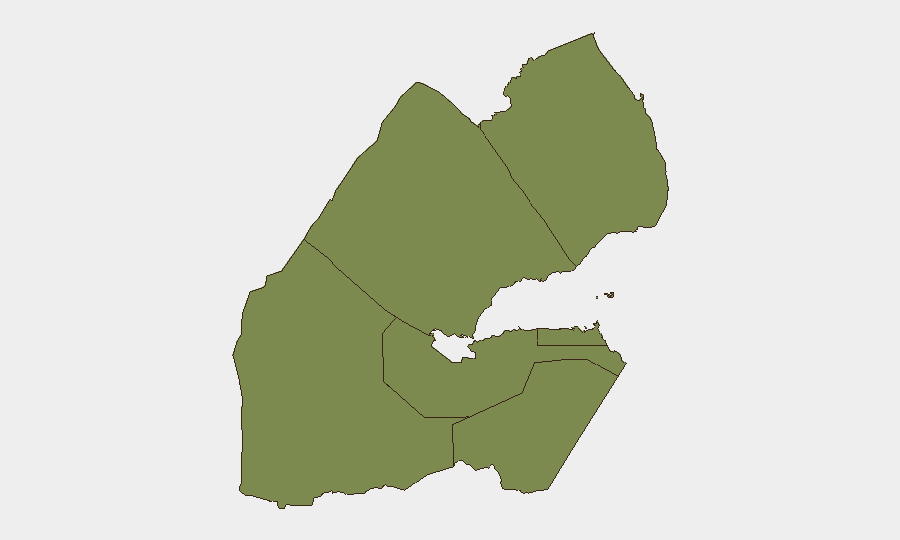
Situation Summary
Djibouti remains at low global threat rank (#99) with no discrete security incidents recorded in the formal event window, but two high-impact developments in the past week—a maritime disaster and a child exploitation network disruption—highlight persistent vulnerabilities in migrant protection and online crime enforcement. The U.S. Tier 2 Trafficking in Persons rating reflects progress in prosecutions but ongoing gaps in victim identification and referral. Northern and eastern border regions (Obock, Tadjourah, Ali Sabieh) carry substantially elevated risk due to migrant flows, maritime hazards, and proximity to Yemen-linked instability.
Key Developments
- 8–9 October, near Guhere (north of Obock): A boat carrying approximately 305 Ethiopian migrants destined for Yemen capsized during passage through Djibouti waters. At least 109 people died, including 15 children; more than 116 remain missing. Djiboutian authorities conducted ongoing search-and-rescue and medical operations, with burials continuing. [IOM, multiple corroborating sources]
- 7 October, Djibouti (location unspecified): National Gendarmerie arrested one suspect for possession and distribution of child sexual-abuse material across eight social-media accounts. Investigation identified online communities of nearly 1,000 members; violent material was seized alongside CSAM.
- 8 October, national level: The U.S. State Department placed Djibouti in Tier 2 of the 2026 Trafficking in Persons report, noting nine victim identifications and increased trafficker convictions but citing deficiencies in victim referral systems and protection measures.
Highest-Risk Areas
Obock and Tadjourah (risk scores 78 and 72, respectively) drive the country's sub-national threat profile, primarily through uncontrolled maritime migration corridors and people-smuggling networks channeling migrants toward Yemen and the Gulf. The Guhere capsizing—killing over 100 in a single incident—exemplifies the acute humanitarian and security risks concentrated in Obock's coastal zones. Ali Sabieh (score 65) faces secondary exposure through overland migrant transit, while Arta (48), Dikhil (42), and the capital region (35) remain materially lower-risk but are not immune to spillover effects, including trafficking-related crime and transnational organized-crime networks. Proximity to Yemen, weak maritime interdiction capacity, and porous borders sustain these differentials.
How GeoBit Would Assist
Security teams with personnel or assets in Djibouti should deploy AOI Monitoring & Early Warning on Obock and Tadjourah coastal and border corridors to detect migrant-movement surges, vessel anomalies, and smuggling-network activity in near-real time. Maritime & Aviation Tracking combined with Satellite & Imagery Analysis enables continuous monitoring of high-risk waterways, trafficking chokepoints, and clandestine crossing zones. Network & Actor Analysis applied to social-media and Telegram sources would map child exploitation and trafficking networks before enforcement response, improving duty-of-care alert cycles for organizations operating in or supporting Djibouti.
7-Day Outlook
The Guhere disaster will likely trigger temporary increases in maritime interdiction and migrant-processing operations, but structural drivers—economic desperation, Yemen conflict, and limited alternative routes—suggest migrant flows will persist. Child exploitation and trafficking investigations will continue at steady pace given recent U.S. rating pressure. No imminent security escalation is forecast for the capital or southern regions, though northern border instability remains a persistent low-level hazard.
Highest-Risk Areas — Ranked
| # | State / Region | Risk |
|---|---|---|
| 1 | Obock | 78 |
| 2 | Tadjourah | 72 |
| 3 | Ali Sabieh | 65 |
| 4 | Arta | 48 |
| 5 | Dikhil | 42 |
| 6 | Djibouti | 35 |
Sources
Previous Weekly Briefs
A new Djibouti brief is written every Monday, covering the week — each with its own risk map and downloadable CSV. Use the calendar to go further back.
- October 5, 2026
- September 28, 2026
- September 21, 2026
- September 14, 2026
- September 7, 2026
- September 1, 2026
- August 30, 2026
📅 Browse past briefs by calendar →
Highlighted days have a brief. Tap a day for that day's map & analysis, or “csv” for that day's dataset ($5).
Atlas — our AI intelligence desk — emails them this snapshot personally. Nothing else, no list.