Situation Summary
Egypt remains at global threat rank #22 with a composite score of 72.8, driven by persistent terrorism risk, politically motivated violence against foreign nationals, and a restrictive security environment. No significant new incidents have been documented in the past 24 hours; current risk reflects ongoing structural vulnerabilities rather than acute escalation. The geopolitical backdrop—including regional tensions and domestic security posture—sustains elevated threat across major population centers, particularly Cairo and secondary urban hubs.
Key Developments
- Cairo (Risk 81) – Ongoing investigation activity and public statements signal continued state scrutiny of political and civil-society actors; the capital's elevated risk score reflects concentration of security operations, protest dynamics, and foreign-national presence.
- Israel–Egypt tensions (2026-06-01) – Multiple signals of Egyptian disapproval, threats, and demands directed at Israel, alongside U.S. appeals to Egypt; regional friction may elevate security posture and nationalist sentiment, increasing incidental risk to foreign nationals perceived as aligned with regional actors.
- Detention/arrest activity (2026-06-02) – Continued arrest and detention signals underscore enforcement of restrictions on political expression and protest; foreign nationals engaged in civil-society, media, or political commentary remain at elevated risk of detention.
- Alexandria (Risk 60.3) – Precedent of politically motivated shootings targeting foreign nationals (2023, 2024) remains operationally relevant; the city's secondary-hub status and tourism profile sustain targeting risk from extremist actors.
- North Sinai & South Sinai (Risk 51 each) – Sustained terrorist activity in the Sinai Peninsula, including targeting of security forces and infrastructure; the Lake and Halaib Triangle (risk 55 and 51 respectively) reflect ongoing remote and border-region vulnerabilities.
- Red Sea resorts (Risk 51.6) – Documented pattern of sexual assault and harassment targeting tourists, with reported reluctance of hospitality staff to report crimes; female travelers face heightened vulnerability, particularly at night and in informal transportation.
- Environmental/political speech (2026-06-04) – Public statement signal between Egypt and environmentalist actors suggests potential friction over development or conservation issues; individuals engaged in activism or critical commentary remain subject to surveillance and potential legal exposure.
Highest-Risk Areas
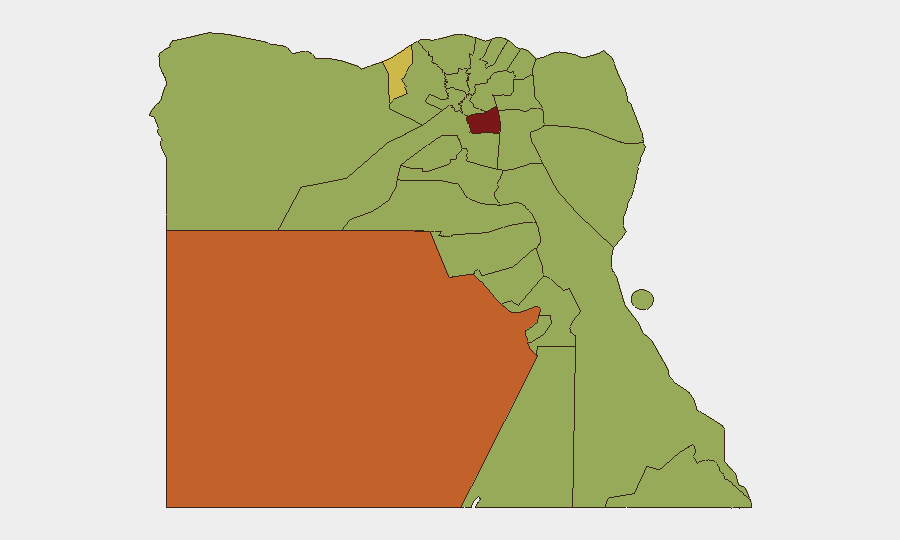
Cairo (81) dominates the national risk profile due to concentration of government operations, foreign-national populations, and state security activity; it remains the primary locus of both terrorism interest and political enforcement. The New Valley (75.6) and Alexandria (60.3) form a secondary tier, with New Valley's elevated score likely reflecting remote-area extremist activity and limited security oversight, while Alexandria's risk stems from demonstrated precedent of foreign-national targeting and maritime/resort exposure. The Red Sea corridor and Sinai Peninsula (all scoring 51–51.6) sustain terrorism threat and transnational crime risk, while Matruh and the Halaib Triangle reflect border and remote-territory vulnerabilities.
How GeoBit Would Assist
Security teams should deploy AOI Monitoring & Early Warning across Cairo, Alexandria, and the Red Sea zone to track emerging incident reporting and protest signals in real time. Multi-language OSINT (including Arabic-language media, Telegram, and local news feeds) will provide visibility into events that may not surface in English-language reporting, offsetting Egypt's restricted information environment. Entity extraction and network analysis of detained individuals, security-force movements, and activist networks will support duty-of-care assessments for personnel involved in civil-society, media, or sensitive commercial work.
7-Day Outlook
No acute escalation is forecast; however, regional geopolitical friction and ongoing state enforcement activity will sustain baseline terrorism and political risk. Monitoring should remain focused on local incident reporting, protest signals, and changes in security-force posture around tourist sites and foreign-national concentrations.
Highest-Risk Areas — Ranked
| # | State / Region | Risk |
|---|---|---|
| 1 | Cairo | 81 |
| 2 | New Valley | 75.6 |
| 3 | Alexandria | 60.3 |
| 4 | The Lake | 55 |
| 5 | Giza | 53 |
| 6 | Red Sea | 51.6 |
| 7 | Al Minya | 51.6 |
| 8 | North Sinai | 51 |
| 9 | Qena | 51 |
| 10 | South Sinai | 51 |
| 11 | Halaib Triangle | 51 |
| 12 | Matruh | 51 |
Previous Daily Briefs
A new Egypt brief is written every day — each with its own risk map and downloadable CSV. Here's the last week; use the calendar to go further back.
📅 Browse every day by calendar →
Highlighted days have a brief. Tap a day for that day's map & analysis, or “csv” for that day's dataset ($5).