Situation Summary
Eswatini remains in a stable security posture as of 20 June 2026, with no credible reports of acute incidents, civil unrest, terrorism, or infrastructure disruption in the last 24–48 hours. Routine political and governance activity continues at the national level, including diplomatic engagement with international partners. The threat environment is assessed as low relative to regional comparators, though persistent sub-national risk concentration in border and southern regions warrants continued monitoring.
Key Developments
- Countrywide (19–20 June): Open-source monitoring across web news, social media, and specialist feeds detected no new security incidents, protests, violent crime spikes, or travel disruptions in the past 48 hours.
- Mbabane (mid-June, diplomatic): U.S. Africa Command publicly reported completion of Ambassador Robert Scott's visit for defence and security-cooperation meetings with Eswatini officials; assessed as routine bilateral engagement with no indicators of acute instability.
- National (routine governance): Local media outlets (Times of Eswatini and others) continue coverage of routine political and judicial matters, including disputed procurement processes in government projects, with no reports of civil unrest or major criminal incidents linked to these disputes.
Highest-Risk Areas
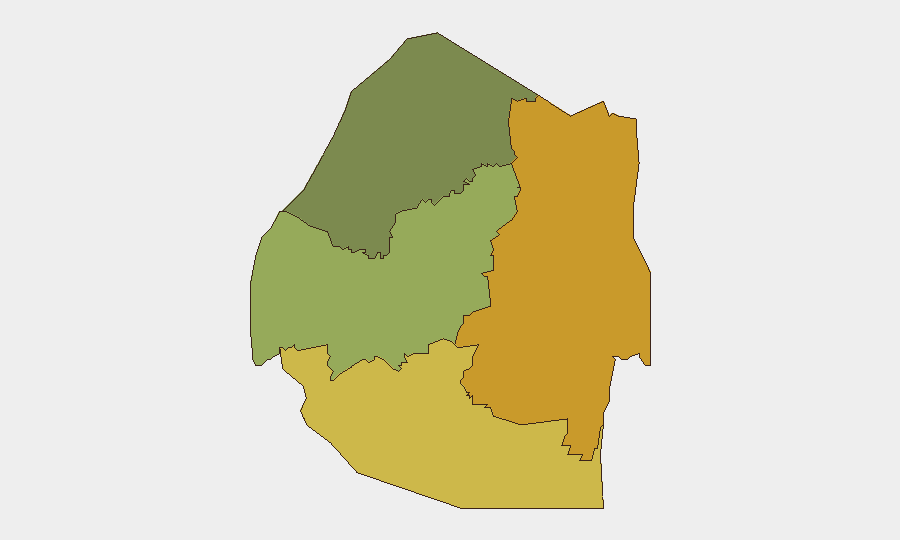
Lubombo Region (risk score 72) and Shiselweni Region (risk score 68) account for the highest-risk concentration and warrant prioritized asset and personnel monitoring. Both regions border Mozambique and South Africa, historically subject to cross-border crime, trafficking networks, and irregular migration flows. Manzini Region (risk 55) presents moderate risk, while Hhohho Region (risk 35) remains the lowest-risk zone. Risk drivers in southern and eastern regions include geographic remoteness, limited state security presence, and transnational criminal activity rather than acute political instability.
How GeoBit Would Assist
Security and duty-of-care teams with operations in Eswatini should employ AOI Monitoring & Early Warning for persistent watch on Lubombo and Shiselweni, with alerting configured to flag cross-border movements, crowd activity, and incident signals. Intel Sweep and multi-language OSINT fusion provide real-time tracking of local media, social sentiment, and informal networks to detect emerging unrest or criminal threats before escalation. Routing & Network Analysis enables alternative journey planning for personnel transiting high-risk border zones, reducing exposure to transnational crime and irregular migration flashpoints.
7-Day Outlook
No acute security triggers are evident in the near-term outlook; Eswatini is forecast to remain operationally stable over the next seven days absent external shocks or significant diplomatic incidents. Routine governance, policing, and cross-border management activity should continue. Teams should maintain standard duty-of-care protocols and monitor diplomatic signals and regional developments (particularly South Africa and Mozambique) as potential drivers of secondary impact on Eswatini's stability.
Highest-Risk Areas — Ranked
| # | State / Region | Risk |
|---|---|---|
| 1 | Lubombo | 72 |
| 2 | Shiselweni | 68 |
| 3 | Manzini Region | 55 |
| 4 | Hhohho Region | 35 |
Sources
Previous Daily Briefs
A new Eswatini brief is written every day — each with its own risk map and downloadable CSV. Here's the last week; use the calendar to go further back.
📅 Browse every day by calendar →
Highlighted days have a brief. Tap a day for that day's map & analysis, or “csv” for that day's dataset ($5).