Situation Summary
Ghana's security environment remains moderately stable overall (global ranking #58, composite threat score 3.3) but faces acute and localized risks concentrated in the Greater Accra Region and along the northern border. The past 72 hours have witnessed a spike in political statements, economic grievances, and diplomatic tensions, coinciding with a marked uptick in armed street crime in Accra—particularly robbery and vehicle attacks. Northern border regions face persistent spillover risk from Sahelian jihadist activity, while kidnapping and violent crime targeting expatriates in major urban centers continue on an upward trend since 2021.
Key Developments
- 2026-06-02, Accra (Greater Accra Region): Armed robbery and shooting at a forex bureau near 37 Military Hospital; assailants fired on at least one victim before escaping on motorcycles, signaling organized street crime.
- 2026-06-02–04, Accra (Greater Accra Region): Spike in armed vehicle robberies on Graphic Road, George Walker Bush Highway, and Teshie-Nungua Road; authorities and foreign missions advise heightened vehicle security protocols.
- 2026-06-02–03, Central Accra: Demonstrations over economic conditions and governance near Parliament House and downtown arteries; generally peaceful but causing short-notice traffic disruption and increased police presence.
- 2026-06-04, National Level: Multiple political and financial statements from President, Finance Ministry, and international actors signal ongoing economic and diplomatic tension, with potential for sustained public unrest.
- 2026-06-02–04, Upper East / Upper West / Savannah / North East Regions: Civil-unrest advisories and cross-border banditry intelligence; several governments have raised travel restrictions requiring special authorization for northern border zones.
- Coastal Accra (Labadi & Kokrobite beaches): Isolated but serious incidents of violent crime and sexual assault against tourists; renewed advisories against solo or after-dark beach visits.
- Kumasi & Takoradi (Ashanti & Western Regions): Continuing reports of kidnappings, including those targeting foreign nationals for ransom; no diplomatic immunity or expatriate status guarantees safe release.
- Kotoka International Airport (Accra): Petty and document theft in arrival and check-in areas; travelers advised to maintain constant control of baggage.
Highest-Risk Areas
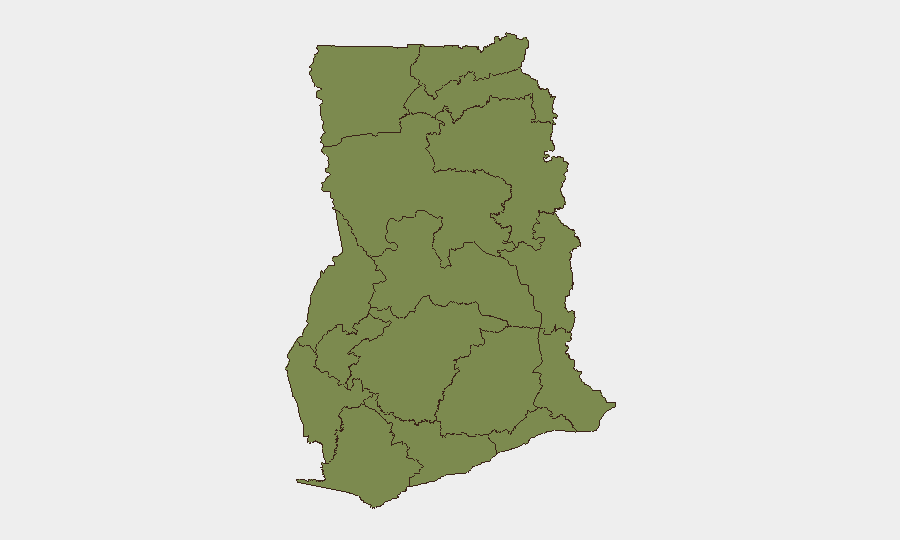
Bono East Region dominates the sub-national ranking (risk score 32.3) and warrants clarification; Greater Accra Region (19.2) and Western Region (18.6) are the principal operational concern areas for corporate security teams. Greater Accra's ranking reflects concentrated armed robbery, vehicle crime, kidnapping, and political demonstrations in the capital and its immediate environs—where most expatriate personnel, embassies, and commercial activity are concentrated. Western Region's elevated score reflects both banditry and organized crime. Northern-border regions (Upper East, Upper West, Savannah, North East) carry lower individual scores but present acute and unpredictable terrorism spillover risk from Burkina Faso-based jihadist groups, warranting travel restrictions and contingency planning for organizations with northern operations or travel requirements.
How GeoBit Would Assist
Security teams monitoring Ghana should deploy AOI Monitoring & Early Warning on high-risk zones (Accra commercial districts, northern border crossings, coastal areas) to detect escalations in criminal activity, demonstrations, or militant movement in near-real time. OSINT Fusion & Corroboration (social media, local media feeds, diplomatic networks) combined with Sentiment & Temporal Analysis would enable teams to distinguish routine reporting from emerging crises and anticipate short-notice demonstrations or security incidents. Routing & Network Analysis and GIS & Spatial Analysis support duty-of-care teams in identifying safe transit corridors in Accra and alternative routes for personnel traveling to or from northern regions during periods of heightened border volatility.
7-Day Outlook
Political and economic tensions are likely to sustain low-level street demonstrations and increased police activity in central Accra through mid-June. Armed street crime in Accra and Western Region is expected to remain elevated; organizations with personnel or assets in these zones should maintain heightened security postures and avoid high-crime corridors during off-peak hours. Northern border instability remains unpredictable and contingent on events in Burkina Faso; travel authorization and contingency evacuation planning are recommended for any staff movement to Upper East or Upper West Regions.
Highest-Risk Areas — Ranked
| # | State / Region | Risk |
|---|---|---|
| 1 | Bono East Region | 32.3 |
| 2 | Greater Accra Region | 19.2 |
| 3 | Western Region | 18.6 |
| 4 | Ashanti Region | 3.6 |
| 5 | Central Region | 2.9 |
| 6 | Upper East Region | 2.3 |
| 7 | Upper West Region | 2.3 |
| 8 | Savannah Region | 2.3 |
| 9 | North East Region | 2.3 |
| 10 | Northern Region | 2.3 |
| 11 | Eastern Region | 2.3 |
| 12 | Oti Region | 2.3 |
Previous Daily Briefs
A new Ghana brief is written every day — each with its own risk map and downloadable CSV. Here's the last week; use the calendar to go further back.
📅 Browse every day by calendar →
Highlighted days have a brief. Tap a day for that day's map & analysis, or “csv” for that day's dataset ($5).