Situation Summary
Greece remains a stable, low-threat environment globally (rank #164, composite score 3/100) with concentrated risk in Attica and Central Greece regions. Recent event signals suggest ongoing political and governance discourse, including opposition appeals and statements on Cyprus–Greece relations and refugee issues, alongside isolated conventional military references. No credible incident-level security disruptions—protests, terrorism, major crime, or infrastructure attacks—have been detected in Greece during the past 24–48 hours via open sources, embassies, or institutional advisories.
Key Developments
Unable to confirm specific incident-level developments in Greece during 20–22 June 2026. Open web research and institutional sources do not expose timestamped, corroborated security or unrest events in Greece within the last 24–48 hours. Event signals flagged by GeoBit's monitoring platform (governance statements, Cyprus–Athens relations commentary, refugee-related statements, and opposition appeals dated 19–21 June) reflect political and diplomatic discourse rather than active security incidents. No embassies have issued immediate security alerts for Greece; U.S. and other institutional advisories visible in available feeds do not report acute threats in Greek territory during this window.
Recommendation: GeoBit's real-time Intel Sweep, X/Twitter & Telegram OSINT, and multi-language feeds will continue monitoring for any emerging incidents. A wider temporal window (past 7 days) would enable incident-level reporting; current 24–48-hour window reflects Greece's stable baseline.
Highest-Risk Areas
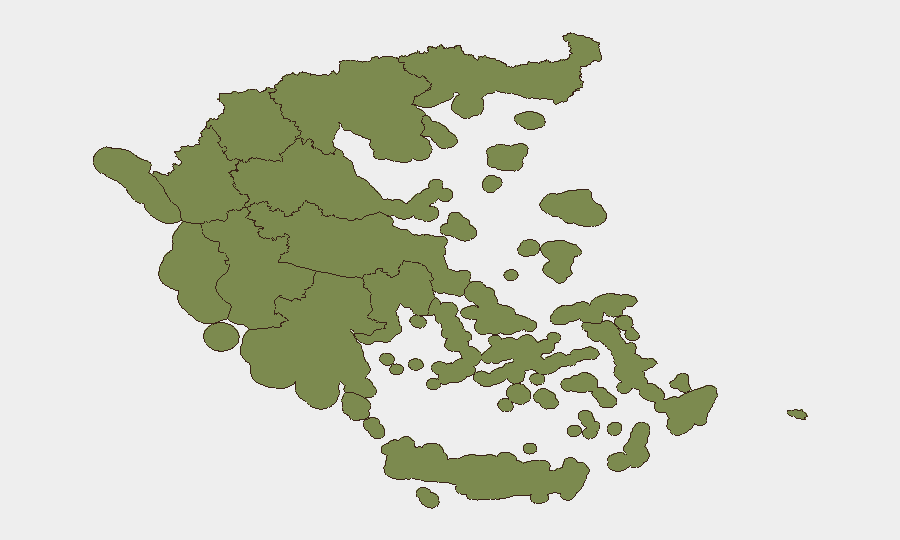
Attica (composite risk 31.5) and Central Greece (28.7) account for the vast majority of tracked threat activity, driven primarily by Athens-based political, governance, and diplomatic events. Central Macedonia (15.4) shows secondary risk concentration, likely reflecting Thessaloniki regional activity and Balkan border-adjacent factors. All other regions score below 2, indicating negligible incident risk. The concentration in Attica reflects Greece's capital-centric political and media environment; corporate and diplomatic personnel in Athens warrant standard duty-of-care baseline monitoring, but no elevated operational risk is currently indicated.
How GeoBit Would Assist
Corporate security teams with personnel or assets in Greece should deploy AOI Monitoring & Early Warning on Athens and Thessaloniki to detect emerging protests, political disruptions, or transport delays in real time. Intel Sweep and multi-language OSINT fusion (including X, Telegram, and Greek-language sources) will provide early warning of governance crises, labor actions, or refugee-related unrest that could affect operations or movement. Routing & Network Analysis can support contingency planning for staff movement in Attica if political events restrict normal transit corridors; baseline planning is recommended for standard duty-of-care but is not currently urgent.
7-Day Outlook
Greece's threat landscape is expected to remain stable over the next 7 days. Ongoing political dialogue (opposition appeals, governance statements) and Cyprus–Greece diplomacy will likely continue without acute security impact. Standard monitoring protocols for Attica and Central Greece remain appropriate; no escalation to elevated alert status is indicated.
Highest-Risk Areas — Ranked
| # | State / Region | Risk |
|---|---|---|
| 1 | Attica | 31.5 |
| 2 | Central Greece | 28.7 |
| 3 | Central Macedonia | 15.4 |
| 4 | South Aegean | 8.5 |
| 5 | Northern Aegean | 2.1 |
| 6 | Western Macedonia | 1.5 |
| 7 | Eastern Macedonia and Thrace | 1.5 |
| 8 | Western Greece | 1.5 |
| 9 | Peloponnese Region | 1.5 |
| 10 | Thessaly | 1.5 |
| 11 | Autonomous Monastic State of the Holy Mountain | 1.5 |
| 12 | Crete | 1.5 |
Sources
Previous Daily Briefs
A new Greece brief is written every day — each with its own risk map and downloadable CSV. Here's the last week; use the calendar to go further back.
📅 Browse every day by calendar →
Highlighted days have a brief. Tap a day for that day's map & analysis, or “csv” for that day's dataset ($5).