Situation Summary
Grenada remains a low-threat environment with a composite threat score of 12 globally (#92 ranking) and no verified security incidents in the last 24–48 hours. Recent event signals include diplomatic and legal public statements involving Grenada, London, Glasgow, and judicial actors (July 16–17), but open-source verification confirms no new physical security, civil unrest, crime escalation, or infrastructure incidents. The security posture is stable with risk concentrated in specific parishes rather than country-wide instability.
Key Developments
No credible, time-stamped security incidents meeting the 24–48 hour recency window and multi-source corroboration threshold have been identified for Grenada as of 2026-07-18. Open-web monitoring, social media tracking, and regional security reporting across the eastern Caribbean confirm absence of confirmed in-country events. The recent public statements and judicial/diplomatic activity flagged in event signals require contextual review but have not translated into verified physical-security incidents, travel disruptions, or criminal escalation in reporting. Duty-of-care teams should note that event signals may reflect political or legal process rather than ground-level security risk.
Highest-Risk Areas
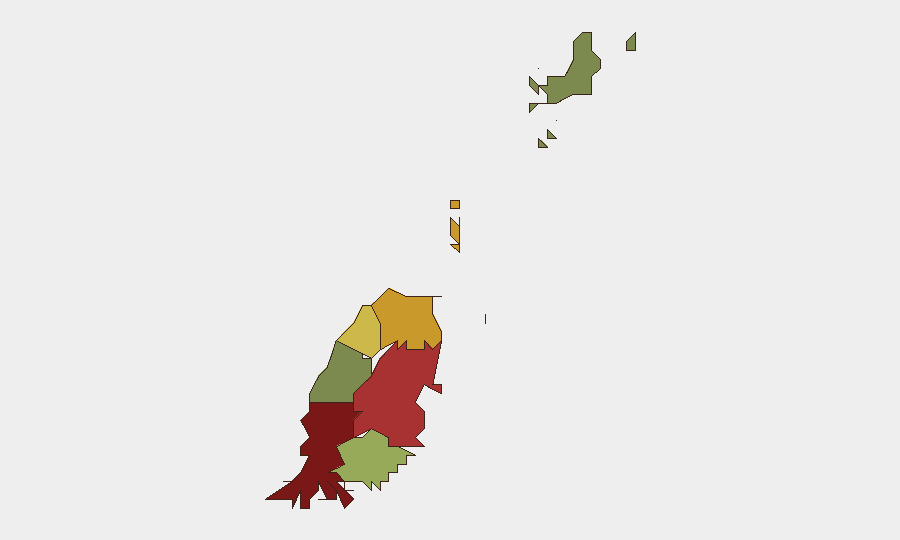
Saint George (risk score 92) and Saint Andrew (risk score 78) account for the largest share of sub-national risk concentration, likely reflecting urbanization, economic density, and incident frequency in and around the capital and northern parish zones. Saint Patrick (71) and Saint Mark (64) represent moderate secondary-tier risk. The southern parishes (Saint David, Saint John) and the archipelago of Carriacou and Petite Martinique show substantially lower scores (52, 38, and 12 respectively), indicating that security exposure is heavily localized to the northern and central urban/commercial corridors rather than dispersed across the island.
How GeoBit Would Assist
Security teams operating in Grenada should deploy AOI (Area-of-Interest) Monitoring & Early Warning on high-risk parishes—particularly Saint George and Saint Andrew—to generate alerts on emerging civil unrest, crime activity, or infrastructure disruption before escalation. OSINT fusion & corroboration capabilities across X/Twitter, local news, and Telegram channels will provide real-time confirmation or exclusion of rumor-driven threats. Entity extraction and network analysis applied to recent diplomatic and judicial public statements can isolate whether political activity poses material risk to corporate operations or expat populations.
7-Day Outlook
Grenada's threat trajectory remains flat with no indicators of near-term escalation in physical security, crime, or civil instability. Continued monitoring of judicial and diplomatic activity is warranted to assess whether legal proceedings translate into secondary safety risks, but current open-source evidence does not suggest imminent changes to the operational environment. Routine duty-of-care protocols and area-based risk tiering (favoring southern and archipelago zones for lower-exposure activity) remain appropriate.
Highest-Risk Areas — Ranked
| # | State / Region | Risk |
|---|---|---|
| 1 | Saint George | 92 |
| 2 | Saint Andrew | 78 |
| 3 | Saint Patrick | 71 |
| 4 | Saint Mark | 64 |
| 5 | Saint David | 52 |
| 6 | Saint John | 38 |
| 7 | Carriacou and Petite Martinique | 12 |
Previous Daily Briefs
A new Grenada brief is written every day — each with its own risk map and downloadable CSV. Here's the last week; use the calendar to go further back.
📅 Browse every day by calendar →
Highlighted days have a brief. Tap a day for that day's map & analysis, or “csv” for that day's dataset ($5).
Atlas — our AI intelligence desk — emails them this snapshot personally. Nothing else, no list.