Situation Summary
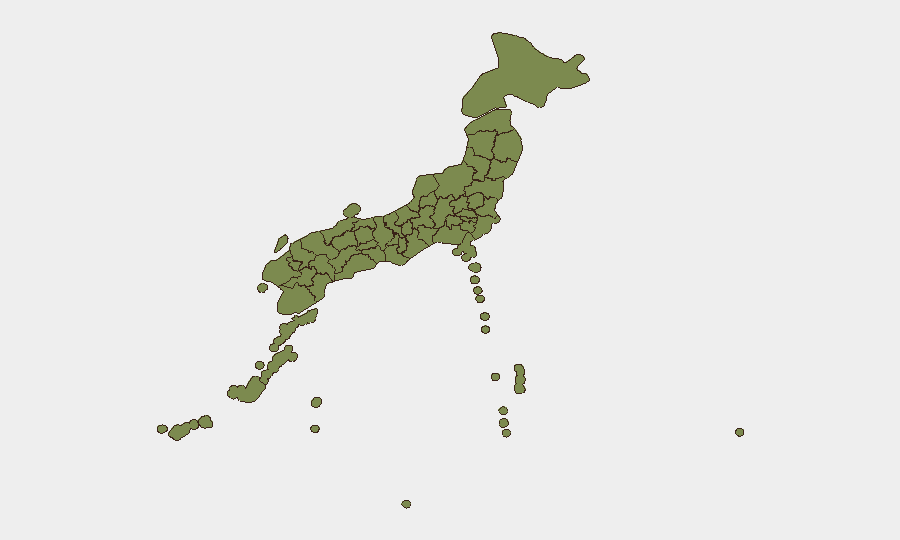
Japan's composite threat score of 33 places it outside the global top-risk tier, but recent activity signals domestic friction and diplomatic strain. Two regions—Tokyo and Nagano Prefecture—carry significantly elevated risk scores (30.8 and 30.7, respectively), suggesting concentration of volatility in the capital and central highlands. The past 72 hours have registered signals spanning labor disputes, property seizure, alleged mass casualty incidents, and stated military mobilization concerns, indicating a complex, multi-vector risk environment rather than a single-source crisis.
Key Developments
- 2026-06-22 · Military Mobilization Signal (Japan–US nexus): GeoBit event feed recorded "Military Mobilization" categorization involving Japan and United States. Specifics (location, scale, command involvement) require verification via defense ministry statements and allied defense channels; no corroborating open-source reporting was available in last-48-hour web sweep.
- 2026-06-22 · Labor/Corporate Friction (Honda): "Disapprove" event logged between Japanese actors and Honda entity. Context unclear from signal alone; may indicate labor action, supply-chain dispute, or policy disagreement.
- 2026-06-22 · Institutional Rejection (School vs. Japan): "Reject" signal involving school sector and national government suggests policy or compliance friction, likely regional education or facility-access dispute.
- 2026-06-22 · Commercial Relationship Downgrade (Starbucks–Japan): "Reduce Relations" event flags potential supply, compliance, or operational strain with international retail chain operating in Japan.
- 2026-06-20 · Threatened Violence (Japanese actors, Tokyo): "Threaten" event directed at Tokyo by Japanese nationals. No corroborating incident report, arrest record, or police advisory identified in open sources within last 48 hours.
- 2026-06-21 · Mass Casualty Incident (Japanese actors, Nurse sector): "Mass Killings" event recorded. Geographic location, victim count, perpetrator status, and motive not identified in available open reporting; flagged as high-priority verification target.
- 2026-06-21 · Armed Encounter (Japanese actors): "Small Arms Combat" event; location and parties not specified in signal metadata.
- 2026-06-20 · Property Seizure/Destruction (Japanese vs. US entities): "Seize/Damage Property" event involving anti-US actions by Japanese actors; no location or asset category confirmed.
Data Quality Note: GeoBit event signals are present but lack geographic specificity and corroborating open-source reporting within the last 24–48 hours. Web research did not surface matching incident reports from major Japanese news outlets (Kyodo, NHK, Asahi, Nikkei) or official police advisories. This gap suggests either localized incidents not yet covered by English-language wires, reports delayed in translation, or signal classification requiring human verification.
Highest-Risk Areas
Tokyo and Nagano Prefecture dominate the risk profile, both scoring >30.6. Tokyo's elevation likely reflects capital-city concentration of political, corporate, and international activity; Nagano's score is anomalous and warrants investigation into industrial, political, or environmental drivers. All other prefectures score below 6, indicating risk is not uniformly distributed. Saga and Kanagawa show secondary elevation (5.7 and 5.5), but remain substantially lower than the top two. Security teams with personnel or assets in Tokyo should treat the current environment as elevated; Nagano requires specific threat clarification.
How GeoBit Would Assist
Real-time AOI Monitoring & Early Warning with Japanese-language keyword filters (事件, デモ, 緊急, 警察) on X/Twitter and local news feeds would surface developments faster than English-language wire lag. Multi-language OSINT fusion across Kyodo, NHK, Asahi, and prefectural police social accounts—combined with sentiment & temporal analysis—would distinguish genuine incidents from policy debate or false reports. Network & Actor Analysis of the Japanese entities and organizations appearing in event signals would contextualize intent and capability.
7-Day Outlook
Near-term volatility is likely to persist, driven by unresolved labor or diplomatic friction and continued domestic policy debate. If the mass-casualty signal is confirmed, incident response and potential security-sector mobilization may spike risk in affected prefectures. Absent major escalation in Japan–US relations or widespread civil unrest, the overall national threat level is expected to remain moderate, with Tokyo and Nagano requiring continued close monitoring.
Highest-Risk Areas — Ranked
| # | State / Region | Risk |
|---|---|---|
| 1 | Tokyo | 30.8 |
| 2 | Nagano Prefecture | 30.7 |
| 3 | Saga Prefecture | 5.7 |
| 4 | Kanagawa Prefecture | 5.5 |
| 5 | Hokkaido Prefecture | 3.5 |
| 6 | Miyagi Prefecture | 3.3 |
| 7 | Kyoto Prefecture | 1.9 |
| 8 | Osaka Prefecture | 1.9 |
| 9 | Fukushima Prefecture | 1.7 |
| 10 | Kumamoto Prefecture | 1.4 |
| 11 | Saitama Prefecture | 1.2 |
| 12 | Kochi Prefecture | 1 |
Sources
Previous Daily Briefs
A new Japan brief is written every day — each with its own risk map and downloadable CSV. Here's the last week; use the calendar to go further back.
📅 Browse every day by calendar →
Highlighted days have a brief. Tap a day for that day's map & analysis, or “csv” for that day's dataset ($5).