Situation Summary
Latvia remains at low acute risk with no confirmed armed conflict, civil unrest, major crime, or infrastructure failure in the past 24–48 hours. The security environment is characterized by ongoing preventive measures at critical energy infrastructure (Incukalns gas storage and hydroelectric dam) in response to mid-July intelligence assessments of possible Russian hybrid threats, combined with routine weather-related disruptions in eastern and western regions. Border security remains heightened due to the ongoing Belarus migration hybrid-threat case, but no new escalation has occurred in the reporting period. Overall trajectory is stable but operationally cautious.
Key Developments
- Nationwide airspace (ongoing, verified within 24–48h): Latvia's NOTAM system confirms active ban on Russian-operated or Russian-documented aircraft from Latvian airspace, with narrow humanitarian and emergency exemptions. Impact on flight planning and aviation logistics remains in effect.
- Kurzeme & Northern Vidzeme (Monday, within last 24–48h): National weather service issued orange-level storm warning for western and northern regions, forecasting heavy rain, thunderstorms, and hazardous driving conditions. Affects short-term road safety and travel logistics.
- Eastern Latvia (recent, operationally current): Severe thunderstorms knocked out power for thousands and disrupted road networks. Repairs ongoing; residual outages and traffic delays possible in the short term.
- Incukalns gas storage & hydroelectric dam (mid-July security boost, still in force): Prime Minister Kulbergs confirmed increased security posture at both facilities following intelligence of possible Russian sabotage action. No active incident reported, but enhanced security presence and access restrictions remain operational.
- Latvia–Belarus border (ongoing case, no new acute incident in 24–48h): Latvian Prosecutor General's Office maintains open criminal case against Belarus border officials for systematic hybrid migration operations since 2021. Lithuania has deployed additional border guards. Heightened enforcement and crossing delays continue but no new border breach or major incident reported in the reporting window.
Highest-Risk Areas
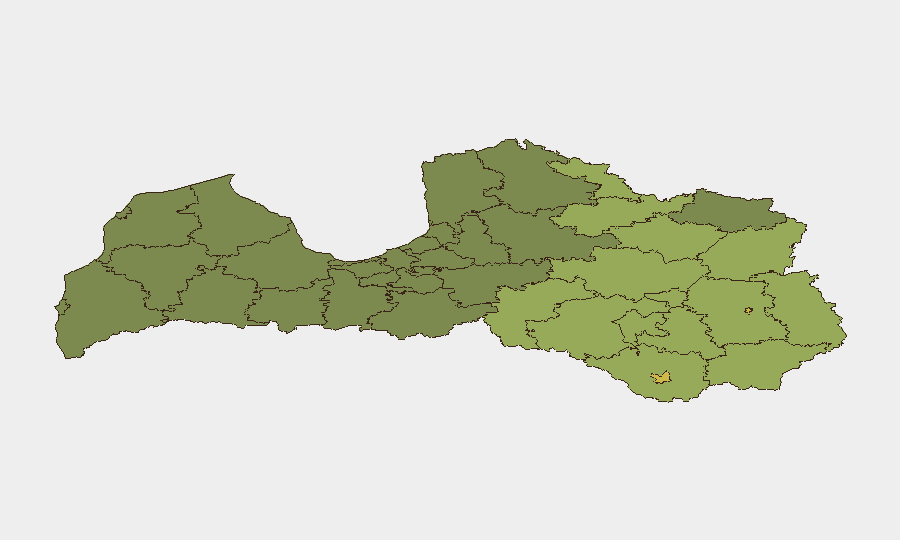
Eastern and southeastern Latvia—specifically Rēzekne (risk 68), Daugavpils (risk 65), and surrounding novads (Rēzeknes, Ludzas, Balvu, Preiļu, Krāslavas)—account for the top tier of sub-national risk. These border regions face compounded exposure to Belarus hybrid-threat activity (migration, trafficking, intelligence probing) and Russian infrastructure-targeting intelligence. Secondary risk clusters in central-eastern municipalities (Jēkabpils, Augšdaugavas, Aizkraukles) reflect continuation of border-proximate and energy-infrastructure vulnerability patterns. Western and northern regions carry lower baseline risk but are subject to weather and seasonal disruption cycles.
How GeoBit Would Assist
Security teams should employ Intel Sweep and global event feeds for real-time monitoring of Russian military communications, sanctions signals, and Belarus border activity; AOI Monitoring with alerting on Incukalns, the hydroelectric dam, and border crossing zones to detect operational changes or disruptions; and OSINT fusion and multi-language search (Telegram, regional news, official notices) to correlate hybrid-threat indicators and weather impacts with staffing and asset positioning decisions. Routing & Network Analysis would support contingency planning for travel and supply chains around storm-affected and border-controlled corridors.
7-Day Outlook
Weather disruptions in Kurzeme and Vidzeme are expected to clear within 48–72 hours, reducing short-term infrastructure and travel friction. Preventive security measures at energy sites and border checkpoints are likely to remain at current operational tempo absent new intelligence or incident. No escalation is anticipated in the near term, but monitoring of Russian hybrid-threat signaling and Belarus border dynamics should remain continuous.
Highest-Risk Areas — Ranked
| # | State / Region | Risk |
|---|---|---|
| 1 | Rēzekne | 68 |
| 2 | Daugavpils | 65 |
| 3 | Rēzeknes novads | 58 |
| 4 | Ludzas novads | 55 |
| 5 | Balvu novads | 52 |
| 6 | Preiļu novads | 50 |
| 7 | Krāslavas novads | 48 |
| 8 | Jēkabpils novads | 47 |
| 9 | Augšdaugavas novads | 46 |
| 10 | Aizkraukles novads | 45 |
| 11 | Varakļānu novads | 44 |
| 12 | Līvānu novads | 43 |
Sources
Previous Daily Briefs
A new Latvia brief is written every day — each with its own risk map and downloadable CSV. Here's the last week; use the calendar to go further back.
📅 Browse every day by calendar →
Highlighted days have a brief. Tap a day for that day's map & analysis, or “csv” for that day's dataset ($5).
Atlas — our AI intelligence desk — emails them this snapshot personally. Nothing else, no list.