Situation Summary
Malaysia's overall security environment remains stable, with a composite threat score of 18 placing it outside the top-risk tier globally. However, two consecutive bomb-threat incidents at private universities in the Selangor/Kuala Lumpur region over 9–10 June have elevated localized risk and prompted enhanced security postures across the Klang Valley's education sector. Cyber threats from regional ransomware groups remain an underlying concern to Malaysian businesses and infrastructure, though no major breach has been confirmed in the past 48 hours. The threat landscape is concentrated in high-density urban and transit zones; outlying and rural states remain low-risk.
Key Developments
- Taylor's University Lakeside Campus, Subang Jaya (Selangor) – 10 June 2026: A second bomb-threat email triggered a full evacuation and police bomb-squad sweep. No explosives were found; campus was declared safe and operations resumed. This represents the second threat at the same location in 48 hours.
- Taylor's University Lakeside Campus, Subang Jaya (Selangor) – 9 June 2026: An initial bomb-threat email led to evacuation and comprehensive security sweep; no device discovered. Police confirmed the threat as unfounded but treated it as a serious incident.
- Monash University Malaysia, Bandar Sunway (Selangor) – 9–10 June 2026 (ongoing): Following a 4 June bomb threat, the campus remains under heightened security. Recent social-media advisories and campus messaging reinforce vigilance and emergency procedures; no additional confirmed threats reported in the past 48 hours.
- Klang Valley university-sector response – 9–10 June 2026: Private universities across Greater Kuala Lumpur and Selangor have increased visible security, circulation of evacuation procedures, and drills in response to the Taylor's and Monash incidents. No evidence of coordinated threat or specific secondary targets identified.
- Ransomware-group activity – Malaysia, cyber context (9–10 June 2026): Regional security analysts have flagged active global ransomware campaigns (DragonForce, Qilin, The Gentlemen) with historical targeting of Malaysian entities. No major new Malaysia-specific breach confirmed, but elevated cyber risk to businesses and critical infrastructure is flagged in sector assessments.
- General travel and operational status – Malaysia (9–10 June 2026): Apart from temporary campus evacuations, no large-scale civil unrest, major political violence, or nationwide infrastructure disruption reported. Travel within Kuala Lumpur and Selangor remains operationally normal; disruption is localized to affected university campuses.
Highest-Risk Areas
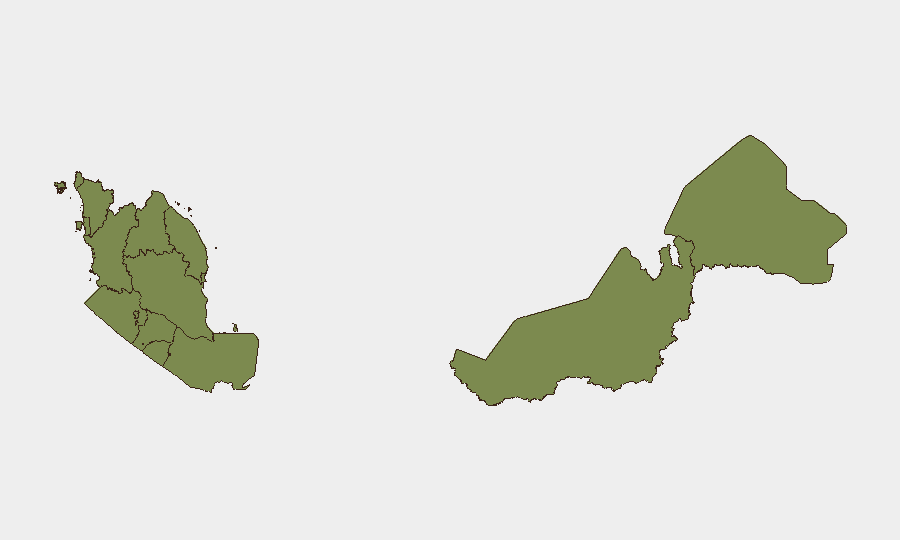
Sarawak (31.3) and Kuala Lumpur (28.3) dominate the sub-national risk profile, with Kuala Lumpur's score driven by recent university-sector bomb threats and urban density. Johor (12.2) ranks third, reflecting ongoing low-level activity in Malaysia's second-largest economic zone. Sarawak's elevated risk reflects its historical significance as a maritime-border and organized-crime concern; Kuala Lumpur's spike is acute and tied to the current 48-hour threat cluster. Selangor, home to Taylor's and Monash campuses, ranks fifth (5.4) overall but is experiencing temporary elevated localized risk due to consecutive threats.
How GeoBit Would Assist
Corporate security and duty-of-care teams would deploy AOI Monitoring & Early Warning to maintain persistent watch on Kuala Lumpur, Selangor, and Sarawak, enabling rapid alerting of threats to personnel and assets in real time. Intel Sweep and OSINT fusion (X/Twitter, Telegram, YouTube, multi-language search) would track emerging threats, copycat activity, and campus-sector chatter to detect secondary risks before escalation. Routing & Network Analysis would provide alternative journey planning for staff in affected zones to minimize exposure during elevated-threat periods.
7-Day Outlook
The immediate risk is containment of the university-sector threat cluster; no evidence suggests wider coordination or secondary targets have emerged. Over the next 7 days, attention should focus on campus-security coordination, potential copycat threats, and whether the incidents escalate beyond email hoaxes. Cyber risk to business continuity remains steady-state but should remain on duty-of-care radars, particularly for entities in Kuala Lumpur and Selangor.
Highest-Risk Areas — Ranked
| # | State / Region | Risk |
|---|---|---|
| 1 | Sarawak | 31.3 |
| 2 | Kuala Lumpur | 28.3 |
| 3 | Johor | 12.2 |
| 4 | Perak | 6.1 |
| 5 | Selangor | 5.4 |
| 6 | Pahang | 5.4 |
| 7 | Sabah | 2.7 |
| 8 | Penang | 2 |
| 9 | Perlis | 1.3 |
| 10 | Kedah | 1.3 |
| 11 | Kelantan | 1.3 |
| 12 | Labuan | 1.3 |
Sources
Previous Daily Briefs
A new Malaysia brief is written every day — each with its own risk map and downloadable CSV. Here's the last week; use the calendar to go further back.
📅 Browse every day by calendar →
Highlighted days have a brief. Tap a day for that day's map & analysis, or “csv” for that day's dataset ($5).