Situation Summary
Malta remains one of Europe's lowest-risk jurisdictions, ranked #175 globally with a composite threat score of 4 and zero tracked security events in the current analysis window. No credible reports of significant security incidents, civil unrest, infrastructure disruption, or travel-risk events have emerged in the last 24–48 hours. The country's overall security posture remains stable and consistent with its historical baseline.
Key Developments
No discrete security events meeting criteria for significance, multi-source confirmation, and occurrence within the last 24–48 hours have been identified in indexed news, real-time incident trackers, or open-source intelligence feeds. Routine, low-level incidents may occur but are not captured at the level of specificity and timeliness required for operational briefing. Organizations with critical operations or personnel in Malta should continue standard situational awareness protocols; absence of reported events does not indicate absence of risk.
Highest-Risk Areas
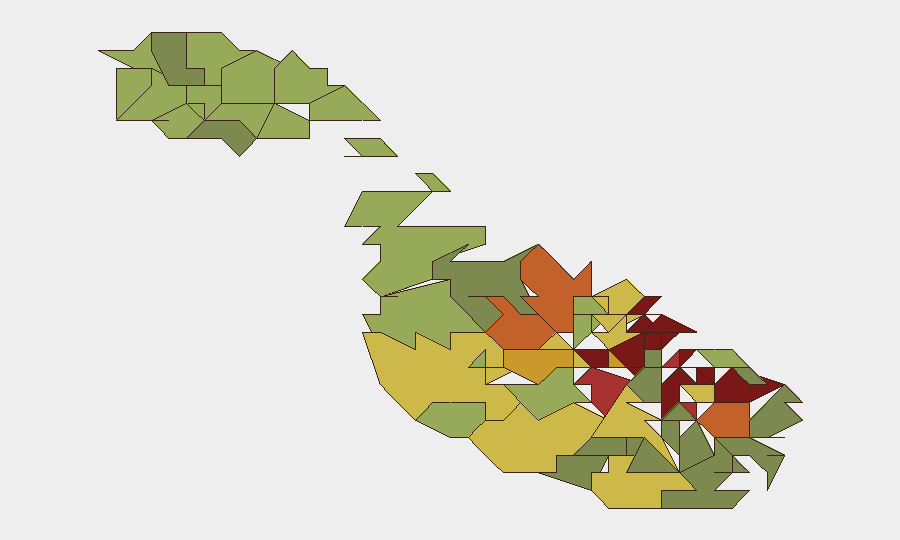
The sub-national risk ranking reflects concentration of threat indicators in the Greater Valletta urban corridor and surrounding commercial/entertainment zones. Valletta (95), Sliema (92), and Saint Julian's (90) drive the highest composite scores, likely reflecting density of financial services, tourism infrastructure, nightlife venues, and transient populations—factors that historically correlate with petty crime, organized-crime activity, and financial-sector exposure. Hamrun, Paola, and Msida (87, 86, 85 respectively) register elevated risk tied to similar urbanization and economic activity. Peripheral and rural areas remain substantially lower-risk. Risk rankings reflect exposure profiles, not current active threats.
How GeoBit Would Assist
Organizations with personnel or assets in Malta's high-risk urban zones should leverage Intel Sweep and global event-feed monitoring to detect any emerging disruptions, combined with X/Twitter and Telegram OSINT to identify early signals of civil unrest, labor action, or cyber incidents affecting critical infrastructure. AOI Monitoring & Early Warning with persistent watch on Valletta's financial district, port facilities, and tourism corridors would provide immediate alerting if conditions deteriorate. Routing & Network Analysis enables identification of alternative transit corridors and secure movement planning should localized incidents occur.
7-Day Outlook
No acute drivers of near-term escalation are visible. Malta's political environment remains stable, and the tourism and financial-services sectors show no signs of disruption. Seasonal summer patterns and routine EU-regulatory activity are expected; continued monitoring of maritime activity (given Malta's strategic position in the Central Mediterranean) and cyber threats targeting financial institutions remains prudent as a matter of ongoing duty-of-care.
Highest-Risk Areas — Ranked
| # | State / Region | Risk |
|---|---|---|
| 1 | Valletta | 95 |
| 2 | Sliema | 92 |
| 3 | Saint Julian's | 90 |
| 4 | Gżira | 88 |
| 5 | Hamrun | 87 |
| 6 | Paola | 86 |
| 7 | Msida | 85 |
| 8 | Birkirkara | 84 |
| 9 | Birgu | 83 |
| 10 | Senglea | 82 |
| 11 | Cospicua | 81 |
| 12 | Żabbar | 80 |
Sources
Previous Daily Briefs
A new Malta brief is written every day — each with its own risk map and downloadable CSV. Here's the last week; use the calendar to go further back.
📅 Browse every day by calendar →
Highlighted days have a brief. Tap a day for that day's map & analysis, or “csv” for that day's dataset ($5).
Atlas — our AI intelligence desk — emails them this snapshot personally. Nothing else, no list.