Situation Summary
Morocco's national security posture remains stable overall (global rank #92, composite threat 11/100), but counter-terrorism operations dominate the current threat landscape. A major pre-emptive dismantling of an ISIL-linked cell on 6 July 2026 indicates elevated jihadist activity in the Sahel corridor with direct operational reach into Moroccan cities. The Drâa-Tafilalet region registers significantly higher risk (31.5) than other provinces, reflecting persistent extremist presence in the south and east.
Key Developments
- Nationwide counter-terrorism operation, 6 July 2026 – Morocco's BCIJ (Central Bureau of Judicial Investigations) conducted coordinated raids across Rabat, Casablanca, Fez, Tangier, and Agadir, arresting 10 suspected members of an ISIL-linked cell affiliated with Islamic State Sahel Province (ISSP). Authorities stated the cell was in "advanced stages" of planning a major terrorist attack and characterized the operation as foiling an imminent plot.
- Evidence seizure, multiple cities, 6 July 2026 – BCIJ recovered bladed weapons, electronic equipment, and planning documents from arrested suspects. Investigators alleged members were scouting targets and experimenting with improvised edged weapons and basic explosive precursors across central and southern provinces.
- Operational intelligence from arrested cell, Rabat, 6 July 2026 – Follow-up BCIJ statements confirmed that some detainees had pledged allegiance to ISIS/ISSP and maintained direct contact with Sahel-based leaders who instructed them to remain in Morocco and prepare attacks rather than travel to conflict zones. This signals persistent jihadist recruitment and command-and-control reaching into urban centers.
- Military equipment acquisition, national level, reported 6 July 2026 – Rheinmetall finalized delivery of seven mobile field hospitals to Morocco under a June 2026 contract, enhancing deployable combat medical and civil-protection capability. The equipment supports military operations and border security contingencies.
- Enhanced US-Morocco security cooperation, 6 July 2026 reporting – Regional analysis noted implementation of a 2026–2036 US-Moroccan defence roadmap emphasizing drone warfare, AI-enabled surveillance, and joint counter-terrorism cooperation. Reflects ongoing investment in detection and interdiction capabilities.
- No corroborated civil unrest reported, last 48 hours – Open-source monitoring identified no significant street protests, political violence, or major crime spikes disrupting travel or commerce in major cities during the review period.
Highest-Risk Areas
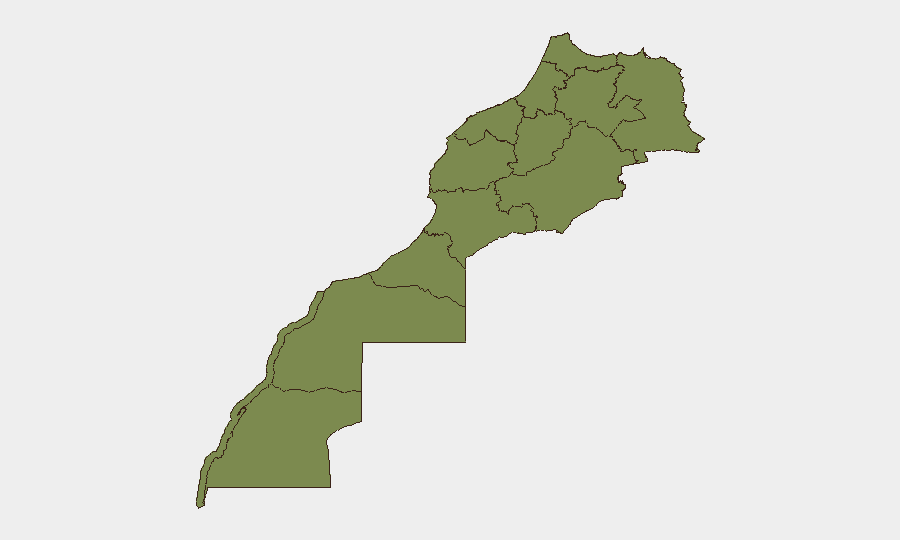
Drâa-Tafilalet province (risk score 31.5) dominates the sub-national ranking by a factor of 15, reflecting sustained jihadist activity in southern and eastern border zones adjacent to Sahel conflict regions. Marrakech-Safi (2.1) and the southern disputed territories (Western Sahara, Laâyoune-Sakia El Hamra, Guelmim-Oued Noun, Dakhla-Oued Ed-Dahab) register elevated but moderate risk. Urban centres including Rabat-Salé-Kénitra, Casablanca-Settat, and Tangier-Tetouan-Al Hoceima remain at baseline national levels (1.5 each), though the 6 July counter-terrorism operation confirms that ISSP cells operate across multiple metropolitan areas. Risk gradient reflects geographic proximity to Sahel supply and command networks rather than localized instability.
How GeoBit Would Assist
Security teams should use AOI Monitoring & Early Warning to track Drâa-Tafilalet and southern border zones for indicators of renewed jihadist mobilization. OSINT Fusion & Corroboration (multi-language feeds, Telegram/X monitoring, entity extraction) would enable real-time detection of recruitment and attack-planning signals similar to those the BCIJ disrupted. Routing & Network Analysis supports identification of safe corridors and travel-time alternatives if incidents spike in high-risk provinces.
7-Day Outlook
The successful disruption of an operational cell suggests Morocco's counter-terrorism apparatus is functioning effectively, reducing imminent attack probability in the near term. However, the presence of direct ISSP command-and-control reaching into urban areas indicates sustained recruitment pressure; follow-on arrests or secondary cell activity within 7–14 days remain plausible. Travel and business continuity disruption risk remains low except in Drâa-Tafilalet, where security operations may intensify.
Highest-Risk Areas — Ranked
| # | State / Region | Risk |
|---|---|---|
| 1 | Drâa-Tafilalet | 31.5 |
| 2 | Marrakech-Safi | 2.1 |
| 3 | Western Sahara | 1.5 |
| 4 | Laâyoune-Sakia El Hamra | 1.5 |
| 5 | Guelmim-Oued Noun | 1.5 |
| 6 | Casablanca-Settat | 1.5 |
| 7 | Dakhla-Oued Ed-Dahab | 1.5 |
| 8 | Rabat-Salé-Kénitra | 1.5 |
| 9 | Béni Mellal-Khénifra | 1.5 |
| 10 | Tangier-Tetouan-Al Hoceima | 1.5 |
| 11 | Fez-Meknes | 1.5 |
| 12 | Oriental | 1.5 |
Sources
Previous Daily Briefs
A new Morocco brief is written every day — each with its own risk map and downloadable CSV. Here's the last week; use the calendar to go further back.
📅 Browse every day by calendar →
Highlighted days have a brief. Tap a day for that day's map & analysis, or “csv” for that day's dataset ($5).
Atlas — our AI intelligence desk — emails them this snapshot personally. Nothing else, no list.