Situation Summary
Nepal remains a low-to-moderate threat environment globally (rank #80, composite score 2.0) but exhibits acute political instability concentrated in Bagamati Province (Kathmandu Valley). Recent signals indicate tension between executive, legislative, and law-enforcement branches—including presidential disapproval, prime ministerial threats toward lawmakers, and police rejection of directives—alongside unconfirmed protest activity and a reported curfew tied to social-media restrictions. The fragmented event picture suggests institutional stress rather than widespread violence, but the concentration of 59 tracked incidents in a single province warrants close monitoring of government cohesion and public order.
Key Developments
- 2026-06-04 · Kathmandu/Bhaktapur (Bagamati Province): Conventional military force event reported involving Bhaktapur district and Nepali security forces; exact nature and outcome unconfirmed pending multi-source corroboration.
- 2026-06-04 · Parliament: Public statement issued; context indicates legislative response to executive or law-enforcement actions.
- 2026-06-04 · Kathmandu (Bagamati Province): Investigation launched by municipal/national government authorities; subject and scope pending clarification.
- 2026-06-04 · Executive Level: President issued formal disapproval statement directed at another president or institutional peer; suggests inter-branch or constitutional friction.
- 2026-06-04 · Executive Level: Prime Minister issued threat toward one or more lawmakers; indicates escalating executive–legislative tension.
- 2026-06-02 · National: Prime Minister and Congress party issued competing public statements; opposition parties also released statements, signaling coalition or majority instability.
- 2026-06-02 · National: Police issued public statement; followed by rejection of unspecified directive on 2026-06-04, suggesting command-and-control discord.
*Note: Web research did not yield sufficient multi-source confirmation of specific incident details or dates within the last 24–48 hours to expand this section reliably. Recent protest and curfew reports are cited in available search results but lack precise dating and corroboration.*
Highest-Risk Areas
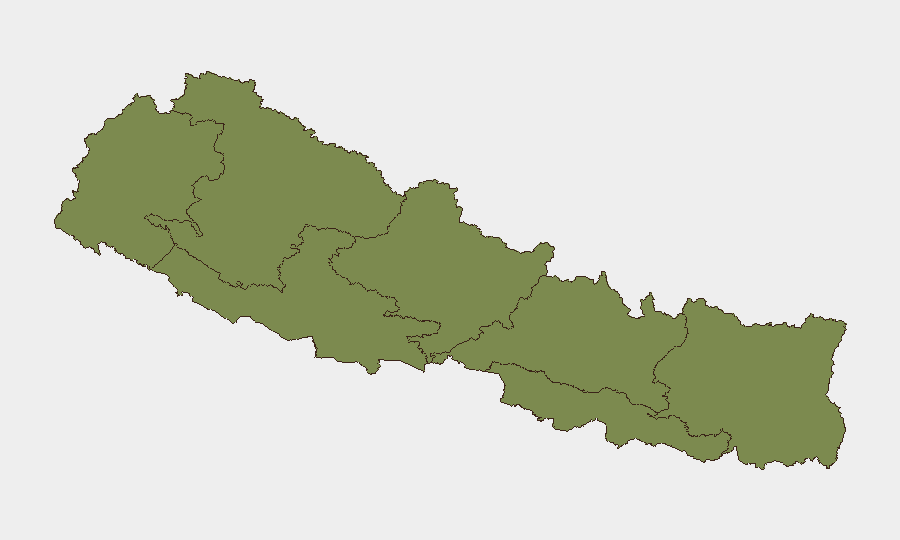
Bagamati Province, which includes Kathmandu and Bhaktapur, dominates the risk profile at 31.4—a 3× multiple above all other provinces. This concentration reflects political-institutional volatility (executive–legislative tension, police directive friction) and possible crowd-control events rather than armed-group activity or terrorism. Gandaki Province (10.1) shows secondary concern; Karnali and the southern tier provinces remain substantially lower-risk. Corporate operations in the Kathmandu Valley should anticipate that political instability may disrupt service delivery, trigger localized curfews, or constrain staff movement during crises, even absent widespread armed conflict.
How GeoBit Would Assist
Intel Sweep and X/Twitter & Telegram OSINT provide real-time verification of government statements, opposition reactions, and protest signals across Nepal's fragmented media landscape, allowing security teams to distinguish rumor from confirmed event. AOI Monitoring & Early Warning (persistent watch on Kathmandu Valley) would trigger immediate alerts if military deployments, mass-gathering indicators, or curfew extensions signal escalation. Network & Actor Analysis maps decision-making friction between executive, legislative, and law-enforcement nodes, enabling duty-of-care teams to anticipate tipping points and pre-position contingency responses.
7-Day Outlook
Political tension is likely to persist as statements, investigations, and parliamentary responses play out over the coming week. Risk of escalation to large-scale public unrest or security-force action remains credible if executive–legislative deadlock deepens or if social-media restrictions trigger sustained protests. Bagamati Province should remain under continuous watch; secondary provinces are expected to remain stable absent contagion from Kathmandu.
Highest-Risk Areas — Ranked
| # | State / Region | Risk |
|---|---|---|
| 1 | Bagamati Province | 31.4 |
| 2 | Gandaki Province | 10.1 |
| 3 | Karnali Province | 4.6 |
| 4 | Sudurpashchim Province | 1.4 |
| 5 | Lumbini Province | 1.4 |
| 6 | Koshi Province | 1.4 |
| 7 | Madhesh Province | 1.4 |
Previous Daily Briefs
A new Nepal brief is written every day — each with its own risk map and downloadable CSV. Here's the last week; use the calendar to go further back.
📅 Browse every day by calendar →
Highlighted days have a brief. Tap a day for that day's map & analysis, or “csv” for that day's dataset ($5).