Situation Summary
Norway remains a low-threat environment globally (rank 56, composite score 35) with no tracked security events in the past week, but elevated cyber and critical-infrastructure risks have emerged as primary concerns. Russian intelligence activity, including reconnaissance of Norwegian defense and infrastructure targets, has been officially confirmed by the Police Security Service (PST). Concurrent cyberattacks on European food-production systems and recent breaches of Norwegian airline passenger data underscore vulnerability in digitized supply chains and transportation networks. The overall security posture is stable, but heightened vigilance is warranted in cyber, energy, and defense-related sectors.
Key Developments
- Nationwide — 12 November: PST warned that Russian intelligence services may attempt sabotage targeting Norwegian defense companies, logistics, energy infrastructure, and other critical sites within the next year. Reconnaissance of Norwegian infrastructure has been identified, though no confirmed sabotage has occurred.
- Nationwide — 11 November: Norway's Food Safety Authority issued a cybersecurity alert to seafood and food-processing businesses following cyberattacks in Europe that manipulated refrigeration systems. No Norwegian cold-storage or salmon-processing facilities have been confirmed affected to date.
- Nationwide — 10 November: The Norwegian government paused new data-center grid connections and planned restrictions on AI-facility construction. Grid-capacity reservations have been suspended until at least August 2027, with priority reserved for defense, emergency services, health, communications, and financial infrastructure.
- Norwegian and Widerøe airlines — reported 13 November: A data breach by Spanish IT provider Amadeus exposed information linked to 144,249 passengers of the two Norwegian carriers, including names and contact details.
- Oslo area — 7 November: A man was arrested near the residence of Marius Borg Høiby after allegedly entering the home and assaulting the occupant; the incident involved Police Security Service intervention (background context: Høiby has been central to earlier assault allegations since October).
- Nationwide — 3 November: A cyberattack raised freezer-system temperatures and activated sprinkler systems at a food-storage facility, destroying large quantities of inventory. The incident was reported to police and is consistent with the pattern flagged by food-safety authorities on 11 November.
Highest-Risk Areas
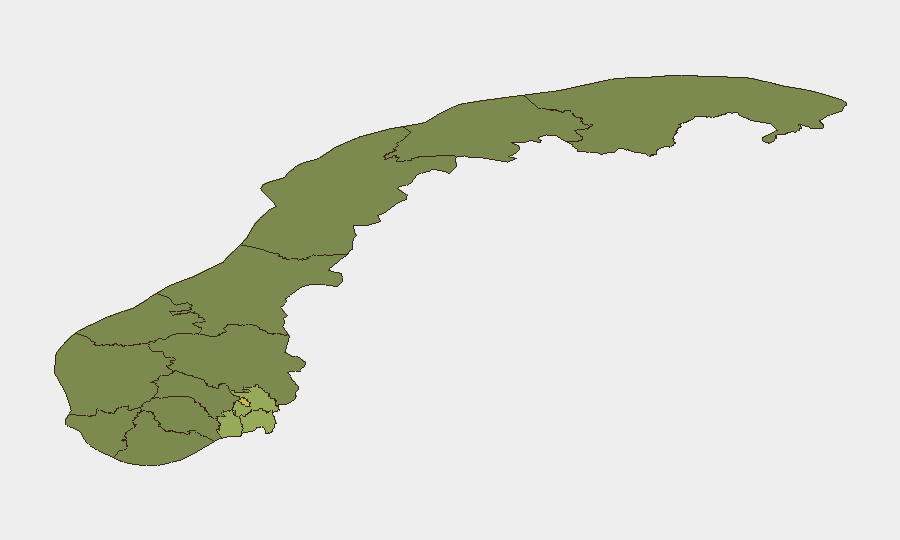
Oslo remains the highest-risk region (score 68), driven by critical-infrastructure concentration, government and defense facilities, and urban crime activity. Akershus (52) and Østfold (48) show elevated risk, likely reflecting proximity to the capital and border-region exposure. Together, these three jurisdictions account for the majority of tracked security signals. Rogaland (38) and Buskerud (35) merit monitoring due to energy-sector assets and transportation corridors. Southern and inland regions (Telemark, Vestland, Agder, Innlandet) register lower composite risk and remain stable.
How GeoBit Would Assist
Corporate security teams should deploy AOI Monitoring & Early Warning to track critical sites in Oslo, Akershus, and defense/energy sectors for persistent threat activity. OSINT Fusion & Corroboration and Intel Sweep capabilities enable continuous monitoring of Russian intelligence signaling, cyberattack forums, and supply-chain vulnerability disclosures. Network & Actor Analysis would map relationships between recent breaches (Amadeus, food-sector attacks, Norad Grants Portal compromise) and identify common threat actors or infrastructure.
7-Day Outlook
Risk trajectory is likely to remain elevated in cyber and critical-infrastructure domains through year-end, with focus on defense procurement and energy-grid security. An aviation strike scheduled for 24 November at Oslo Gardermoen and Bergen Flesland may cause localized operational disruptions but is not a security threat. No imminent violence or civil unrest is anticipated, though corporate teams should maintain heightened cyber vigilance and supply-chain monitoring.
Highest-Risk Areas — Ranked
| # | State / Region | Risk |
|---|---|---|
| 1 | Oslo | 68 |
| 2 | Akershus | 52 |
| 3 | Østfold | 48 |
| 4 | Vestfold | 42 |
| 5 | Rogaland | 38 |
| 6 | Buskerud | 35 |
| 7 | Trøndelag | 32 |
| 8 | Telemark | 28 |
| 9 | Vestland | 27 |
| 10 | Agder | 26 |
| 11 | Møre og Romsdal | 22 |
| 12 | Innlandet | 20 |
Sources
Previous Weekly Briefs
A new Norway brief is written every Monday, covering the week — each with its own risk map and downloadable CSV. Use the calendar to go further back.
- November 9, 2026
- November 2, 2026
- October 26, 2026
- October 19, 2026
- October 12, 2026
- October 5, 2026
- September 28, 2026
📅 Browse past briefs by calendar →
Highlighted days have a brief. Tap a day for that day's map & analysis, or “csv” for that day's dataset ($5).
Atlas — our AI intelligence desk — emails them this snapshot personally. Nothing else, no list.