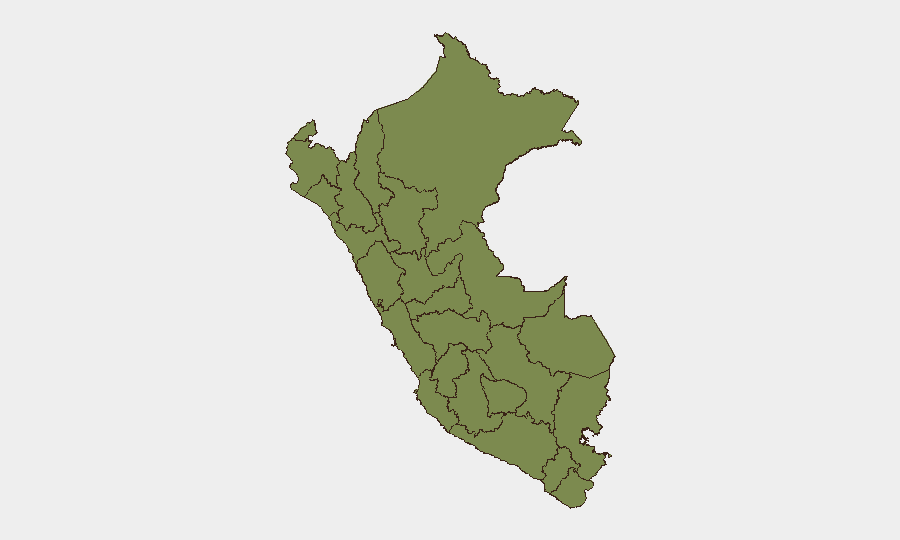
Situation Summary
Peru remains at moderate composite threat level (#55 globally, score 17) with 237 tracked events under active monitoring. The security environment is characterized by persistent sub-national fragmentation, with Huánuco emerging as the primary locus of risk (31.5), followed by Lima (15.4) at significantly lower intensity. Recent signal activity suggests localized civil-police tensions, institutional friction (judicial rejection, media disapproval), and militant demand cycles, though no single incident has escalated to nationwide consequence in the immediate window.
Key Developments
Unable to confirm Peru-specific incidents in last 24–48 hours with multi-source corroboration. Open-source search and social media OSINT have not surfaced clearly dated, independently verified security events (protests, violence, arrests, infrastructure disruption, or political crises) in Peru for 2026-06-16 or 2026-06-17. GeoBit's event signal database shows activity flagged on 2026-06-15 and 2026-06-16 (police-related abduction, judicial rejection, militant demands, arrest/detain cycles, and mayoral statements), but live web research cannot presently tie these to confirmed incident summaries, locations, or casualty/impact data needed for operational briefing.
Recommendation: If your organization has direct feeds, incident reports, or social-media links dated to the last 48 hours, provide them for immediate cross-reference and structured analysis.
Highest-Risk Areas
Huánuco dominates the risk profile at 31.5 (more than double Lima's 15.4), indicating sustained instability in the central highlands—likely driven by organized-crime activity (narcotics trafficking corridors), weak state presence, and historical conflict dynamics. Lima, despite lower composite score, remains operationally critical due to population density, economic concentration, and symbolic/political salience; incidents there carry disproportionate institutional and media weight. Madre de Dios (5.7), Puno (4.4), and Ayacucho (3.2) show secondary risk, associated with border porosity, mining disputes, and residual leftist militant presence respectively. Organizations with personnel or assets in Huánuco should treat it as the primary monitoring and contingency-planning jurisdiction.
How GeoBit Would Assist
Security teams protecting Peru operations should deploy AOI Monitoring & Early Warning on high-risk regions (Huánuco, Lima) with real-time alerting on protest activity, armed-group movement, and institutional instability. Intel Sweep (X/Twitter OSINT, multi-language news fusion, entity extraction) provides continuous signal intake; Network & Actor Analysis maps criminal and militant cell structures and their operational tempo. Routing & Network Analysis supports duty-of-care planning—identifying alternative travel corridors and safe-zone access if violence escalates in primary routes.
7-Day Outlook
No imminent nationwide destabilization is forecast, though Huánuco's elevated risk profile warrants assumption of sustained localized activity (cartel-related violence, police operations, possible civil unrest). Lima's political and judicial friction (signal of judicial rejection, mayoral statements) may produce secondary demonstrations or institutional gridlock but is unlikely to trigger major security events. Monitor for escalation in militant demand cycles and any linkage between regional incidents and capital-level political response.
Highest-Risk Areas — Ranked
| # | State / Region | Risk |
|---|---|---|
| 1 | Huánuco | 31.5 |
| 2 | Lima | 15.4 |
| 3 | Madre de Dios | 5.7 |
| 4 | Puno | 4.4 |
| 5 | Ayacucho | 3.2 |
| 6 | Tumbes | 2.7 |
| 7 | Loreto | 2.3 |
| 8 | Piura | 2.3 |
| 9 | Junín | 2.3 |
| 10 | Apurímac | 2.3 |
| 11 | Tacna | 2.3 |
| 12 | Lambayeque | 1.9 |
Sources
Previous Daily Briefs
A new Peru brief is written every day — each with its own risk map and downloadable CSV. Here's the last week; use the calendar to go further back.
📅 Browse every day by calendar →
Highlighted days have a brief. Tap a day for that day's map & analysis, or “csv” for that day's dataset ($5).