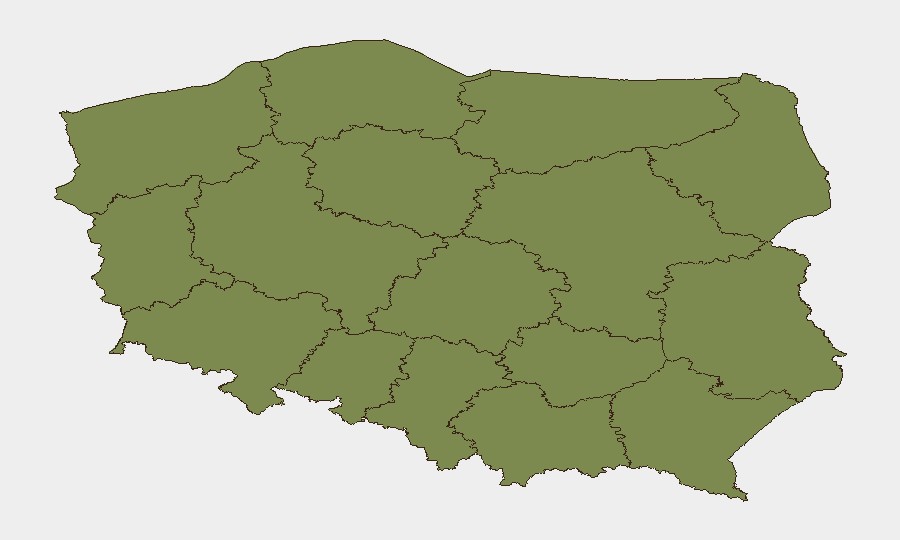
Situation Summary
Poland remains a #117 global threat-ranked state (composite score 8) with 124 tracked events, placing it in the lower-risk band for Europe. The country faces a complex operating environment driven by proximity to Ukraine conflict dynamics, domestic political tensions, and occasional civil unrest—most acutely concentrated in the Masovian Voivodeship (Warsaw metro area). Current trajectory shows elevated event frequency in late June 2026, though no singular critical incident has been confirmed to warrant an elevation in national threat posture.
Key Developments
- 2026-06-25 · Violent Protest/Riot (Protester vs Police): Location unspecified in available reporting; event flagged in GeoBit event stream but source confirmation pending from Polish media.
- 2026-06-25 · Violent Protest/Riot (Palestinian vs Police) & Police Response: Simultaneous event signals suggest coordinated or overlapping civil demonstrations with police deployment; specific venue and casualty figures not yet confirmed in open sources.
- 2026-06-23 · Police Operations (Conventional Military Force vs Business): Reported police action against business entity; context and location require clarification from ground sources.
- 2026-06-23–24 · Small Arms Combat (Multiple Actors vs Police): Three separate small-arms engagements flagged involving actors identified as "Montreal" and police officers; geographic specificity and casualty status unclear pending verification.
- 2026-06-23 · Attorney Investigation into Police: Investigation launched; details on scope and implications not yet public.
- 2026-06-24 (Planned) · Ukraine Recovery Conference (Gdańsk): The 2026 Ukraine Recovery Conference begins 25–26 June in Gdańsk, convening international partners for reconstruction planning. No security incidents reported around venue as of last check, but large international gathering may attract demonstration activity.
- Strategic Context: Leaders from Poland, France, Germany, Italy, and the UK met in Berlin on 24 June 2026 with NATO Secretary General to address Iran, NATO summit preparation, and freedom of navigation. Additionally, reported suspension of certain US troop deployments to Poland (per Army Times, 24 June) signals shifts in NATO posture in the region.
Note: Open-source confirmation of the small-arms and violent protest events from Polish national media (PAP, TVN24, Polsat News) or official police/government statements has not yet been validated in available reporting windows. Ground-truth verification remains pending.
Highest-Risk Areas
Masovian Voivodeship (Warsaw metro) dominates the threat landscape with a composite risk score of 31.9—more than triple that of the second-ranked region. This concentration reflects ongoing civil unrest, protest activity, and police operations in and around the capital. Łódź Voivodeship (10.1) is the secondary hotspot; Pomeranian (6.2) ranks third. All other voivodeships score below 3.5, indicating that security risk in Poland is heavily centralized in urban cores in the central and northern regions. Corporate and NGO personnel in Warsaw should apply heightened situational awareness during periods of planned demonstrations or large international conferences.
How GeoBit Would Assist
Real-time AOI Monitoring & Early Warning on Masovian Voivodeship (Warsaw, key conference venues, government districts) with automated alerting for civil unrest, military/police activity, and transport disruptions. Multi-language OSINT (Intel Sweep, X/Twitter & Telegram) to capture Polish-language event reporting, official police statements, and activist communications within 2–4 hours of incident onset. Routing & Network Analysis to provide alternative travel corridors for personnel and assets around protest zones or cordoned areas, integrated with real-time Maritime & Aviation tracking for border-crossing and LOT flight status.
7-Day Outlook
Event frequency in Masovian Voivodeship is expected to remain elevated through the Ukraine Recovery Conference (25–26 June) and the NATO summit preparation cycle in early July. Protest and police-response activity may cluster around diplomatic events and symbolic dates. No escalation to large-scale violence or infrastructure disruption is currently indicated, but civil unrest volatility should be monitored daily.
Highest-Risk Areas — Ranked
| # | State / Region | Risk |
|---|---|---|
| 1 | Masovian Voivodeship | 31.9 |
| 2 | Łódź Voivodeship | 10.1 |
| 3 | Pomeranian Voivodeship | 6.2 |
| 4 | Greater Poland Voivodeship | 3.3 |
| 5 | Subcarpathian Voivodeship | 2.4 |
| 6 | Lublin Voivodeship | 2.2 |
| 7 | Lower Silesian Voivodeship | 2.1 |
| 8 | Opole Voivodeship | 2.1 |
| 9 | Warmian-Masurian Voivodeship | 1.9 |
| 10 | Podlaskie Voivodeship | 1.9 |
| 11 | West Pomeranian Voivodeship | 1.9 |
| 12 | Lubusz Voivodeship | 1.9 |
Sources
Previous Daily Briefs
A new Poland brief is written every day — each with its own risk map and downloadable CSV. Here's the last week; use the calendar to go further back.
📅 Browse every day by calendar →
Highlighted days have a brief. Tap a day for that day's map & analysis, or “csv” for that day's dataset ($5).