Situation Summary
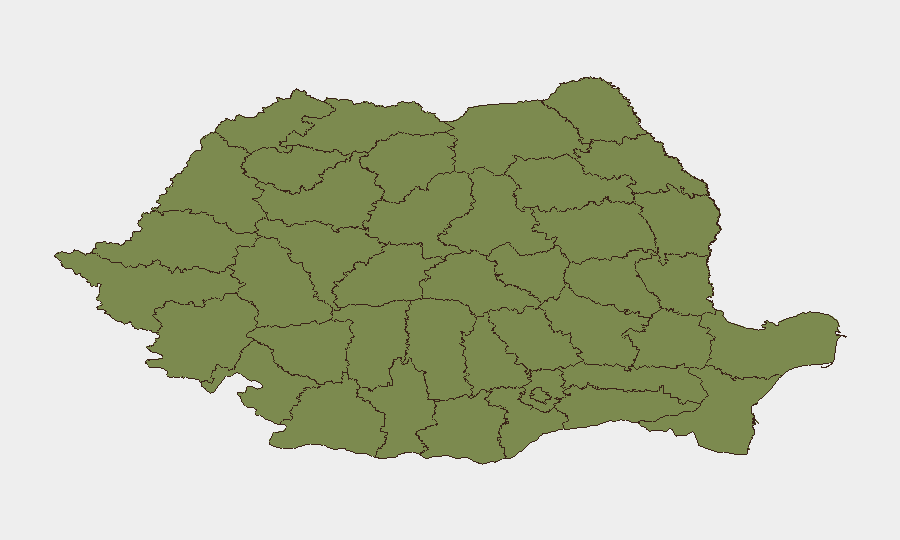
Romania remains a relatively low-threat environment globally (rank #102, composite score 8), but sub-national risk concentration is acute: Bihor and Alba counties present composite threat scores of 31.4—nearly four times the national average—while Bucharest and surrounding regions score significantly lower. Event signals over the past 72 hours show fragmented, low-intensity incidents (small arms engagements, localized blockades, and civil disapproval) rather than coordinated or escalating unrest. The overall trajectory suggests containment within specific geographic pockets, though the density of "disapprove" signals indicates underlying grievance accumulation.
Key Developments
- 2026-06-21 · Small Arms Combat · Armed Group (location unconfirmed). Low-level armed engagement reported; no casualty or infrastructure impact data available.
- 2026-06-21 · Blockade · Village (location unconfirmed). Localized blockade action; extent and duration not yet clarified in available reporting.
- 2026-06-21 · Small Arms Combat · Congress (location Bucharest assumed). Armed engagement involving legislative or institutional actors; details sparse.
- 2026-06-21 · Disapprove · Rights Group vs Muslim Community. Civil protest or statement; scale and location not specified in current signals.
- 2026-06-20 · Small Arms Combat · Ministry vs Terrorist Group (location unconfirmed). Law-enforcement or military response to armed actors; outcome unclear.
- 2026-06-21 · Public Statement · Student (location unconfirmed). Student-led statement on unspecified issue; no indication of mass mobilization.
*Caveat: Open-source reporting for Romania in the last 24–48 hours remains sparse and often unverified. Specific locations, casualty figures, and corroboration across independent sources are not yet available. Teams with operational presence in Romania should cross-reference with proprietary alert feeds, Romanian-language local media, and official government statements.*
Highest-Risk Areas
Bihor and Alba counties drive the majority of measured threat, each scoring 31.4 on the composite index. Both regions have reported small arms engagements and armed-group activity in recent days; the concentration suggests either territorial or resource-based conflict, or organized dissent. Brașov (score 28.9) follows as a secondary concern, likely tied to the same underlying drivers. By contrast, Bucharest—Romania's capital and largest economic center—scores 6.4, indicating that national-level institutional risk (reflected in the "Congress" engagement noted above) remains isolated from broader public unrest. This geography suggests risk is peripheral and localized, not metropolitan or nationally coordinated.
How GeoBit Would Assist
Security teams should deploy AOI Monitoring & Early Warning on Bihor, Alba, and Brașov counties to capture emerging protest, armed activity, or infrastructure disruption in real time. Multi-language OSINT and entity extraction (targeting Romanian-language social media, local news outlets, and Telegram channels) would provide faster confirmation and geolocation of the sparse headline signals currently available. Network & Actor Analysis would help identify whether the armed engagements reflect organized criminal, separatist, or ad-hoc community-based actors—a distinction critical for personnel movement and supply-chain planning.
7-Day Outlook
Risk is expected to remain sub-threshold over the next week absent significant escalation in Bihor or Alba. Monitoring for spillover into adjacent counties (Arad, Satu Mare, Maramureș) and organized-action signals (coordination across multiple villages, statements from formal leadership) will be critical to early warning. Any escalation in Bucharest-area small arms activity or institutional targeting should trigger immediate escalation review.
Highest-Risk Areas — Ranked
| # | State / Region | Risk |
|---|---|---|
| 1 | Bihor | 31.4 |
| 2 | Alba | 31.4 |
| 3 | Brașov | 28.9 |
| 4 | Bucharest | 6.4 |
| 5 | Prahova | 3.9 |
| 6 | Vâlcea | 1.4 |
| 7 | Timiș | 1.4 |
| 8 | Caraș-Severin | 1.4 |
| 9 | Satu Mare | 1.4 |
| 10 | Sălaj | 1.4 |
| 11 | Arad | 1.4 |
| 12 | Maramureș | 1.4 |
Sources
Previous Daily Briefs
A new Romania brief is written every day — each with its own risk map and downloadable CSV. Here's the last week; use the calendar to go further back.
📅 Browse every day by calendar →
Highlighted days have a brief. Tap a day for that day's map & analysis, or “csv” for that day's dataset ($5).