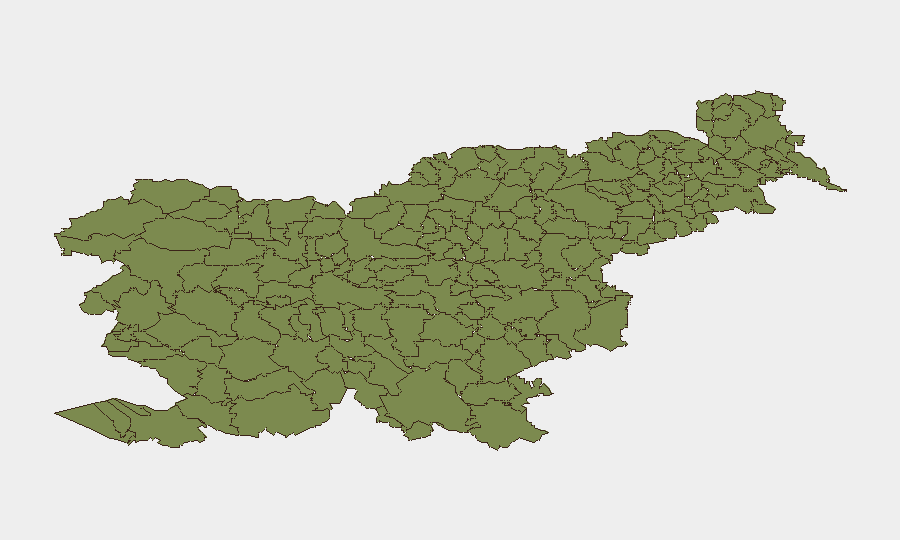
Situation Summary
Slovenia maintains a stable security environment with a composite threat score of 2/100 and no major incidents reported in the last 24–48 hours. Recent developments reflect policy-level adjustments rather than acute security threats: the government has signaled administrative actions and diplomatic statements, and all 12 tracked sub-national regions carry zero composite risk scores. The national security posture remains consistent with Slovenia's EU and NATO standing.
Key Developments
- 2026-06-12, National Level – Slovenian government issued administrative sanctions; specific target and rationale not yet detailed in open reporting but consistent with government enforcement authority.
- 2026-06-13, National Level – Deputy-level public statement issued; no acute incident reported, likely addressing policy or diplomatic matters.
- 2026-06-12, Bilateral Relations – Government signaled reduction of relations with Croatia and Hungary; this reflects diplomatic adjustment rather than an acute security incident and does not indicate border instability or travel disruption at this time.
- 2026-06-12–13, Regional Diplomatic Activity – Public statements involving Bulgaria and deputy-level actors; context suggests routine interstate communication rather than escalation.
- 2026-06-12, Administrative Action – Government imposed sanctions related to Israeli interests; no corresponding reports of domestic unrest, protests, or operational disruption in Slovenia.
Note: Web research covering the last 24–48 hours identified no corroborated reports of violent incidents, civil unrest, terrorism, or infrastructure attacks in Slovenia. All sub-national regions show zero risk scores.
Highest-Risk Areas
All 12 tracked sub-national regions (Bovec, Kobarid, Kanal, Kranjska Gora, Gorje, Tolmin, Bohinj, Cerkno, Brda, Šempeter-Vrtojba, Renče-Vogrsko, and Miren-Kostanjevica) register zero composite risk scores. This uniform risk profile reflects Slovenia's overall stability and absence of geographically concentrated threats such as organized-crime strongholds, active protest hotspots, or border-security flashpoints. No area requires elevated operational security posture relative to others.
How GeoBit Would Assist
Corporate security teams operating in Slovenia should use Intel Sweep and multi-language OSINT to monitor government policy announcements and bilateral statements that may affect sanctions compliance or market access. AOI Monitoring & Early Warning on capital-city and border regions (Croatia, Hungary crossings) would provide persistent watch for any sudden diplomatic escalation or travel restrictions. Sentiment & Temporal Analysis of local and regional news feeds would offer early signal of any emerging civil or labor unrest not yet visible in English-language wire services.
7-Day Outlook
No acute threat indicators suggest imminent security deterioration. Near-term focus will remain on diplomatic-relations trajectory with neighboring states and implementation of announced administrative actions. Routine monitoring of government communications and border-crossing operations is sufficient to identify any deviation from current stable conditions.
Highest-Risk Areas — Ranked
| # | State / Region | Risk |
|---|---|---|
| 1 | Bovec | 0 |
| 2 | Kobarid | 0 |
| 3 | Kanal | 0 |
| 4 | Kranjska Gora | 0 |
| 5 | Gorje | 0 |
| 6 | Tolmin | 0 |
| 7 | Bohinj | 0 |
| 8 | Cerkno | 0 |
| 9 | Brda | 0 |
| 10 | Šempeter-Vrtojba | 0 |
| 11 | Renče-Vogrsko | 0 |
| 12 | Miren-Kostanjevica | 0 |
Sources
Previous Daily Briefs
A new Slovenia brief is written every day — each with its own risk map and downloadable CSV. Here's the last week; use the calendar to go further back.
📅 Browse every day by calendar →
Highlighted days have a brief. Tap a day for that day's map & analysis, or “csv” for that day's dataset ($5).