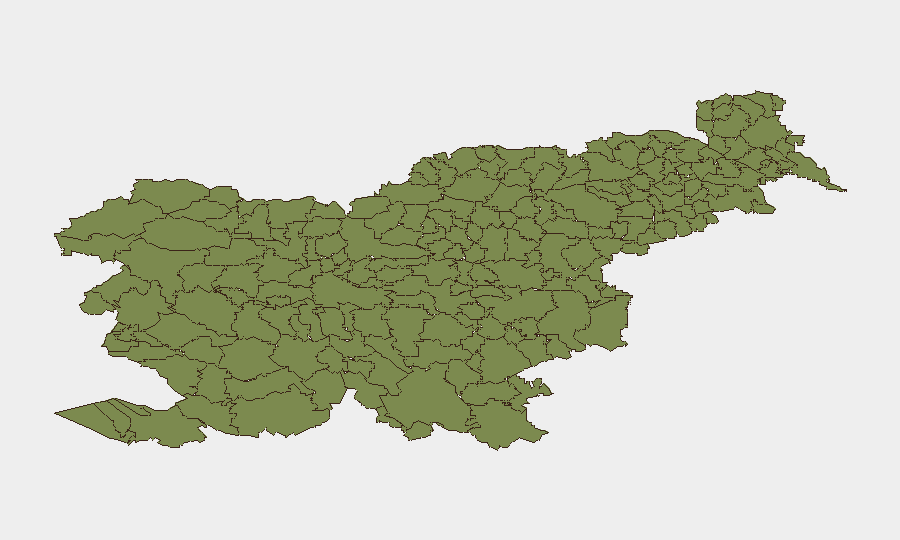
Situation Summary
Slovenia remains a low-threat environment overall (rank #161 globally, composite score 8), with zero tracked major incidents in the past week. However, the past seven days revealed significant organized-crime activity, including the dismantling of two international drug networks and an extradition-related homicide investigation, alongside sporadic localized incidents (unauthorized fireworks, firearm seizures). The country's security posture is stable; criminal activity is being actively investigated and interdicted by law enforcement, with no indicators of systemic instability or transnational security threats to the broader population.
Key Developments
- Ljubljana (13 October): Police dismantled two international drug-trafficking networks in a major Europol-supported operation; 34 suspects arrested, with 13 remanded in custody and two placed under house arrest. Seizures included over 3 tonnes of cannabis, more than 700 kg of cocaine, and more than 100 kg of heroin.
- Slovenia-wide (13–14 October): A parallel trafficking investigation exposed a network using three Slovenia-based transport companies to distribute narcotics from Belgium and the Netherlands; police intercepted a 5.7-tonne cocaine shipment valued at approximately €285 million in Antwerp.
- Postojna and Slovenian airspace (17 October): Slovenia participated in NATO Neptune Strike 2026 exercise; allied aircraft conducted overflights supporting joint-fire-controller training with expected increased noise (11:00–14:00). This was a scheduled military training activity with prior public notice.
- Piran municipality hinterland (night of 18–19 October): Police responded to reported gunfire at a village residence, detained a 44-year-old Croatian national who resisted officers, and seized a pistol, magazine, and ammunition.
- Kranj, Planina neighborhood (night of 18–19 October): Police responded twice to disruptive fireworks involving groups of youths; alleged perpetrators had not been located as of reporting.
- Laško (19 October): Two Croatian citizens suspected of torturing and murdering a pensioner were extradited from Germany to Slovenia after seven weeks in flight.
Highest-Risk Areas
All 12 sub-national regions tracked in Slovenia carry a composite risk score of 0, indicating no elevated localized threat signatures. The absence of differentiated risk scores reflects Slovenia's overall stability and the distributed, opportunistic nature of recorded incidents (isolated firearm seizures, youth disturbances, cross-border crime) rather than concentrated regional instability. Police response capability and interagency coordination appear effective; no geographic zone exhibits systemic vulnerability or sustained criminal organization.
How GeoBit Would Assist
Security teams with personnel or assets in Slovenia should use Intel Sweep and global event feeds to maintain real-time awareness of organized-crime enforcement actions and cross-border trafficking networks that may involve Slovenian transit routes or companies. Network & Actor Analysis would support identification of criminal networks' supply chains and personnel; Routing & Network Analysis would enable alternative journey planning to avoid areas where police operations are active. AOI Monitoring & Early Warning on border crossings and major cities would provide early notification of incidents affecting business continuity or traveler safety.
7-Day Outlook
Organized-crime investigations will likely continue at heightened intensity through October and beyond, with additional arrests and asset seizures probable as prosecutions advance. Minor public-order incidents (youth disturbances, isolated firearm incidents) should be expected in urban centers but carry low risk to corporate operations. No deterioration in the broader security environment is indicated.
Highest-Risk Areas — Ranked
| # | State / Region | Risk |
|---|---|---|
| 1 | Bovec | 0 |
| 2 | Kobarid | 0 |
| 3 | Kanal | 0 |
| 4 | Kranjska Gora | 0 |
| 5 | Gorje | 0 |
| 6 | Tolmin | 0 |
| 7 | Bohinj | 0 |
| 8 | Cerkno | 0 |
| 9 | Brda | 0 |
| 10 | Šempeter-Vrtojba | 0 |
| 11 | Renče-Vogrsko | 0 |
| 12 | Miren-Kostanjevica | 0 |
Sources
Previous Weekly Briefs
A new Slovenia brief is written every Monday, covering the week — each with its own risk map and downloadable CSV. Use the calendar to go further back.
- October 13, 2026
- October 6, 2026
- September 29, 2026
- September 22, 2026
- September 15, 2026
- September 8, 2026
- September 1, 2026
📅 Browse past briefs by calendar →
Highlighted days have a brief. Tap a day for that day's map & analysis, or “csv” for that day's dataset ($5).
Atlas — our AI intelligence desk — emails them this snapshot personally. Nothing else, no list.