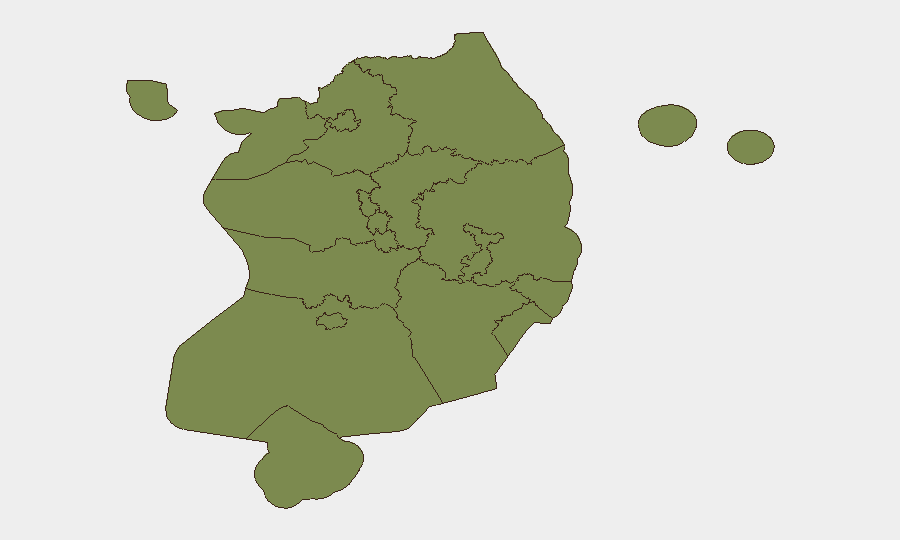
Situation Summary
South Korea remains a moderate-threat environment (rank #66 globally, composite score 2.1) but faces elevated risk from converging cyber, diplomatic, and inter-Korean tensions. Over the past 72 hours, the country has experienced a significant cyberattack attributed to North Korean actors, multiple U.S. disapproval statements, and concurrent mobile-network security breaches affecting millions of users. Risk concentration is extreme: Seoul accounts for 80% of the country's measured threat surface, indicating that most corporate and diplomatic assets operate in a disproportionately exposed location.
Key Developments
- Seoul / Government & Media Cyberattack (2026-06-01) — North Korean-attributed attackers compromised 69 government offices and private-sector organizations, including the presidential office website. Preliminary indicators suggest stolen personal information; most services restored within 24 hours.
- Seoul / Presidential Office Data Breach (2026-06-01–02) — Unspecified personal data was exfiltrated during the cyberattack. Scope and sensitivity of stolen records remain under investigation by authorities.
- Nationwide / SK Telecom Mobile-Network Breach (2026-06-02) — Major mobile carrier reported leaked USIM data affecting millions of subscribers. SIM replacement queues were substantial; full scope of exposure and timing unclear from available reporting.
- Diplomatic Escalation (2026-06-01–02) — The United States and Washington separately issued disapproval statements toward South Korea; South Korea simultaneously rejected and disapproved of unspecified measures. Nuclear cooperation and enrichment/reprocessing authority remain points of friction.
- South Korea–Japan Diplomatic Statement (2026-06-01) — Public statement issued; context and substance not confirmed in available reporting.
- North Korean Arrest (2026-06-01) — South Korean authorities arrested or detained a North Korean national; full details pending.
- School-Related Demand (2026-06-01) — South Korea issued a demand to an unspecified school; context unclear from event signals alone.
Highest-Risk Areas
Seoul dominates South Korea's risk profile, with a composite score of 31.5—approximately 15× the national average and 135× that of the safest tracked region. North Chungcheong (20.3) is the only other region approaching significant risk and likely reflects either government/military infrastructure concentration or unconfirmed incidents. Incheon (6.7), the country's third-busiest port and primary gateway, carries maritime and supply-chain exposure. All other regions fall below 2.5 risk score, indicating that duty-of-care and asset-protection resources should prioritize Seoul monitoring and contingency planning for travel or operations within the capital and surrounding Gyeonggi province.
How GeoBit Would Assist
Corporate security teams operating in South Korea should deploy Intel Sweep and global event feeds for real-time detection of cyberattacks and diplomatic shifts; OSINT fusion and corroboration to validate North Korean attribution and assess breach scope; and AOI Monitoring with persistent alerting on Seoul, Incheon, and government/telecom facilities. Sentiment and temporal analysis of Korean-language social media and news feeds will surface early signals of political instability or supply-chain disruption ahead of mainstream reporting.
7-Day Outlook
Cyber-attack frequency and sophistication are likely to persist given demonstrated North Korean capability and geopolitical tension. Diplomatic friction between South Korea, the United States, and Japan may escalate to secondary impacts on business travel, visa processing, or telecommunications. Expect continued investigation into the SK Telecom breach and potential secondary credential-compromise incidents within 7–14 days as stolen USIM data is weaponized.
Highest-Risk Areas — Ranked
| # | State / Region | Risk |
|---|---|---|
| 1 | Seoul | 31.5 |
| 2 | North Chungcheong | 20.3 |
| 3 | Incheon | 6.7 |
| 4 | South Jeolla | 2.3 |
| 5 | Busan | 2.3 |
| 6 | Gyeonggi | 2.1 |
| 7 | Gangwon State | 1.5 |
| 8 | South Chungcheong | 1.5 |
| 9 | Jeju | 1.5 |
| 10 | Sejong | 1.5 |
| 11 | Jeonbuk State | 1.5 |
| 12 | Daejeon | 1.5 |
Previous Daily Briefs
A new South Korea brief is written every day — each with its own risk map and downloadable CSV. Here's the last week; use the calendar to go further back.
📅 Browse every day by calendar →
Highlighted days have a brief. Tap a day for that day's map & analysis, or “csv” for that day's dataset ($5).